Buy light roast if you want to taste where the coffee came from, and buy dark roast if you want the familiar, cosy flavours that roasting itself creates. That is the whole decision in one sentence. Roast level is not a strength dial; it is a trade between origin character and roast character.
The rest depends on three practical things: what you brew with, whether you drink it with milk, and how fast you get through a bag. Get those right and the roast almost picks itself.
What roast level actually changes
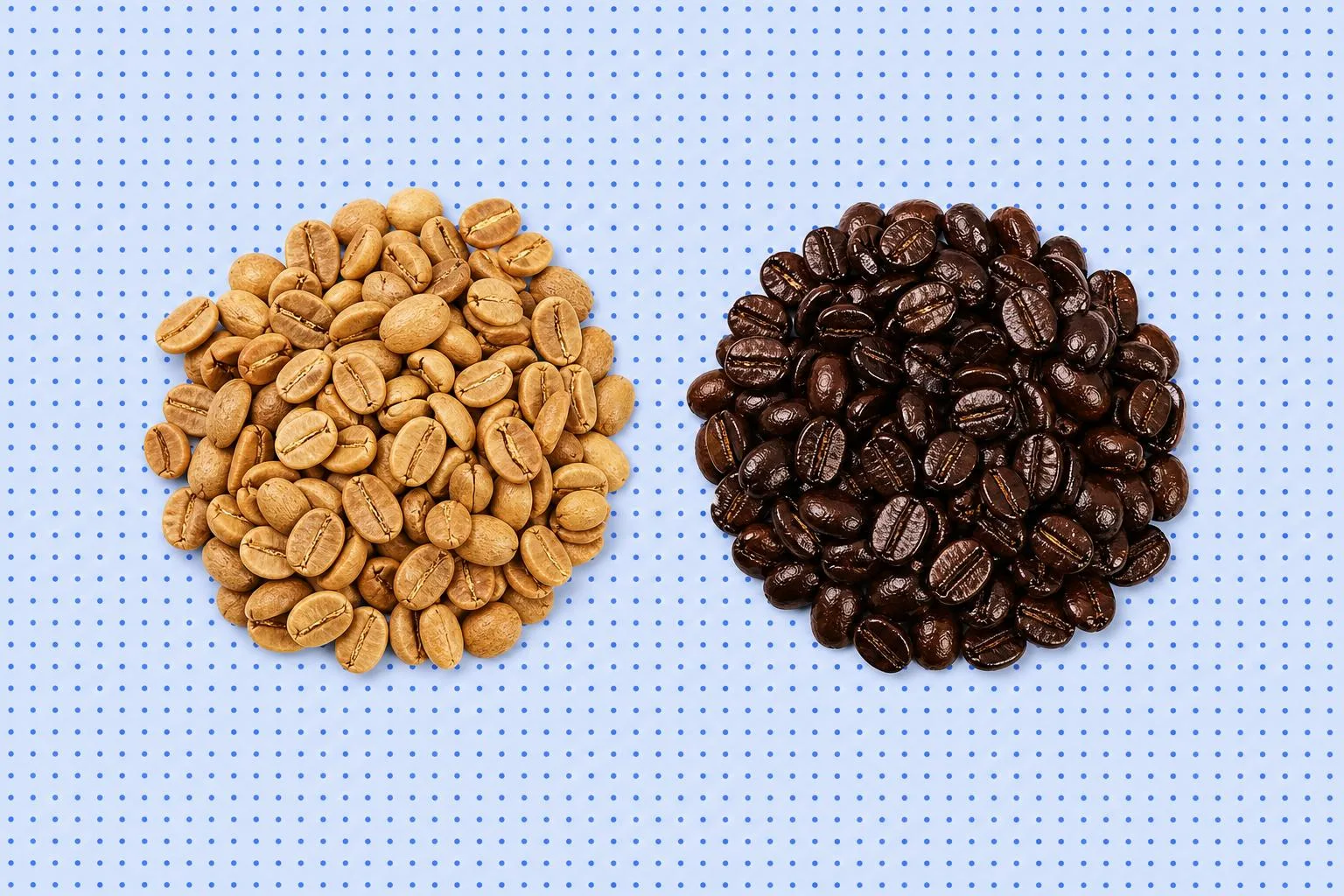
A green bean has no coffee flavour. Heat builds it. Around 196 °C the bean gives an audible pop called first crack, and a light roast is dropped shortly after, keeping its acidity and the floral, fruity, tea-like notes that come from the origin.
Keep roasting and a second crack arrives around 224 °C, when the bean's structure breaks down further and oils push to the surface. Dark roasts are taken to or past this point. The core rule is simple: the further past first crack you go, the more origin flavour is replaced by roast-created flavour like caramel, chocolate and smoke.
So a light Ethiopia tastes of jasmine and citrus because it was stopped early, while a dark roast of the same bean tastes mostly of the roast. Neither is better. They are different products, and the choice is about which set of flavours you actually want in the cup.
Roasters do not judge this by eye alone. Many grade darkness with an Agtron score, a standardised light-reflectance number, so a stated roast level reflects a measurement rather than a guess. That is worth knowing when a bag simply says "medium": the word means more when the roaster is measuring it.
The caffeine myth, settled
Roasting barely changes caffeine. The molecule is stable at roasting temperatures, so a light and a dark roast of the same coffee carry nearly the same amount. What changes is taste, acidity, body and aroma.
There is one honest wrinkle about scooping. Dark beans lose more water and puff up, so they are less dense: a spoon of light roast holds more actual coffee, and therefore more caffeine, than the same spoon of dark. America's Test Kitchen measured about 60% more caffeine from light roast when dosed by volume, but virtually identical caffeine once both were weighed.
The fix is to weigh your dose, not scoop it. A cheap kitchen scale removes the whole problem, and it makes every other variable in your recipe repeatable too. That single habit does more for a consistent cup than any change of roast.
If you are chasing the strongest cup, a 2024 study from Berry College and Drexel found extraction actually tends to peak in medium roasts, which combine more porosity than light roasts with more remaining caffeine than dark. The differences are small, though. Roast for flavour, not for a caffeine edge.
Match the roast to your brewer
This is where the decision gets real. Light-roast beans stay dense and resist water, so they extract slowly and reward precision. Dark roasts are more porous and soluble, so they give up their flavour easily and forgive a sloppy grind or a rushed pour.
Slow, paper-filtered pour over suits light roasts beautifully, because the longer contact time coaxes out their intricate fruit and florals. A French press or a moka pot copes happily with either, but a dark roast is the more forgiving first choice.
Espresso is the sharp case. Its extraction window is only about 25 to 30 seconds, so soluble medium and dark roasts extract more fully in the time available. Light-roast espresso can taste sour and underdeveloped unless you dial it in carefully, which is doable but demanding.
Brew temperature follows the same logic. Darker roasts want slightly cooler water or they turn harsh; lighter roasts want it hot, near boiling, or they read sour. So a beginner with a variable-temperature kettle has more room to play, while a fixed-boil kettle simply flatters a lighter roast. If you are unsure of a ratio to start from, our brew calculator will set you up.
The milk question
Milk changes everything, and most guides skip it. Dark roast's bold, roasty flavour survives a latte because it is loud enough to cut through dairy. That is exactly why cafe house blends lean darker.
A delicate light-roast espresso behaves differently. Its perfume is largely lost once you go past roughly a one-to-one milk ratio, so paying a premium for a floral micro-lot only to bury it in a flat white is a waste.
So if you drink mostly milk-based coffee, buy medium or darker and enjoy the chocolate and caramel notes that come through. If you drink it black, light roast is where the interesting money is.
Freshness and how fast you drink
Roast level also decides how long a bag stays good. Second crack fractures the bean's internal structure, so dark roasts are more porous: they release their carbon dioxide fast, hitting their stride in roughly two to seven days, but they also go stale faster.
Dark roasting brings oils to the surface where they oxidise quickly, so dark roasts are best drunk within about two to three weeks. Light roasts benefit from resting around five to ten days after roasting and then hold their quality longer.
There is a useful visual tell here. Surface oil is a sign of roast level or age, not freshness. Fresh light and medium beans look dry and matte; heavy oil sitting on a light or medium roast usually means the bag is stale, not that the beans are special.
So if you only make coffee at weekends, a light or medium roast will forgive a slow bag. If you drink several cups a day, a dark roast fits your pace and will be gone before it fades.
Three bags, three honest picks
Our catalogue leans heavily to light and medium roasts, which is normal for specialty roasters chasing origin clarity. Prices and stock move, so treat these as examples of a type rather than a fixed shortlist, and browse all the coffees or use our decision helper to narrow things down.
For a bright, black-coffee light roast that still stays approachable, Coffee Collective's Bombona from Colombia leans on caramel and berry rather than sharp acidity. It is a friendly way into light-roast filter without needing lab-grade precision.
If you take milk, a medium roast built for the job makes more sense. This washed Tolima espresso from Colombia carries caramel and chocolate that hold up under steamed milk, and it dials in far more easily than a light-roast espresso would.
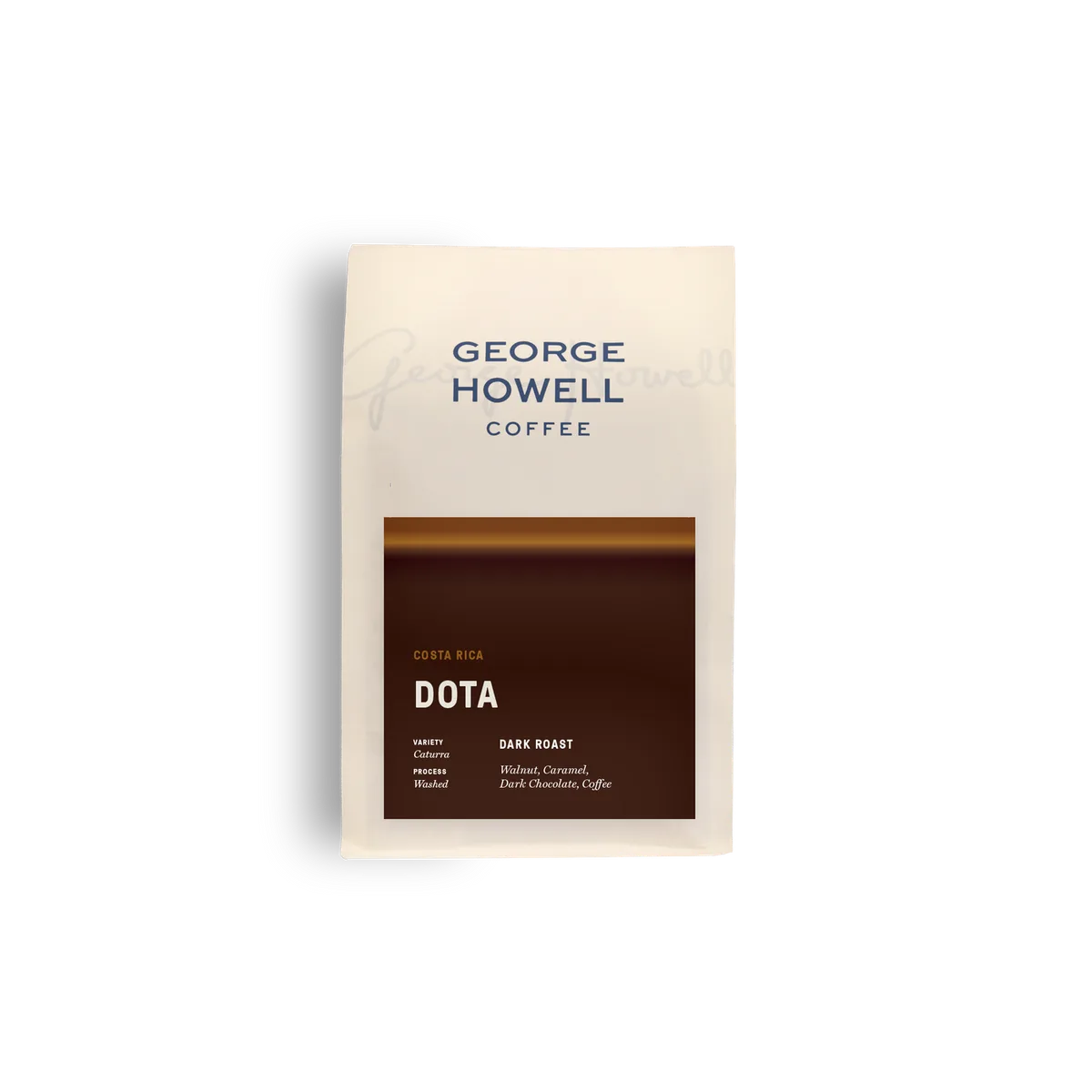
And if you genuinely want dark, this is a rare properly dark roast in our catalogue: a Costa Rica lot pushed to chocolate, caramel and nutty depth. It is forgiving to brew, comforting with milk, and best drunk within a few weeks of arriving.
So, which should you buy?
Start with how you drink. Black coffee from a pour over or AeroPress points to a light or light-medium roast, where the origin does the talking. Milk drinks and espresso from a home machine point to medium or dark, which are louder and more forgiving.
Then sanity-check against your pace. Fast drinkers can chase dark roast's short, punchy window; slow drinkers should lean lighter so the bag does not stale before the weekend.
Whatever you pick, weigh your dose, match your water temperature to the roast, and give the bag a few days to rest. Do that and both camps taste like what they are meant to be, rather than like a compromise. When you are ready to go deeper, the processes behind these beans shape the cup just as much as the roast does.