Coffee this week: Kraft Heinz quits coffee as arabica dips to a five-week low
Kraft Heinz sells Maxwell House and Gevalia for $650 million, arabica slides then bounces, Starbucks calls its turnaround complete, and Icafe forecasts a global surplus.
The headline most coffee drinkers will remember from this week is corporate, not agricultural. Kraft Heinz agreed to sell its North American coffee business, the home of Maxwell House and Gevalia, to private equity for $650 million. It is a historic exit from a category a decades-old brand owner helped define.
Underneath that, prices spent the week drifting. Arabica slid to a five-week low midweek before bouncing on Friday, ending roughly 2.5% down. Robusta did the opposite, recovering about 2.5% after touching its lowest level since March 2024.
None of this moves your bag price overnight. But the direction of travel, softer arabica and a slowly rebuilding supply, is what shapes next year's shelf prices.
The market this week
| Market | Price | This week |
|---|---|---|
| Arabica (ICE Dec) | 280.00 ¢/lb | -2.51% |
| Robusta (ICE Jan) | $3,285/tonne | +2.53% |
| ICO Composite | 247.74 ¢/lb | -1.55% |
| Colombian Milds (ICO) | 337.37 ¢/lb | -3.08% |
| Other Milds (ICO) | 317.92 ¢/lb | -2.24% |
| Brazilian Naturals (ICO) | 277.49 ¢/lb | -2.27% |
| Robustas (ICO) | 157.70 ¢/lb | +1.42% |
The ICO rows compare Thursday 5 November with Thursday 29 October; the ICO posts each day's prices on the next working day, and the Market page charts every series day by day. Source: International Coffee Organization (ICO) indicator prices.
December arabica started the week strong, rallying on Monday to 292.10 cents, up 1.71% on near-term tightness. It then faded, closing Thursday at 277.15 cents, a five-week low, before a Friday bounce of just over 1%. The net result was a week that gave back most of its early gains.
The main drag was currency. Brazil's real fell to a 10.25-month low against the dollar, and a weaker real nudges Brazil's exporters to sell more to lock in dollar returns. More selling, lower prices.
The ICO's own indicators tell the same soft story. Colombian Milds fell 3.08% on the week and Brazilian Naturals slipped 2.27%, so the drift was broad across the washed and natural arabicas that fill most specialty bags, not a single-market quirk.
Supply is also loosening at the warehouse. Coffee has arrived rapidly from Brazil since mid-September, and ICE inventories of Brazilian coffee climbed to a 9.25-month high of 83,678 bags on Thursday. Even so, total ICE arabica stocks sit near a seven-week low, only modestly above September's 27-year trough, so the market is not comfortably stocked yet.
That tension explains the whipsaw. Traders are caught between fresh Brazilian supply landing and a still-thin cushion of certified stock, which is why one piece of news can swing the price several cents in a day.
Robusta told a steadier recovery story. The January contract firmed back above $3,250 a tonne after Uganda's agriculture minister said October exports fell 13% year on year on a weak harvest, even as Vietnam's new crop picked up. Tight near-term supply from East Africa did the lifting.
The longer view turned looser. On Thursday, Icafe said it expects a global surplus of 9.7 million bags in 2026/27, the first surplus after four years of deficits. A surplus should slowly rebuild the low inventories that have kept prices jumpy, which over time is quietly good news for what you pay.
Kraft Heinz leaves coffee
The week's biggest company move landed on Wednesday. Kraft Heinz agreed to sell its North American coffee unit, including Maxwell House and Gevalia, to private equity firm One Rock Capital Partners at an enterprise value of $650 million.
Kraft Heinz keeps a 30% non-controlling stake, and the deal is expected to close in mid-2027. It marks a clean break from a category the company has been tied to for generations.
For specialty drinkers this is mostly a supermarket story. Maxwell House is a mainstream, pre-ground brand, not a single-origin roaster, so your weekend pour over is untouched.
But it is a signal worth reading. Legacy grocery coffee is a tougher business than it was, squeezed by high green prices and by drinkers trading up to fresher, traceable bags.
Private equity owners typically chase efficiency, not romance. A $650 million price tag for brands this famous is a reminder of how much value has drained from commodity-grade coffee as the premium end has grown.
That squeeze is exactly why the specialty shelf keeps growing. When the mass-market tin loses its shine, roasters offering named washed and natural lots tend to pick up the curious.
Starbucks, Luckin and the holiday rush
Also on Wednesday, Starbucks boss Brian Niccol declared the chain's turnaround plan complete and predicted sales growth for 2027. Global comparable sales rose 7.2% in the fourth quarter, with operating margin widening to 14%.
The guidance is more cautious than the headline. For 2027 Starbucks expects about 4% comparable growth in North America but revenue down roughly 1%, as its China business moves to a joint venture.
On China, the pressure is visible. On Tuesday, Luckin Coffee reported adding a net 2,599 stores in the third quarter to reach 38,909, closing in on Starbucks' 41,607 outlets worldwide. Revenue rose 17%, though same-store sales at its own outlets fell 11.1%, the cost of breakneck expansion.
That gap between store count and store sales is the thing to watch. Luckin is now the second-largest branded chain by outlets, but opening faster than existing shops can grow is a strategy that only works while the new stores keep filling.
For drinkers, the chains set the seasonal mood. Both Starbucks and Dunkin' rolled out holiday menus midweek, including a new line of tiramisu drinks such as a Tiramisu Velvet Latte.
None of that is specialty coffee, but it shapes habits. Sugar-forward seasonal drinks are often someone's first step before they go looking for something cleaner in a bag.
Elsewhere in coffee
India trimmed its outlook. On Thursday the Coffee Board said it now expects output of about 380,000 tonnes in the season to March, more than 5% below its earlier forecast of over 400,000 tonnes, after a weak monsoon hurt yields.
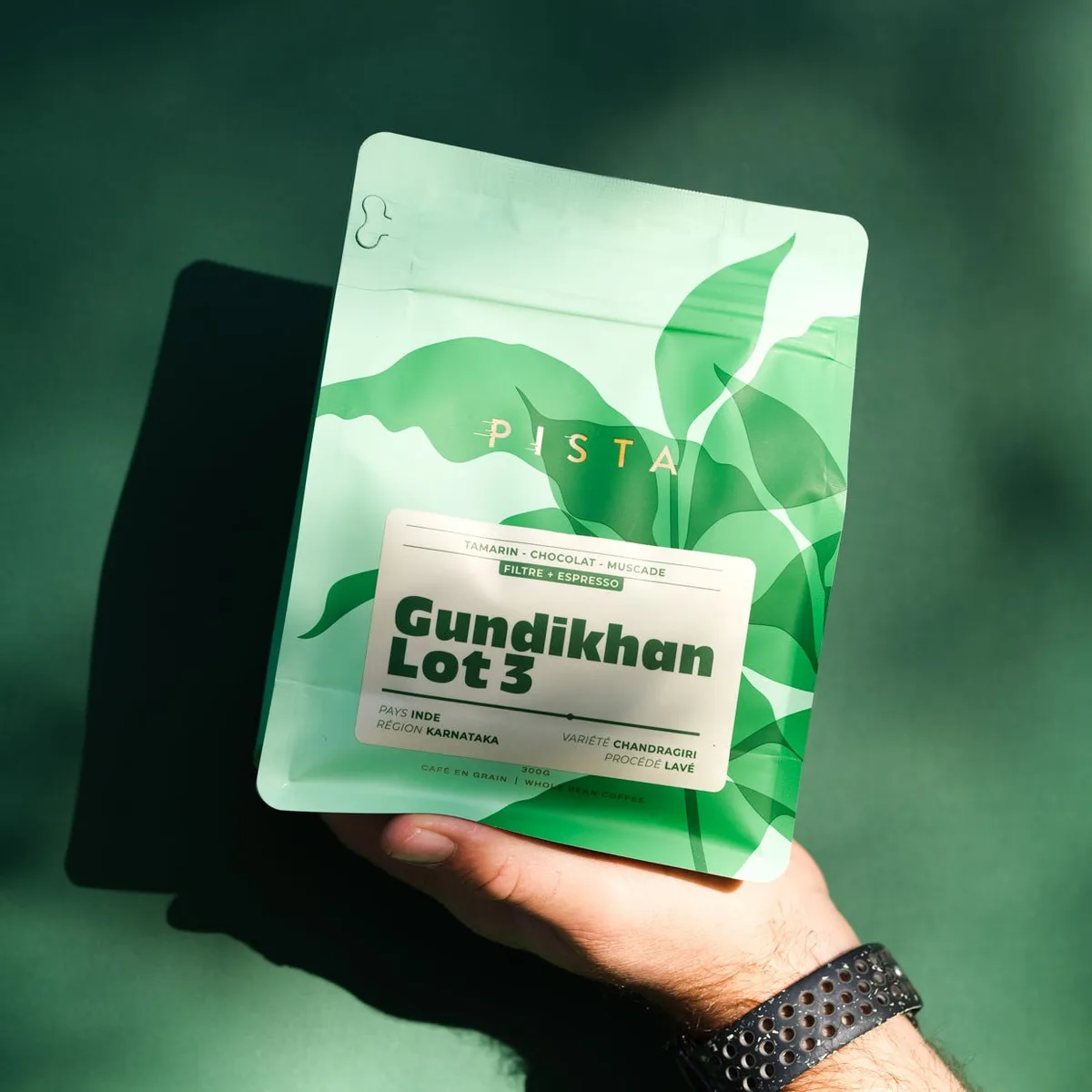
India's specialty lots are a small, shaded, characterful corner of the market, often carrying gentle chocolate and spice. They are worth seeking out while this season's coffees last.
If you want to taste why, this washed Indian lot is a clean, cocoa-and-spice introduction to the origin:
A new research review pushed back on the idea that robusta is a simple climate fix. It argues that major robusta regions in Vietnam, Brazil and India lack the natural rainfall for rain-fed robusta and lean heavily on irrigation.
That matters because robusta is often sold as the resilient future crop. If much of it depends on pumped water, its climate edge is narrower than the story suggests.
The practical takeaway is that no single species is a free pass against a warming climate. Both arabica and robusta face real constraints, which is part of why green prices have stayed high and volatile for years now.
In San Francisco, Outset Coffee closed both its cafes after landlord disputes, one ending in a $200,196 court judgment and the other in a court-ordered eviction. The three-year-old roaster was known for Asian-inspired specialty drinks.
On a brighter note, the Garagem do Café roaster will represent Brazil at the World Coffee Roasting Championship in New Orleans next April. It is a small reminder that the country driving the price tape is also pushing hard on the craft end.
What to watch next week
Watch whether Friday's arabica bounce holds or fades, and whether more Brazilian coffee turns up in certified ICE stocks. Rising certified stocks would push prices lower still.
Keep an eye on the real, too. If Brazil's currency keeps sliding, expect more export selling and continued pressure on arabica.
Want to see the daily moves yourself? The Market page charts every series day by day, and the coffee catalogue refreshes as roasters restock through the holidays.