Pacamara is a coffee variety from El Salvador, bred on purpose by crossing two other varieties: Pacas and Maragogype. Its name is simply the first four letters of each parent stitched together, Paca plus Mara.
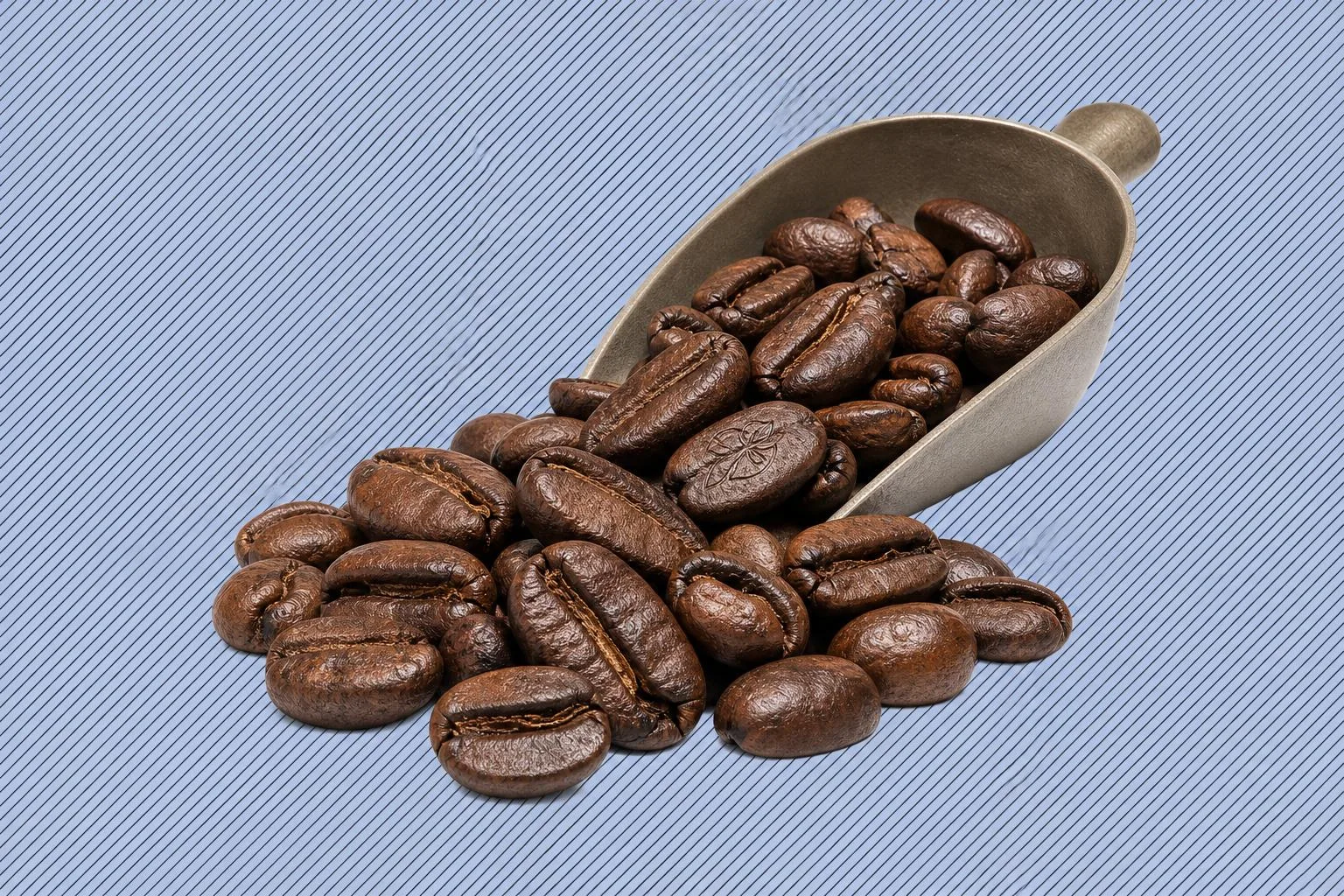
The headline feature is size. Pacamara seeds are enormous, among the largest of any commercial arabica, which has earned it the nickname "elephant bean". That size shapes both its reputation and its cup, and it is why roasters respect it and sometimes dread it.
If you have seen Pacamara on a bag and wondered why it costs more and tastes louder than the coffee beside it, the answer is in its parents, its instability and its difficult harvest. Let us take those in turn.
Where Pacamara came from
Pacamara was created by the Salvadoran Institute for Coffee Research, known as ISIC, starting in 1958. The goal was to combine two good things in one plant.
From Pacas, a natural dwarf mutation of Bourbon first found on the San Rafael farm in El Salvador's Santa Ana region, breeders wanted a compact plant, higher yield and some hardiness. A short plant is easier to pick and packs more trees into a hectare.
From Maragogype, a large-beaned mutation of Typica first identified in Brazil, they wanted the giant seed and the cup quality. The idea was elegant: shrink the tree, keep the huge bean.
It was slow work. Roughly thirty years of selection passed before Pacamara was released to producers in the late 1980s. That is a long apprenticeship for a variety, and it hints at how tricky the plant has been to stabilise.
That long gestation is part of why Pacamara carries a certain pride in El Salvador. It is one of the few widely grown varieties that was deliberately designed by a national research body rather than stumbled upon in a field or a nursery.
Why it is called the elephant bean
Most specialty coffee screens out somewhere between 15 and 18, the standard sizing measure where one screen unit is a 64th of an inch. Pacamara routinely runs above screen 17 and often reaches 19 to 25, which is genuinely unusual.
The size is inherited from the Maragogype side. Hold a few Pacamara beans next to an ordinary washed coffee and the difference is obvious to the naked eye.
There are two main fruit colours too: Red Pacamara and Yellow Pacamara, named for the colour of the ripe cherry. The colour does not change the basic character much, but it is a useful label on a bag.
Size is not just a party trick, either. The bigger seed holds more of the sugars and acids that drive flavour, and when everything aligns it is part of why the cup feels so full and layered.
It is not a stable variety
Here is the catch that keeps producers on their toes. Pacamara is genetically unstable, and roughly 10 to 12 percent of plants revert to Pacas rather than breeding true.
That means farmers have to select carefully in the field, replacing off-type plants to keep a lot consistent. A Pacamara farm is a managed thing, not a plant-and-forget crop, and the labour of rogueing out the wrong plants adds to the cost in the cup.
The plant is also demanding to grow. It is susceptible to coffee leaf rust, nematodes and cherry disease, and it gives only moderate yields. In exchange for the showy cup, the farmer takes on more risk and less volume.
All of this stacks up on the price tag. When you buy a Pacamara you are paying for careful field selection, modest harvests and a plant that fights back, not just a novelty bean size.
What Pacamara tastes like
When it is grown well and roasted well, Pacamara is loud in the best way. Expect a big body, a creamy texture and layered complexity, with notes that can span stone fruit, citrus, florals and chocolate.
It is a polarising cup for a reason. At its best it is complex and herbaceous; grown low or picked underripe, that same intensity can read green and vegetal instead. The variety has no middle gear.
Altitude matters a great deal. Pacamara cups best high up, and in general the higher it is grown, the better it scores. This is a coffee that rewards hard growing conditions.
Its track record backs this up. Pacamara has placed repeatedly at Cup of Excellence, the auction-grade quality competition, and a Finca Los Planes lot scored 93.52 to take second in El Salvador's 2006 contest. Those are serious numbers.
How processing swings the cup
Processing, the way the fruit is removed and dried, pushes Pacamara in clearly different directions. The same variety can read very differently depending on the choice at the mill.
A washed Pacamara, where all the fruit is stripped before drying, tends toward floral and citrus clarity. It is the cleanest window onto what the variety and the altitude are doing.
Take it natural or honey, where some or all of the fruit stays on during drying, and it turns wine-like and fruity, with the body leaning even heavier. Neither is better; they are two honest expressions of the same bean.
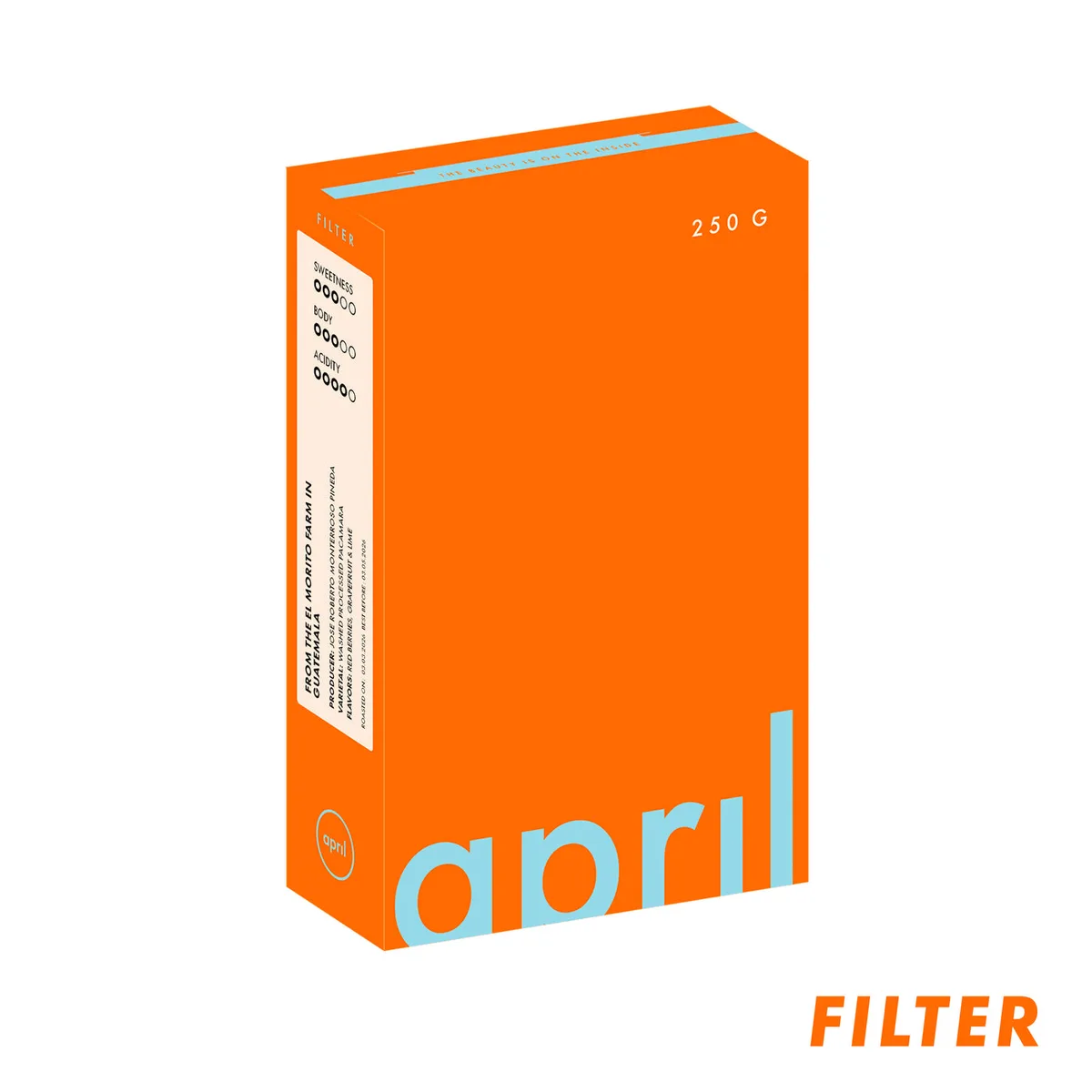
If you want the washed, bright end of the spectrum, this Guatemalan lot is a clean and affordable way in. It carries nutty and citrus notes and shows off the variety without the auction-lot price tag.
Why Pacamara is hard to roast
The elephant bean's size is a genuine problem on the roaster, not just a talking point. A large bean risks an under-roasted centre and an over-roasted exterior if the roast moves too quickly, because heat has further to travel into the seed.
Sight becomes unreliable, too. Pacamaras tend to hit first and second crack, the two audible stages that mark roast progress, a few degrees Celsius cooler than other varieties, and they look lighter and more uneven than they really are.
There is a sneaky density trap as well. Despite the huge screens, measured density can be only moderate, around 1.15 grams per millilitre, so treating the bean as automatically low density will mislead you.
And the same weight of green Pacamara takes up roughly 10 percent more drum volume than smaller coffees, which quietly changes how a batch behaves. A roaster used to loading by weight can end up with a drum that is fuller than expected.
None of this is insurmountable. It just means a roaster has to slow down, trust the thermometer and the clock over the eye, and give the heat time to reach the middle. Done badly, you taste the mismatch as a hollow, grassy centre wrapped in roasty bitterness.
Where to find it and what to buy
Pacamara started in El Salvador but has spread across Central America, and you will now see it from Guatemala and Nicaragua among others. It remains a specialty curiosity rather than a commodity, so bags are seasonal and move quickly.
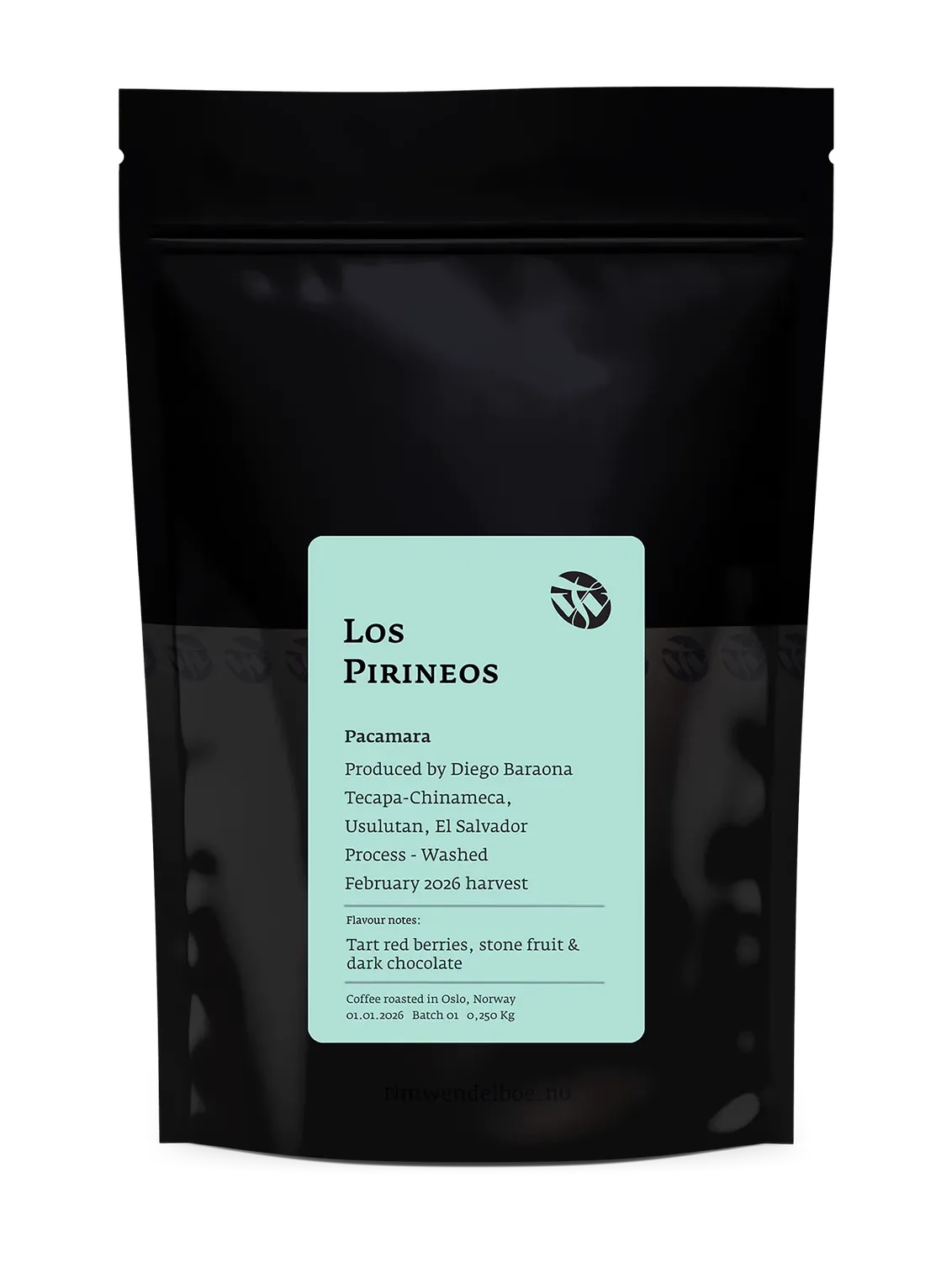
For the variety on its home turf, this El Salvador lot is from Los Pirineos, a well-known Salvadoran estate, and leans into berry, stone fruit and chocolate: a fuller, fruit-forward read on the bean.
If you would rather taste it from a neighbouring origin, this washed Nicaraguan Pacamara shows how the variety travels while keeping its signature size and body.
Brew it the way you would any high-altitude, aromatic coffee. A pour over flatters the washed, floral-citrus versions, while the heavier naturals also take well to a French press. If you want to nail the ratio, the brew calculator will set your dose and water for you.
Start with a washed example to meet the variety cleanly, then try a natural to feel how far processing can push it. From there, the varieties and processes pages are the quickest way deeper into the graph.