Honey process coffee is a middle path between the two classic methods: the cherry skin is pulped off like a washed coffee, but some or all of the sticky fruit layer underneath is left clinging to the bean while it dries. The result is a cup that sits between clean and fruity: sweet, syrupy and rounded, with softer acidity than a washed lot and less wildness than a natural.
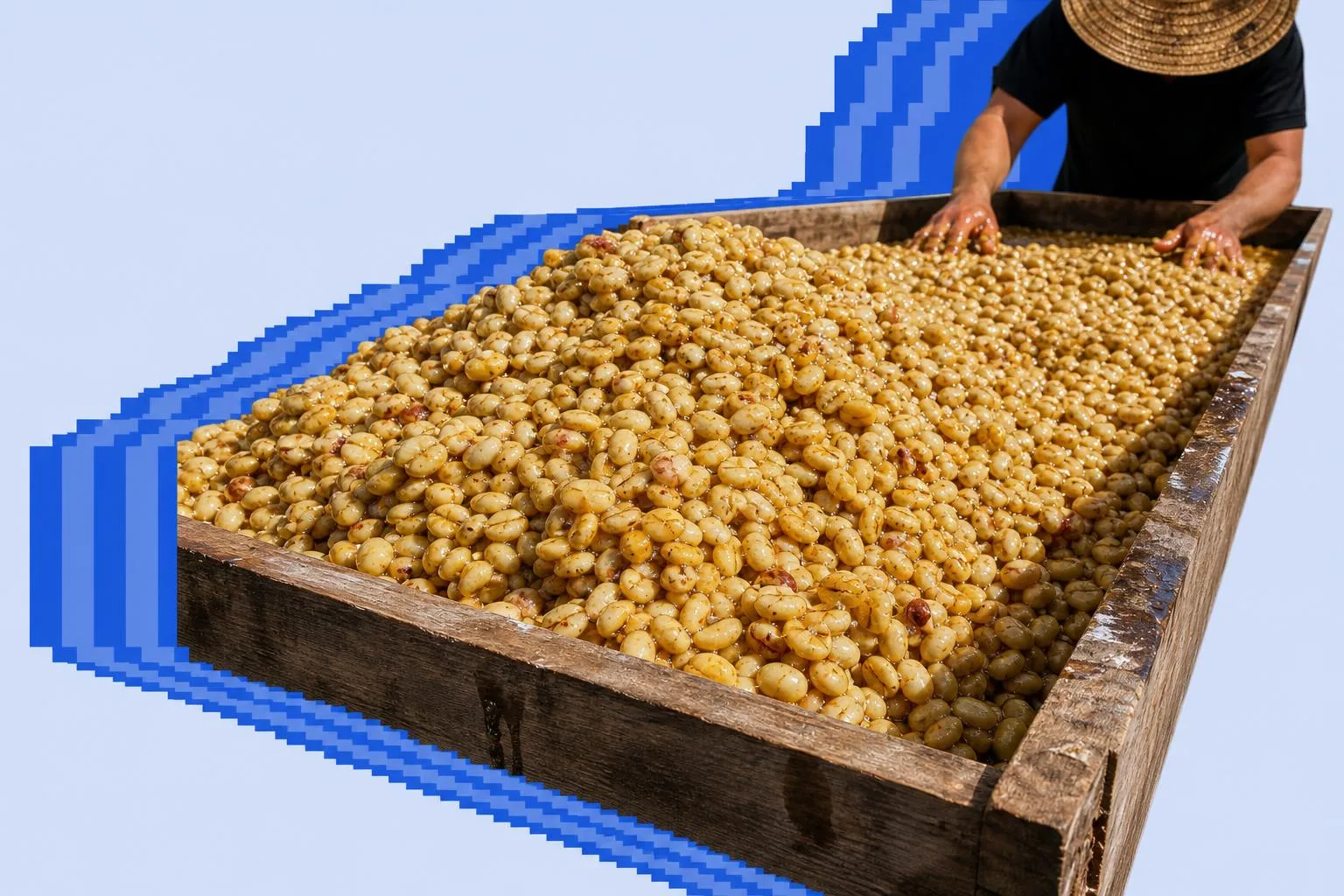
And no, there is no honey in it. The name comes from the look of the drying beans, glossy and tacky as if dipped in honey, not from any added ingredient. If you have wondered whether honey coffee tastes of honey, the honest answer is that it tastes of the fruit's own sugars, concentrated.
What actually happens to the bean
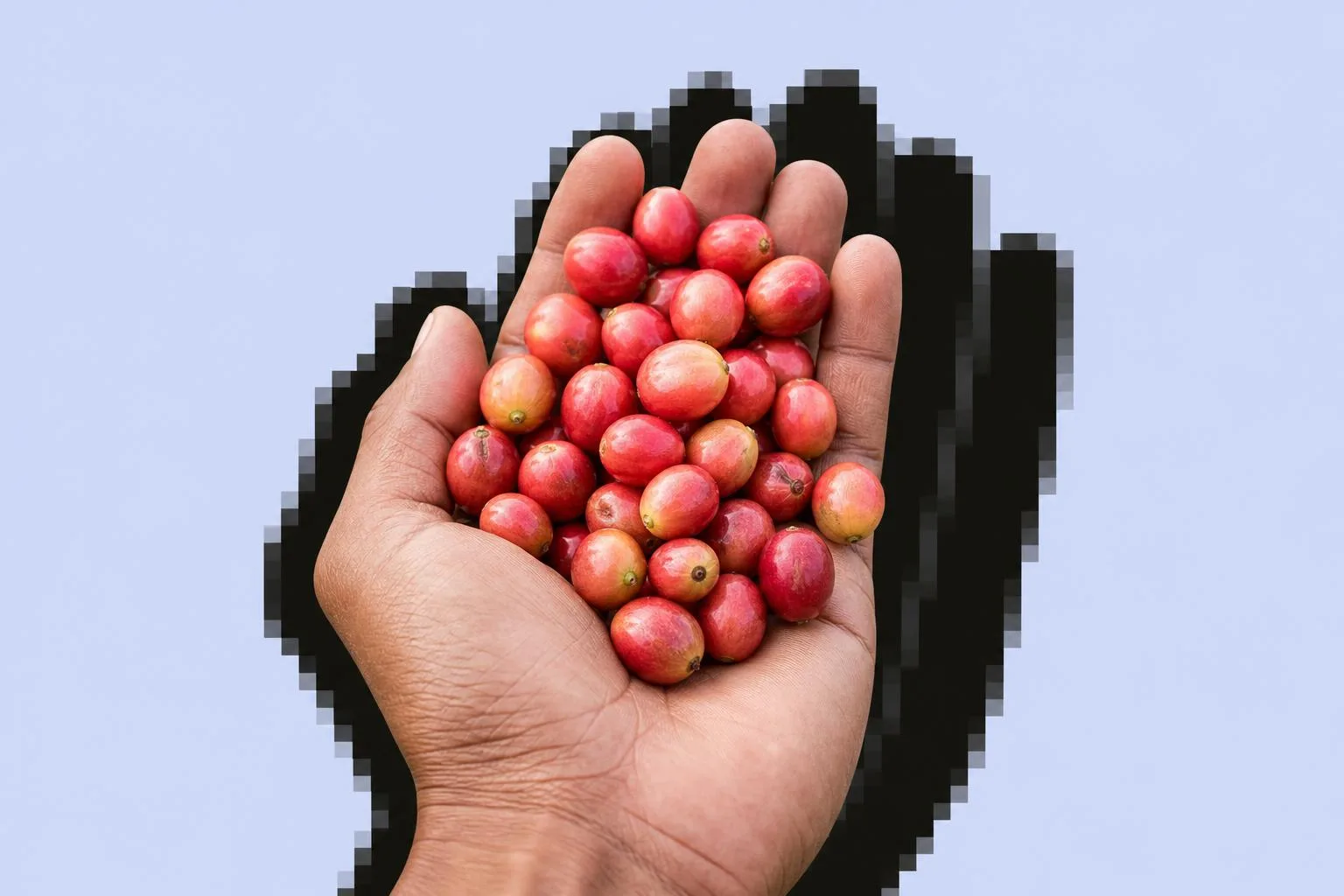
Every coffee cherry has the same layers: skin, a slippery sugar-rich layer called mucilage, a papery parchment, then the seed we roast. Washed coffees strip both skin and mucilage before drying. Naturals dry the whole cherry intact, skin and all.
Honey process splits the difference. A pulping machine removes the skin, but the mucilage stays on, and the beans go to dry with that sticky coating still attached.
Over a drying period of roughly two to four weeks, the sugars and fermentation byproducts in that mucilage slowly work their way into the bean. That slow absorption is where the syrupy sweetness and gentle body come from.
It is a longer, more watchful process than washing, and that patience is the whole point. Because the fruit sugars are physically touching the seed as it dries, they leave a mark on the cup that a fully washed coffee simply cannot. Get the drying wrong and the same sugars invite mould or sour off-flavours, which is why the beds need constant attention.
Why it was invented
Honey processing became closely tied to Costa Rica in the late 2000s, and the reason is practical rather than romantic. After a major earthquake in 2008, water-use restrictions pushed producers to find a method that used far less water than full washing.
Leaving the mucilage on means you skip the water-hungry fermentation and washing tanks. The pioneering Chacon family at the Las Lajas mill engineered equipment to control how much mucilage stayed on the drying beans, turning a constraint into a signature style.
Brazil got there first, in a sense. Its "pulped natural" method, developed decades earlier, is essentially the same idea: skin off, mucilage on.
The difference is mostly language and precision. Costa Rica built a colour-graded vocabulary around it, while Brazil typically does not specify how much mucilage is kept. Today honey is treated as one of the "big three" processes alongside washed and natural, and it is no longer a curiosity.
White, yellow, red and black: what the colours mean
Honey lots are often sorted into White, Yellow, Red and Black honey. These are not strict legal categories. Think of them as points along one spectrum: the more mucilage left on and the slower the drying, the sweeter, fuller and darker the cup, and the higher the risk of things going wrong.
Here is the directional map, lightest to boldest:
- White honey: least mucilage retained. Bright acidity, gentle sweetness, minimal fermentation character. The cup lands close to a clean washed profile.
- Yellow honey: a little more fruit left on, dried quickly in direct sun over roughly 8 to 10 days. Clean and mildly sweet, with light stone-fruit notes.
- Red honey: more mucilage, dried slower in partial shade over roughly 12 to 14 days. Richer, jammier, with a syrupy texture.
- Black honey: the most fruit left on, dried slowest under shade in higher humidity. Deep jam-like sweetness, medium acidity and big body.
The drying environment matters as much as the pulping. More humidity and slower development push a lot toward black; drier, faster conditions pull it toward yellow or white.
The colours are best read as a dial for intensity, not as fixed recipes. As you move from white toward black, expect the caramel and stone-fruit sweetness to deepen and the acidity to soften.
Why the percentages disagree
You will see confident numbers online: red honey is "50% mucilage retained," yellow is "25%," and so on. Treat those as rough signposts, not gospel, because mills genuinely do not agree.
One guide will call red "25% removed" while another calls it "50% retained," which are not even describing the same thing. The colour names travel faster than any shared standard behind them.
Some producers reject the mucilage-percentage idea entirely. Las Lajas, one of the method's originators, leaves 100% of the mucilage on every lot and controls the colour purely through how it dries the beans. Same coating, different drying, different colour on the label.
So the useful takeaway is the direction, not the digits: darker grade means more fruit contact, more sweetness and body, and more that can go wrong. Two red honeys from different farms can taste quite different, so let the roaster's tasting notes guide you rather than the colour alone.
Why honey coffees cost more
Honey processing is labour-intensive in a way washing is not. Those two to three weeks of drying need constant monitoring, with the beds raked and turned so the sticky mucilage dries evenly instead of clumping or moulding.
The risk of defects is higher, batch sizes are usually smaller, and a lot can be lost to a bad spell of weather. All of that shows up in the price, which is part of why honey lots often sit a notch above a farm's washed offering.
That premium buys you a specific thing: sweetness and body without the funk of a heavy natural. If you find full naturals too wild but washed coffees too lean, honey is often the process that fits.
How to brew a honey coffee
Honey coffees reward a slightly gentler hand than a punchy washed Kenyan. Their sweetness is the star, and it is easy to bury it under harsh extraction.
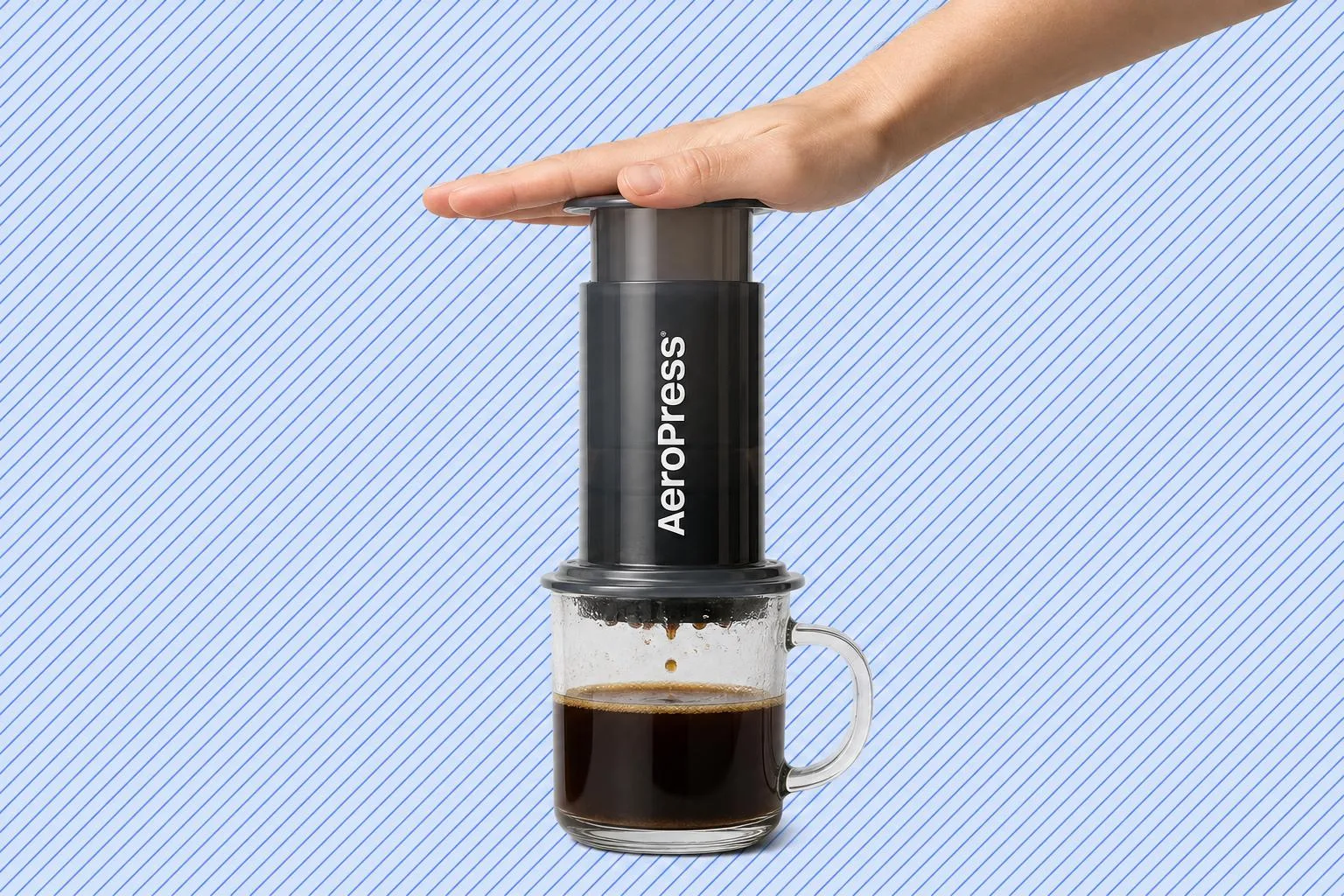
For filter, a pour over flatters them. Use water a touch off the boil, around 92 to 94 °C, which preserves the syrupy sweetness without dragging out too much body and bitterness.
Start from a standard 1 to 16.5 ratio and dial from there; the brew calculator will do the sums for your dose. If the cup tastes flat or heavy, nudge the water hotter or grind a touch finer; if it turns harsh, do the opposite.
For espresso, go carefully. Very fine grinds with aggressive pressure can push honey coffees into bitter, astringent territory, so back the grind off a step and taste for the sweet spot rather than chasing a fast, thin shot.
Where to start
If you want to taste the sweet, balanced heart of the style, a straightforward Colombian honey is an easy, affordable entry point. This one leans floral and citrus with a stone-fruit sweetness, a clean read on what mucilage-on drying adds.
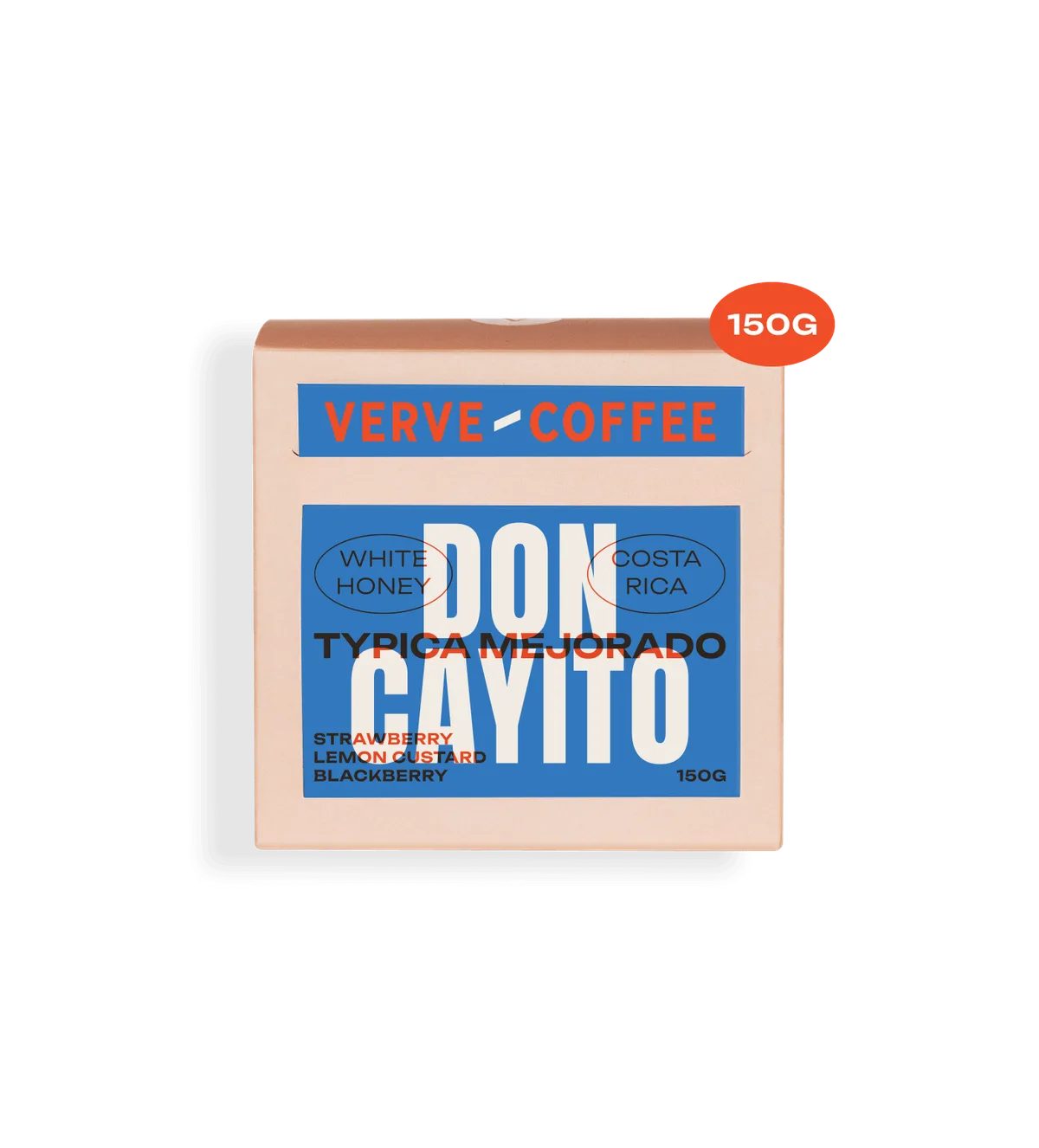
For the pale end of the spectrum, a white honey shows how close the process can sit to a washed cup while keeping a little extra roundness. Verve's Costa Rican white honey is a good demonstration of that bright-but-sweet balance.
And if you want the bold, jammy far end, a black honey is the big sibling: maximum fruit contact, deep sweetness, more body. This Colombian black honey shows that heavier, more layered side.
Start with a mid-priced yellow or red honey if you just want to understand the category, then taste a white and a black side by side to feel the spectrum for yourself. From here, browse the full honey process range or compare it against washed and natural lots in the catalogue to hear the difference in the cup. Availability and prices shift as harvests land, so treat any single bag as a snapshot.