Coffee this week: arabica tumbles 6.5% as Brazil's Lula win sinks the real
Arabica closed sharply lower on the week after Lula's runoff win and a 10.5% slide in the Brazilian real, while robusta hit a multi-year low and Starbucks closed out fiscal 2026.
Coffee's headline price fell hard this week. December arabica slid roughly 6.5% from the previous Friday, shaken by a Brazilian election result that sent the country's currency tumbling and revived hopes of better supply.
The trigger was politics turning into economics. Lula won Brazil's runoff on 25 October, and the Brazilian real promptly dropped 10.5% against the US dollar, which makes it more attractive for Brazilian farmers to sell coffee priced in dollars.
For anyone buying beans, this is the kind of move that eases pressure upstream without rewriting your receipt overnight. Green coffee is cheaper than it was a week ago, but roasters price months ahead, so the shelf tends to catch up slowly, if at all.
The market
| Market | Price | This week |
|---|---|---|
| Arabica (ICE Dec) | 287.20 ¢/lb | -6.59% |
| ICO Composite | 251.63 ¢/lb | -5.50% |
| Colombian Milds (ICO) | 348.09 ¢/lb | -5.01% |
| Other Milds (ICO) | 325.22 ¢/lb | -6.01% |
| Brazilian Naturals (ICO) | 283.94 ¢/lb | -6.72% |
| Robustas (ICO) | 155.49 ¢/lb | -3.16% |
The ICO rows compare Thursday 29 October with Thursday 22 October; the ICO posts each day's prices on the next working day, and the Market page charts every series day by day. Source: International Coffee Organization (ICO) indicator prices.
New York's December contract had settled at 307.45 cents per pound on 23 October. By Friday it was near 287 cents, and even a modest late bounce of 0.61% on the day could not undo a week that went one direction.
The why was consistent across the week. A weaker real encourages Brazilian selling, and traders also leaned on expectations of improved supply, pulling arabica below $3 per pound midweek for the first time since mid-October.
Midweek was the lowest point. December arabica closed down 0.45% on Thursday at 285.45 cents, a one-month low, before Friday's small rebound stopped the bleeding without reversing it.
You can see the pressure concentrated in Brazilian coffee specifically. The ICO's Brazilian Naturals indicator fell 6.72% on the week, the steepest drop of any group, while the broader Composite eased 5.50%.
Robusta had its own story. Prices touched their lowest level since March 2024 before steadying near $3,183 per tonne, pressured by swelling exchange inventories and the start of the harvest in Vietnam, the world's leading robusta grower.
Stocks are the quiet backdrop. Certified arabica inventories on ICE remain historically tight but ticked up by 3,033 bags to 225,068, a reminder that the squeeze that drove prices high earlier this year is easing at the margins.
What it means at the counter is patience. A week like this loosens the cost of the green coffee behind your morning cup, but the drinks and bags you buy reflect deals struck weeks or months ago, so do not expect a sudden discount.
Brazil keeps the beans flowing
The other half of the bearish case is simply how much coffee Brazil is shipping. Exports reached about 3.30 million bags by 22 October, up 43.2% on the same period a year earlier, according to Cecafé.
That is a lot of supply hitting the market just as the currency makes selling attractive. Strong flow plus a cheap real is exactly the combination that drags futures lower.
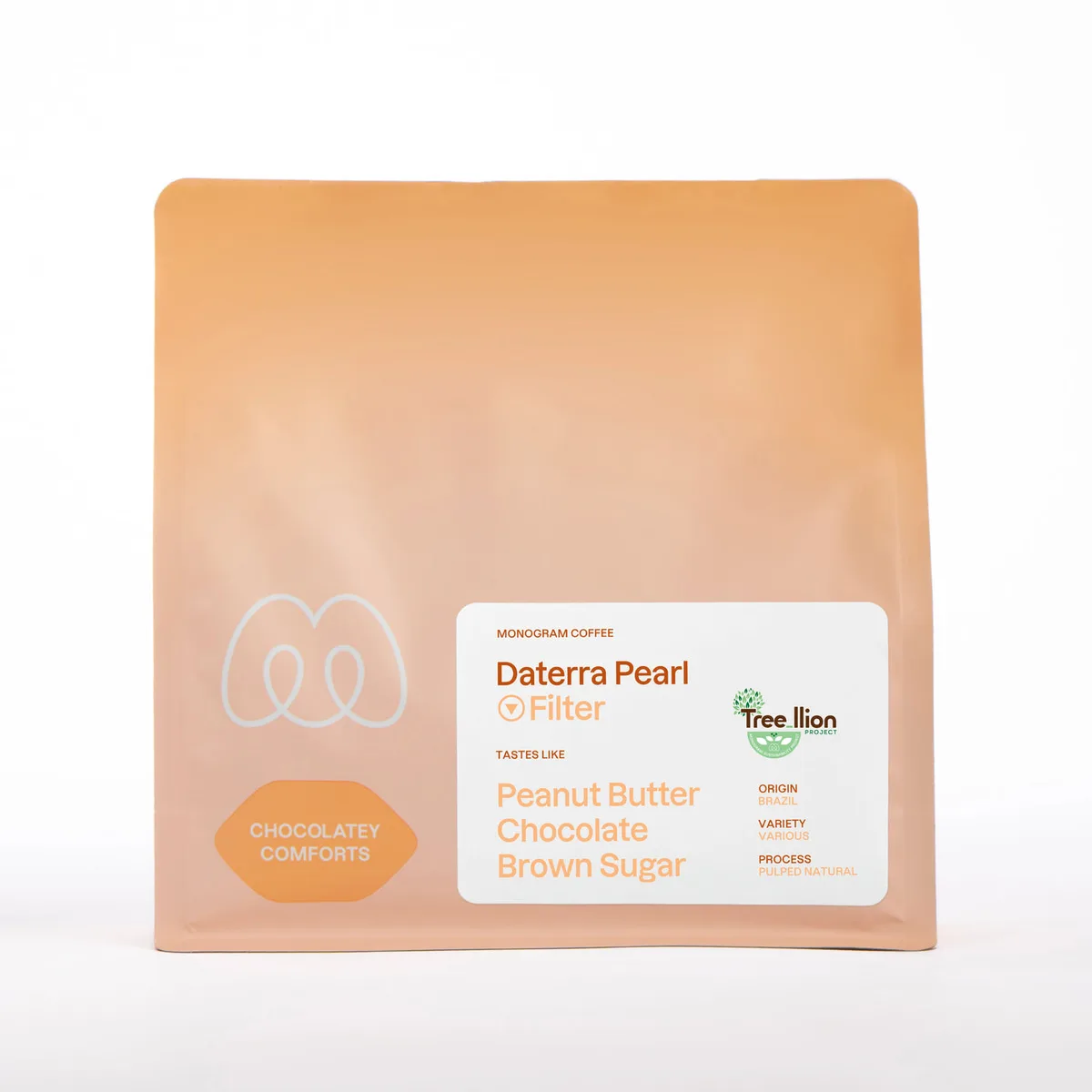
For drinkers, Brazil is where this translates most directly into the cup. Its natural coffees are the nutty, chocolatey backbone of most espresso blends, and more of them moving means that end of the shelf stays well supplied.
The mechanism is worth spelling out. When a producing country's money loses value, every dollar a buyer pays converts into more local currency, so farmers and exporters have a reason to sell now rather than hold back the crop.
That selling meets a market already braced for a big harvest, and the two reinforce each other. It is the opposite of the scarcity story that pushed prices to seven-month highs earlier in the year.
If the week's numbers nudge you toward a dependable, well-priced everyday bag, a clean Brazilian natural is a sensible place to look.
Starbucks closes out its fiscal year
Starbucks reported fourth-quarter and full-year fiscal 2026 results on Thursday. Revenue in the quarter was $9.14 billion, slightly short of the $9.23 billion analysts expected, though the company issued healthy guidance for the new year.
The fuller-year picture was steadier. Full-year comparable sales rose 6.6%, a sign the turnaround plan is gaining traction, even as shares slipped about 2% in extended trading after the print.
The more interesting note came on Friday. Chief executive Brian Niccol said building a multi-brand company is a possibility, weeks after the chain batted down speculation that it was eyeing a takeover of Chipotle.
The revenue miss was small and the guidance reassured investors, which is why the drop was modest. Markets tend to forgive a soft top line when the outlook holds and same-store sales are climbing.
For customers, none of this changes your flat white tomorrow. But it hints at a bigger, more acquisitive Starbucks, which matters for the specialty world it both competes with and feeds from.
Nestlé holds the line on Nescafé
Nestlé Philippines said on 27 October that it would not raise Nescafé prices yet, despite El Niño worries about local coffee supply. It is a notable call in a year when instant and supermarket brands have mostly passed costs through.
The company's plan if domestic output falls is to source beans from neighbours, naming Vietnam and Indonesia. That is the quiet machinery of global coffee at work: when one origin wobbles, the big buyers reroute.
The swap is easy for a company at Nestlé's scale because much of the instant category leans on robusta, which Vietnam and Indonesia grow in volume. A regional shortfall in one country is a sourcing adjustment, not a crisis.
It is also well timed. With robusta touching a multi-year low this week, the beans Nestlé would reach for are cheaper than they have been in some time.
For shoppers it is a small reprieve, and a useful signal. With futures falling this week, the pressure to hike at the cheaper end of the aisle is loosening rather than tightening.
De'Longhi doubles down on espresso hardware
The week's biggest machinery move came from De'Longhi. The group paid 662.5 million euros, about $744 million, to lift its stake in the professional coffee business that houses La Marzocco and Eversys from roughly 61% to 88%.
That is a serious bet on high-end espresso gear, the kind of equipment behind the bar at the cafes many specialty drinkers frequent. Consolidation at the top of the hardware market tends to shape what eventually trickles down to prosumer machines.
La Marzocco builds the cafe machines, Eversys the automatic ones chains rely on, so the deal gives De'Longhi a foot in both the craft and the volume ends of professional brewing. Owning almost all of that business lets it steer research and pricing across the range.
The practical read for home enthusiasts is slow but real. Features proven on commercial machines often migrate into domestic ones over a few years, so who controls the top of the market eventually touches your kitchen.
There was a flashier footnote, too. On Friday La Marzocco and Porsche launched limited-edition 911 Carrera RS espresso machines, a reminder that espresso hardware is now firmly a luxury-lifestyle category.
Elsewhere in coffee
The sport had a landmark. On 25 October in Panama City, Pan Wei of Parking Coffee became the 2026 World Barista Champion, a historic first for China.
That result rhymes with a broader shift in Chinese demand. A trade round-up this week noted that coffee now accounts for up to 20% of sales at some of China's leading tea chains.
Taken together, the two stories sketch a country that is becoming a coffee culture in its own right, not just a market to sell into. A home-grown world champion gives that momentum a face.
At the producer end, the Food and Agriculture Organization is accepting applications through 9 November for grants supporting nature-based enterprises in Kenya's Mt Elgon region. Registered producer groups and cooperatives in Bungoma and Trans Nzoia counties are eligible.
It is the sort of unglamorous funding that rarely makes headlines but quietly underwrites quality and resilience at origin.
What to watch next week
Two threads will decide direction. The first is the Brazilian real: if it keeps sliding, selling pressure on arabica continues; if it stabilises, this week's slide may find a floor.
The second is Vietnam's robusta harvest. A fast, heavy crop feeds the inventory build that just dragged robusta to a multi-year low.
Keep half an eye on ICE stocks, too. They remain historically tight, and if that small uptick reverses, the supply cushion the market is pricing in could prove thinner than it looks.
If you want to track it yourself rather than wait for the weekly, the Market page charts arabica, robusta and the ICO series day by day. For where to spend while prices ease, the coffees list and the decision helper are the quickest routes in.