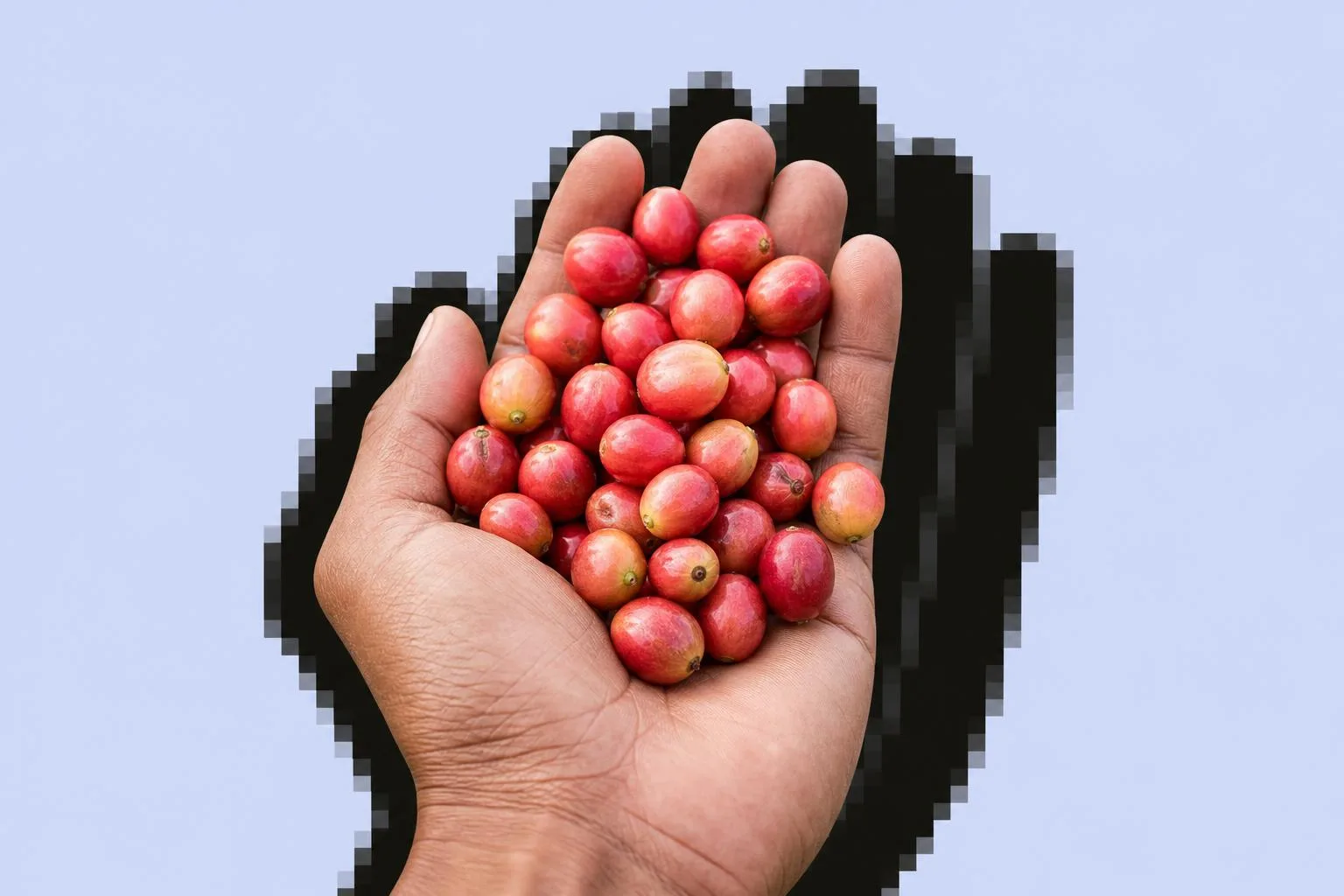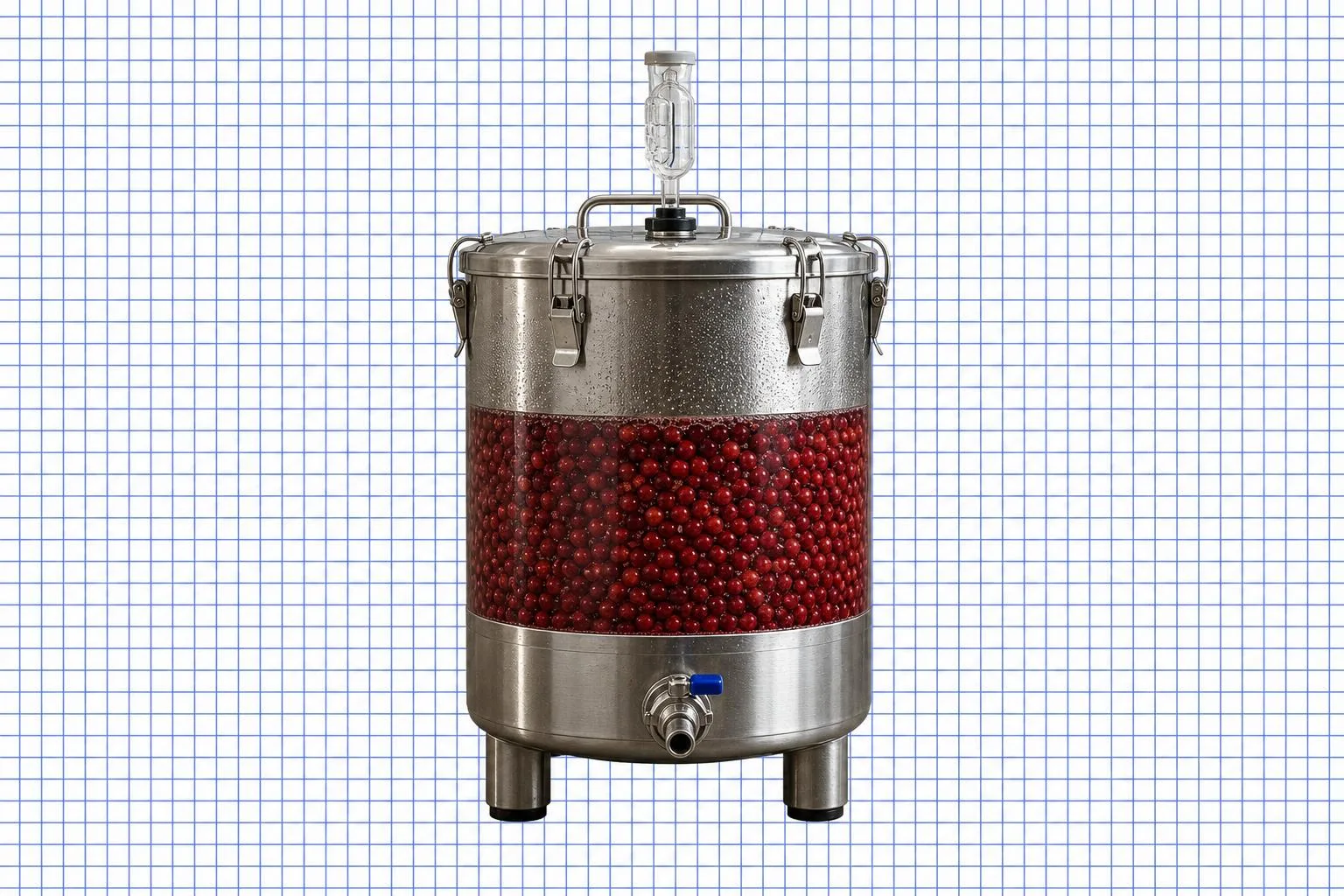
Anaerobic processing is fermentation carried out without oxygen. Whole or pulped coffee cherries go into a sealed tank or bag, and the gases the fermentation produces push the remaining oxygen out through a one-way valve.
That single change, cutting off the air, reshapes which microbes get to work on the coffee. The result is the loud, fruity, sometimes divisive cup you now see on bags labelled "anaerobic natural" or "carbonic maceration". Here is how it actually works, and where the marketing gets ahead of the coffee.
It is a modifier, not a category
The first thing to understand is that anaerobic is not a process on the same level as washed or natural. It is a fermentation step layered on top of one of them.
So you get anaerobic washed lots, where the fruit is stripped after the sealed ferment, and anaerobic natural lots, where the whole cherry dries intact. There are anaerobic honey coffees too, with the sticky mucilage left on to dry.
Think of it as a dial the producer adds before the usual drying route. That is why two anaerobic coffees can taste worlds apart: the base process still matters enormously.
It helps to picture the full journey. The cherries are picked and sorted, then loaded into the sealed vessel for the anaerobic stage, and only afterwards do they follow the washed, honey or natural path to the drying beds. The ferment is the twist, not the whole story.
Why removing the oxygen changes the flavour
Ordinary fermentation happens in open air, where oxygen-loving bacteria dominate. Seal the tank and you starve those aerobic microbes, handing the stage to lactic acid bacteria and yeasts instead.
Those microbes produce different acids and aromatic compounds, notably lactic acid, which brings a smooth, almost yoghurt-like softness. They also generate a richer set of fruity esters, the molecules behind aromas of berry, tropical fruit and stone fruit.
Control is the other half of the story. Most anaerobic ferments run at roughly 15 to 25 °C and last anywhere from 48 hours to several weeks. Cooler and slower gives a cleaner cup; warmer and faster pushes intensity.
Because the tank is sealed, producers can let fermentation run long without the runaway spoilage risk of an open-air natural. Many monitor pH and stop the ferment at a target, often keeping it above about 3.8 so acidity stays pleasant rather than sharp.
The reproducibility that made it popular
There is a practical reason roasters and farmers love this method beyond flavour fireworks. A sealed tank is a controlled environment.
Once a producer dials in a temperature, a time and a pH target, they can repeat it. Weather no longer wrecks the next batch the way a sudden rain can ruin cherries drying on open patios. That repeatability is a big part of why anaerobic lots spread so fast.
That control also lets a producer chase a specific flavour on purpose rather than by luck. A washing station in Colombia or Ethiopia can log every batch and slowly tune it, treating fermentation like a recipe instead of a gamble.
The technique and the name both come from winemaking, historically tied to the fruity, light-bodied Gamay reds of Beaujolais. Coffee borrowed the idea, and it hit the mainstream in 2015 when an Australian barista won the World Barista Championship using a carbonic-processed Colombian coffee.
Anaerobic versus carbonic maceration
These two terms get used interchangeably, but carbonic maceration is a stricter sub-type. Both are oxygen-free; the difference is how the oxygen is removed and what goes in the tank.
In a plain anaerobic ferment, the coffee's own fermentation gases displace the oxygen through the valve. In carbonic maceration, whole intact cherries go in unpulped and carbon dioxide is actively pumped in. Because CO2 is heavier than air, it physically forces the oxygen out.
The higher tank pressure also matters. It drives sugars and aromatic compounds into the seed itself, which is part of why these lots taste so concentrated. Carbonic lots often show smooth lactic acidity plus a cinnamon-and-spice edge on top of the fruit.
In practice, most bags labelled "carbonic maceration" have gone through this deliberate, CO2-flushed version, while "anaerobic" is the looser umbrella term. If a label lists only "anaerobic", you cannot be sure which method was used, so let the cup and the roaster's notes guide you.
What anaerobic coffee actually tastes like
The classic signature is loud. Expect a heavier body than a comparable washed coffee, plus winey and raisin notes, a fermented-cacao depth, and vivid fruit and floral aromatics that can leap out of the cup.
Controlled fermentation genuinely boosts fruity ester production. Research on coffees from the same farm reports roughly three to four times greater ester diversity in fermented lots compared with a traditional washed processing of the same beans.
That is the source of the "funky" reputation. Done heavy-handed, an anaerobic coffee can taste boozy, overripe or borderline like a fruit-and-alcohol candy.
But the stereotype that anaerobic always means weird is wrong. Many of these coffees are clean and precise, with the technique used to amplify a variety's natural sweetness and clarity rather than to bury it in ferment. A well-made one can simply taste like a brighter, sweeter, more expressive version of itself.
A good in-stock example of the clean, fruit-forward end is DAK's Bonita, a light-roast Colombian anaerobic that leans into caramel, tropical and floral notes without tipping into chaos.
For the bolder, more overtly fermented side of the spectrum, Glitch's Tolima El Vergel natural anaerobic shows the deeper berry-and-chocolate register that pushes people either firmly for or against the style.
Where the hype outruns reality
The risks are real and worth knowing. An oxygen-free environment does not only favour the microbes you want; it can also foster undesirable ones, contamination and spoilage. Anaerobic processing demands strict hygiene and constant monitoring, which is why cheap versions can taste muddy or medicinal.
There is also a flavour trade-off many drinkers do not clock at first. A heavy ferment can flatten the differences between origins and varieties, so a Colombian and an Ethiopian anaerobic can end up tasting more like each other than like their homes. If you love a coffee for its terroir, that is a genuine loss.
Then there is the price ceiling. At the extreme end, some Colombian producers pair anaerobic stages with thermal shock, rapidly cooling the fermenting mass from around 35 °C toward near-freezing to arrest the microbes and lock in specific compounds. Lots processed this way have sold for over 300 US dollars a kilo.
Much of that cost is craft and labour, but some of it is fashion. Anaerobic is a legitimate tool, not a guarantee of quality, and a clean washed coffee from a great farm will often beat a mediocre anaerobic every time.
It is worth separating anaerobic from its noisier cousin, co-ferment, where fruit, yeast or spices are added to the tank. Co-ferments push flavour even further from the bean, and the two often get lumped together, but adding oxygen-free fermentation is not the same as adding strawberries.
What to try first
Start with a lighter-touch anaerobic from a roaster you already trust, and taste it beside a washed coffee from a similar origin. That side-by-side is the fastest way to hear what the process is doing, rather than guessing.
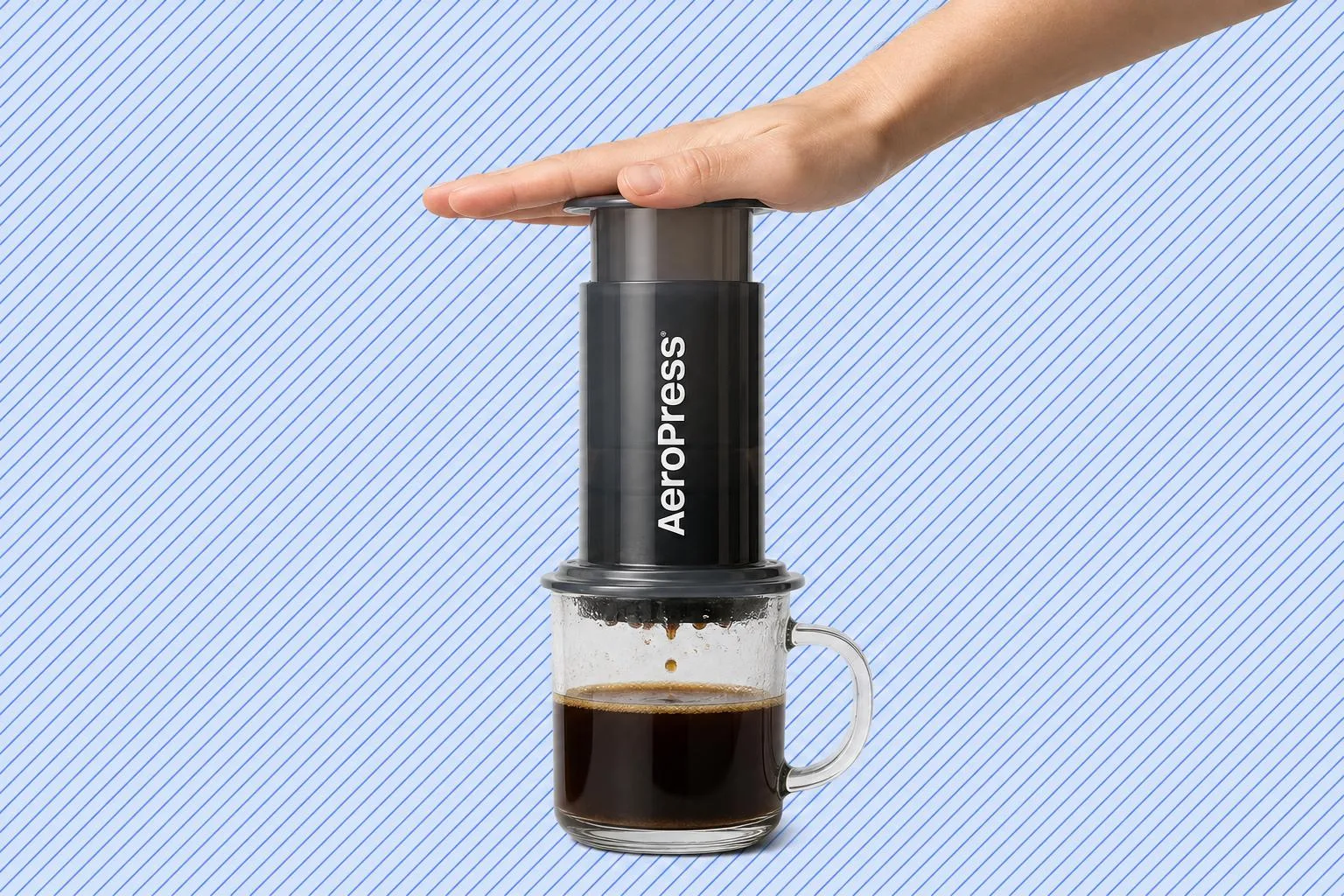
Brew it clean. A paper-filtered pour over gives you the clarity to pick apart the fruit and acidity, where a heavier immersion method can smear the intensity into something jammy. If you want to nail your ratio, the brew calculator will set your dose and water for you.
Grind a touch coarser than usual if the cup feels too much, since these coffees carry a lot of flavour per gram. Small dilutions and slightly cooler water can also tame a ferment that reads as overwhelming.
If the funk grabs you, chase the intense naturals; if it does not, look for anaerobic washed lots, which tend to stay tidier. Either way, browse the full coffee list and read the labels. The method is a spectrum, and the fun is finding your spot on it.