Kenya has dispatched its first consignment of premium green coffee beans directly to Italy, aiming to reach higher-value markets and lift returns for its coffee farmers. It is a small shipment with a large ambition behind it.
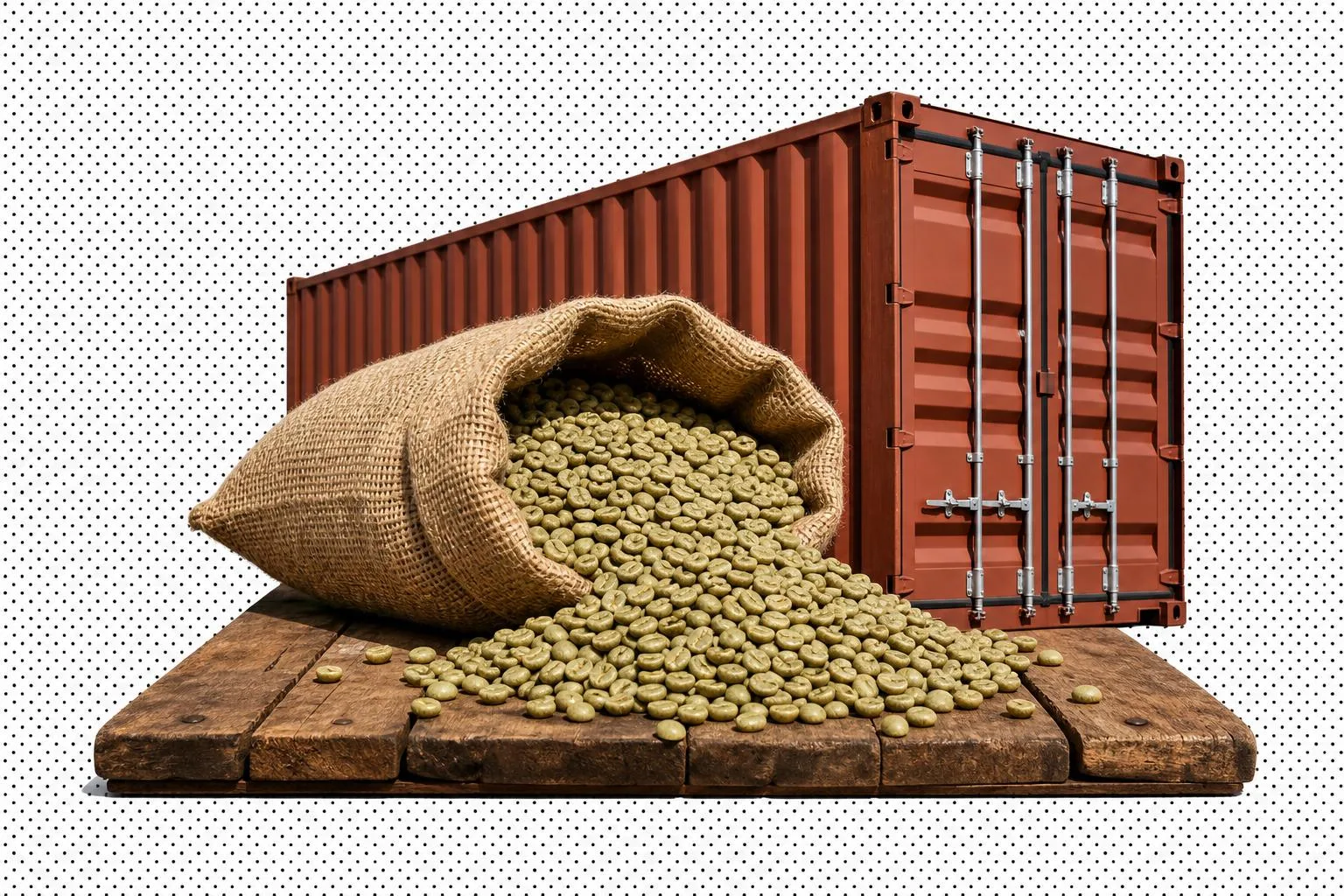
The first of 20 containers left for Italy's Port of Trieste on 15 July, sent by exporter Sumseron Coffee and processed at the facilities of Mitchell Cotts Kenya. Government officials flagged it off at a formal ceremony, framing it as a new chapter for Kenyan coffee in Europe.
What actually shipped, and why it matters
The cargo is green coffee: unroasted beans, the raw form in which almost all coffee crosses borders. Nothing here is roasted or branded for a supermarket shelf yet. That detail matters, because the story is about where the beans go and who gets paid, not about a finished product.
Italy is Europe's third-largest coffee-consuming market, and Kenyan officials value it at roughly Sh500 billion. Reaching it directly, rather than through the usual chain of intermediaries, is the whole point of the exercise.
The Kenya National Chamber of Commerce and Industry says premium Kenyan coffee in this first shipment is fetching upwards of USD 9.50 per kilogram. That is a strong number for green coffee, though it comes from a promotional flag-off statement rather than audited trade data, so treat it as a headline figure rather than a settled market price.
The chamber also described the deal as the fruit of collaboration between the Kenyan and Italian governments, with financial institutions and development partners in the room. In other words, it is as much a diplomatic and policy project as a commercial one, which tells you how much weight Kenya is putting on the symbolism.
The blend trap Kenya is trying to escape
For decades Kenyan coffee has been rated among the finest in the world, yet much of it has ended up blended with beans from other countries before it reaches a cup. When that happens, the distinctive character disappears into an anonymous house blend, and the farmer never captures the premium that the Kenya name could command.
This is the quiet economics behind a lot of great coffee origins. The reputation is real, but the money often lands with roasters and traders downstream, not with the growers who created the quality in the first place.
Direct trade is the counter-move. By sending containers straight to a named buyer in a named market, Kenya keeps its coffee identifiable, and identity is what commands a premium in specialty circles. A washed Kenyan lot that stays a washed Kenyan lot, all the way to the roaster, is worth more than the same beans dissolved into a blend.
The logic is not new to specialty roasters, who have built their reputations on exactly this: an origin, a region, a farm or washing station, and a variety named in full on the bag. What is new here is a government trying to scale that transparency up to the level of national export policy.
What makes Kenyan coffee worth the premium
Ask why Kenyan coffee earns its reputation and the answer starts with the varieties. The classics are SL28 and SL34, Scott Laboratories selections chosen in the 1930s for their cup quality, joined more recently by the disease-resistant Ruiru 11 and the cleaner-cupping Batian.
SL28 in particular is the source of the flavour people chase in the country: a deep, jammy blackcurrant note over a bright, structured acidity that few other origins produce. It is grown high, picked ripe, and tends to reward careful processing.
That processing is the second pillar. Kenya's washing stations, known as factories, run a rigorous washed process with extended fermentation and soaking that scrubs the cup clean and lets the fruit acidity ring out. The grading system, with its familiar AA and AB screen sizes, adds another layer of quality control that buyers trust.
Altitude does the rest. Much of the crop grows well above 1,700 m on volcanic soils around Mount Kenya and the Aberdares, where cool nights slow the cherry's development and concentrate sugars and acids in the bean.
Put the varieties, the altitude and the meticulous washing together and you get a cup that is unmistakable: blackcurrant, tomato-like savouriness, and a juicy, wine-adjacent acidity. It is coffee that tastes like a place, which is exactly what makes it too valuable to hide in a blend.
The honest caveats
It is worth being clear-eyed about the scale here. This is one shipment of 20 containers, not a proven long-term trade flow, and the upbeat figures around it came from a government and chamber-of-commerce launch event. First shipments are, by nature, showcases.
There is also a cultural obstacle. Italy's espresso tradition leans heavily on robusta-forward commercial blends built for crema and body, not on bright single-origin arabica. Positioning a delicate, acidic Kenyan lot into that market is aspirational, and it is unproven at any real volume.
The chamber says it is also targeting Central and Eastern Europe to spread the risk and buffer farmers against price swings in any one region. That diversification is sensible precisely because a single new market can stall.
None of this makes the move a bad idea. It simply means the headline deserves an asterisk: a promising first step, judged fairly, rather than a finished success.
The bigger production goal
Behind the Italy push sits a national target: lifting Kenya's annual output to 150,000 metric tonnes by 2029, up from current production of around 50,000 tonnes. Tripling output is a steep climb, and premium market access is meant to be the incentive that makes replanting and reinvestment worthwhile for smallholders.
To hold onto tightly regulated markets like the EU, the chamber says it trained 200 local cooperatives on business and human rights, fair compensation and market compliance. Those are the unglamorous requirements that increasingly gate entry to European buyers, and getting them right is as important as the cup score.
Whether the strategy works depends on repeat orders, not launch ceremonies. If Trieste keeps buying, and if the premium genuinely reaches farmers, the model spreads. If not, it becomes a well-photographed one-off.
How to taste the story yourself
You do not need to wait for the Italian trade to mature to drink what this is all about. Plenty of roasters already buy Kenyan lots directly, keep them single-origin, and put the factory or farmer name on the bag, which is the same anti-blend logic playing out on a smaller scale.
For the textbook Kenyan profile, this washed AB from a named washing station shows the blackcurrant-and-structure signature cleanly, and it is a fair-priced way in.
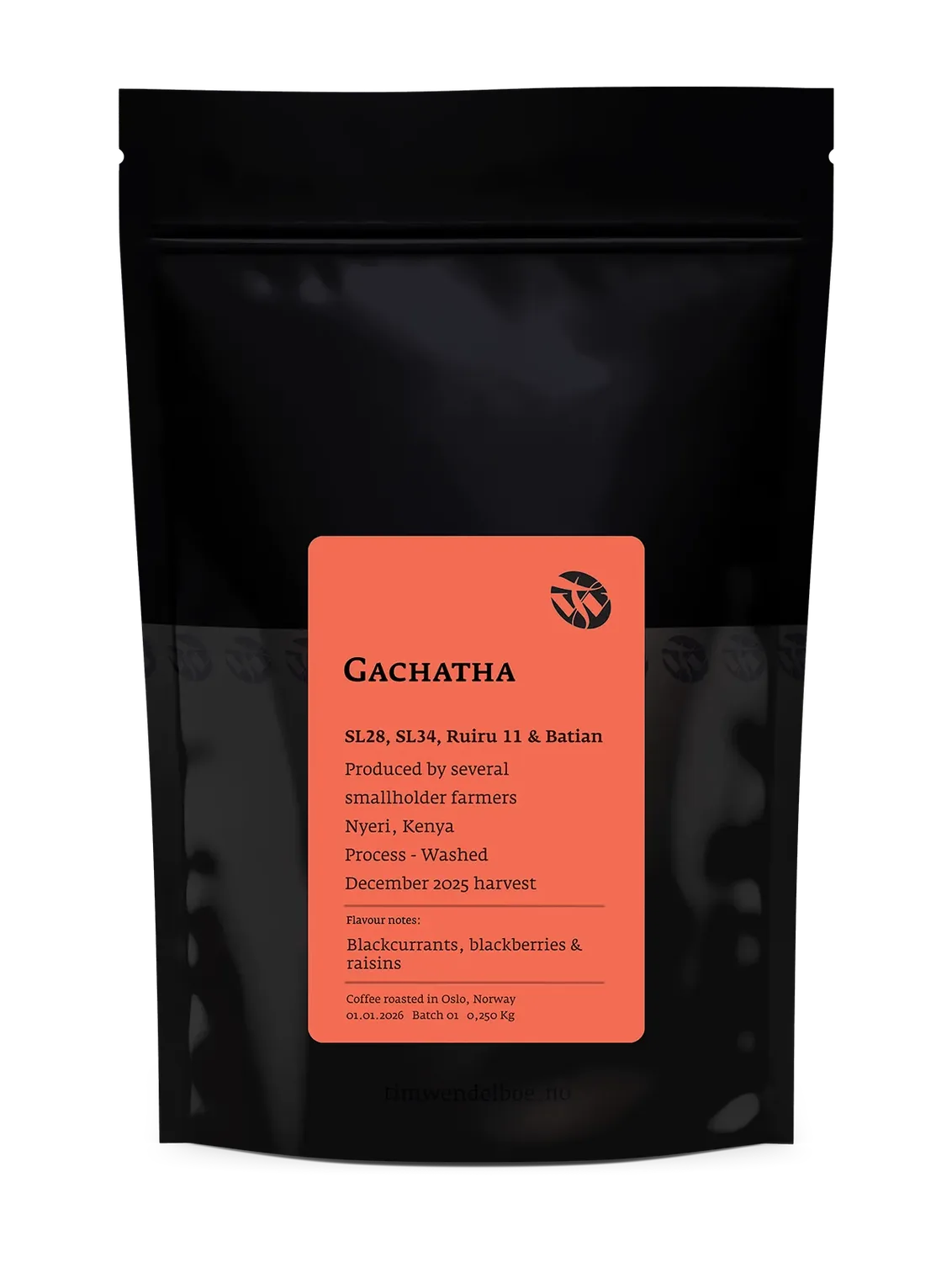
If you want the fuller, more classic expression with that deep cassis intensity, Tim Wendelboe's Gachatha is a washed lot that leans hard into the blackcurrant and winey side of the country.
Brew either as a pour over to keep the acidity crisp and the fruit distinct; a paper filter is the microscope this coffee deserves. If you are dialling in ratios, the brew calculator will get you a sensible starting recipe.
What to watch next
The number that matters is not the launch price but the reorder. Watch whether Trieste takes a second and third shipment, and whether any of that USD 9.50 per kilogram visibly reaches cooperative members rather than stopping at the exporter.
For coffee drinkers, the takeaway is simpler and more encouraging. The more origins that keep their coffee identifiable all the way to the cup, the more of what you pay flows back to the people who grew it, and the more distinctive the coffee on your shelf becomes.
Start by reading the bag: an origin, a region, a variety and a process named in full is the sign of coffee that escaped the blend. Then explore more of the country on the Kenya origin page, or browse the wider catalogue of coffees to compare what direct, single-origin sourcing actually tastes like.