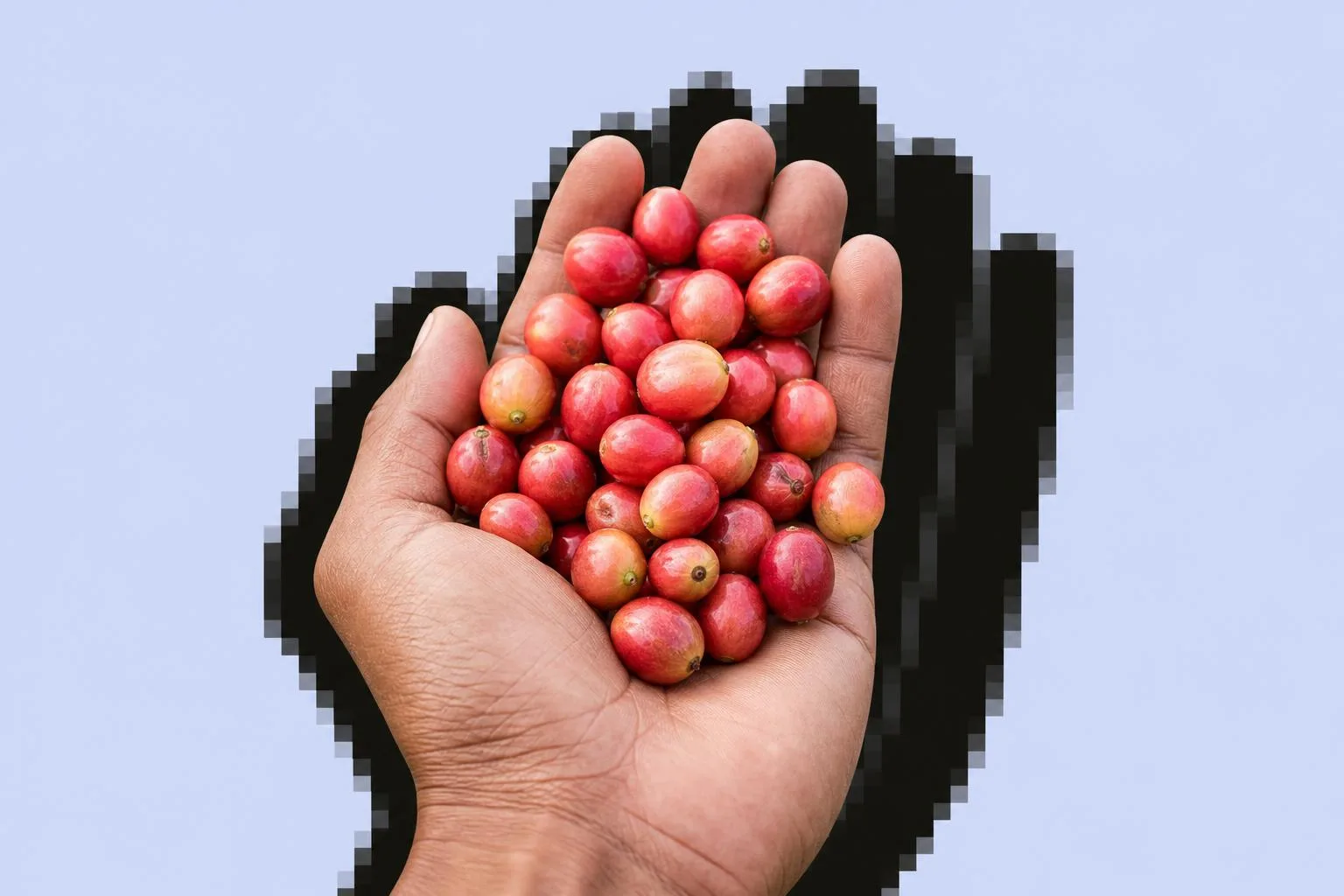
Pink Bourbon is a rare Arabica variety grown mostly in the highlands of Colombia, prized for cherries that ripen to a soft salmon-pink rather than the deep red most coffee fruit turns. That colour is where the name comes from.
The cup it gives is sweet, fruity and intensely floral, with a silky, lingering finish. It has become a specialty darling over the last decade, and it carries one strange twist: genetically, the "Bourbon" part of the name appears to be wrong.
Why the cherries turn pink
Ripe coffee cherries usually glow red because the fruit expresses anthocyanins, the same pigment family that colours blackberries and red cabbage. Pink Bourbon expresses that pigment only partially.
Unlike a fully red Bourbon, which shows the pigment in full, Pink Bourbon shows it halfway. The result is that salmon-pink to orange-pink hue that gives the variety its name and its fame.
That is more than a party trick. The colour makes the variety genuinely hard to harvest, which shapes both its rarity and its price.
Where it grows, and why it stays rare
Pink Bourbon is cultivated mainly in southern Colombia, above all in the Huila and Cauca departments, at high altitudes of roughly 1,600 to 1,800 m. It lives almost entirely in the specialty world, with small trial lots also appearing in Brazil and Guatemala.
It is believed to be native to southern Huila, first appearing around the San Adolfo area of Acevedo municipality in the 1980s. Producers there favoured it partly for its resistance to coffee leaf rust, the fungal disease known locally as la roya, which it survived well when outbreaks hit the country.
The variety was then developed as a serious specialty crop in Huila between 2010 and 2014, when Rodrigo Sanchez Valencia and his team identified and championed it on Finca Monteblanco. From there its reputation spread through the competition circuit.
Growing it is a labour of patience. Yields are low, the trees are agronomically demanding, and to keep the line pure the trees need strict isolation from other varieties so they self-pollinate cleanly.
Then there is the picking problem. Because ripe cherries turn pink or salmon-orange instead of red, pickers cannot rely on the usual visual cue to tell ripe from unripe, so every lot needs slow, selective hand-picking. Low yields plus intensive labour is exactly the recipe that keeps a coffee scarce and expensive.
The name is a lie: what genetics found
Here is the twist. Despite the name, Pink Bourbon is almost certainly not a Bourbon at all.
Cafe Imports began genetic testing in 2017, using leaves from two morphologically different plants that were both being sold as Pink Bourbon. Working with DNA Analytica, the testing found high similarity to plants with Ethiopian coffee genetics, described as similar to wild plants coming from Ethiopia.
In 2023, with better tools available, five samples from different regions of Colombia and Costa Rica were sent to the lab RD2 Vision. All came back with the same verdict: no relation to Bourbon, and indigenous to Ethiopia.
That 2023 test, led by Christophe Montagnon, confirmed Pink Bourbon as an Ethiopian landrace rather than a true Bourbon. In his framing, "Pink Bourbon" is a vernacular name, a market label, not a genetic classification.
In other words, the coffee is closer in ancestry to the wild heirloom types of Ethiopia than to the Bourbon lineage that half of Latin America's coffee descends from. The pink cherry stuck a familiar name on an unfamiliar plant.
The honest caveat
Genetics in coffee is rarely a clean yes or no, and it is worth being straight about that. Sweet Maria's Coffee Library has noted the same complexity.
The point they raise is that the genetic distinctions between Bourbon, Typica and Ethiopian landrace types are subtle. The 2023 results are notable and point strongly toward an Ethiopian origin, but they do not slam the door on every question about how these plants are related.
So the safest summary is this: Pink Bourbon is very likely an Ethiopian landrace wearing a Bourbon costume, and the evidence for that is good. If you see it sold simply as "a Bourbon mutation," treat that as shorthand rather than settled fact.
What Pink Bourbon tastes like
This is the part that made everyone forgive the misnomer. The cup is sweet and fruity-floral, with a lingering, silky finish that separates it from a straightforward Colombian.
When processed washed, Pink Bourbons commonly show floral aromatics: jasmine, hibiscus and rose petals, a perfume that reviewers keep comparing to high-end Ethiopian coffees. That resemblance now makes a lot more sense given what the genetics say.
Washed lots tend to be the cleanest window into that florality, keeping the fruit bright and defined. Naturals and fermented versions push it toward heavier, jammier sweetness, but the variety's calling card is that delicate, tea-like top note rather than sheer intensity.
If you have ever loved a washed Ethiopian and wondered why a Colombian could taste so similar, a washed Pink Bourbon is the neatest possible demonstration.
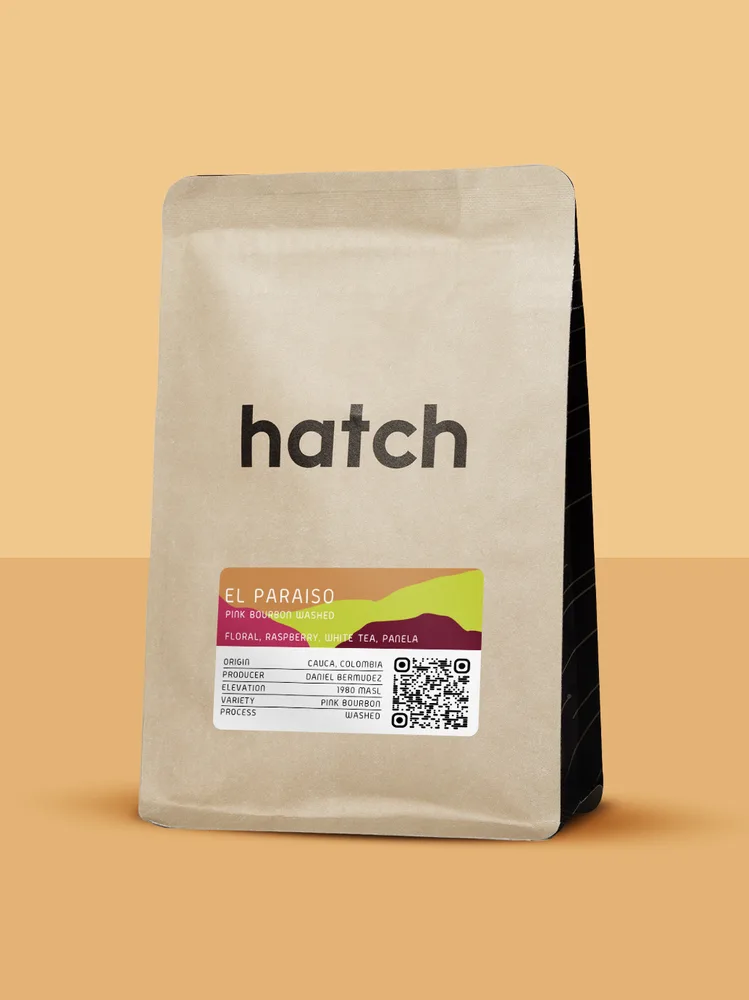
That lot comes from El Paraiso in Cauca, one of the region's best-known names for the variety, and it leans into the floral-plus-berry side with a caramel backbone. It is a light roast, which is the right call: the delicacy here rewards a gentle roast and would be buried under a dark one.
Why it ended up on the world's biggest stages
Pink Bourbon stopped being a curiosity when it started winning. In 2022 it elbowed Geisha, the trophy variety, out of two of the top ten spots at the Colombia Cup of Excellence.
Beating Geisha on its own turf is no small thing, because Geisha has dominated Colombian competition lots for years. Doing it with a low-yielding, hard-to-pick variety told buyers the cup quality was real, not just novelty.
It has also travelled to the sport's summit. At the 2023 World Barista Championships, two finalists used Pink Bourbon in their coffees during the final round, the kind of vote of confidence that ripples straight through to roaster demand.
That competition pedigree is part of why prices sit high and stock moves fast. When the best baristas and the biggest cupping tables keep reaching for the same variety, the small harvests get spoken for quickly.
How to buy and brew it
Start by reading the bag. A lot labelled Pink Bourbon should tell you the region (Huila or Cauca are the classics), the process, and ideally the farm, since the variety's fame has made the name a magnet for loose labelling.
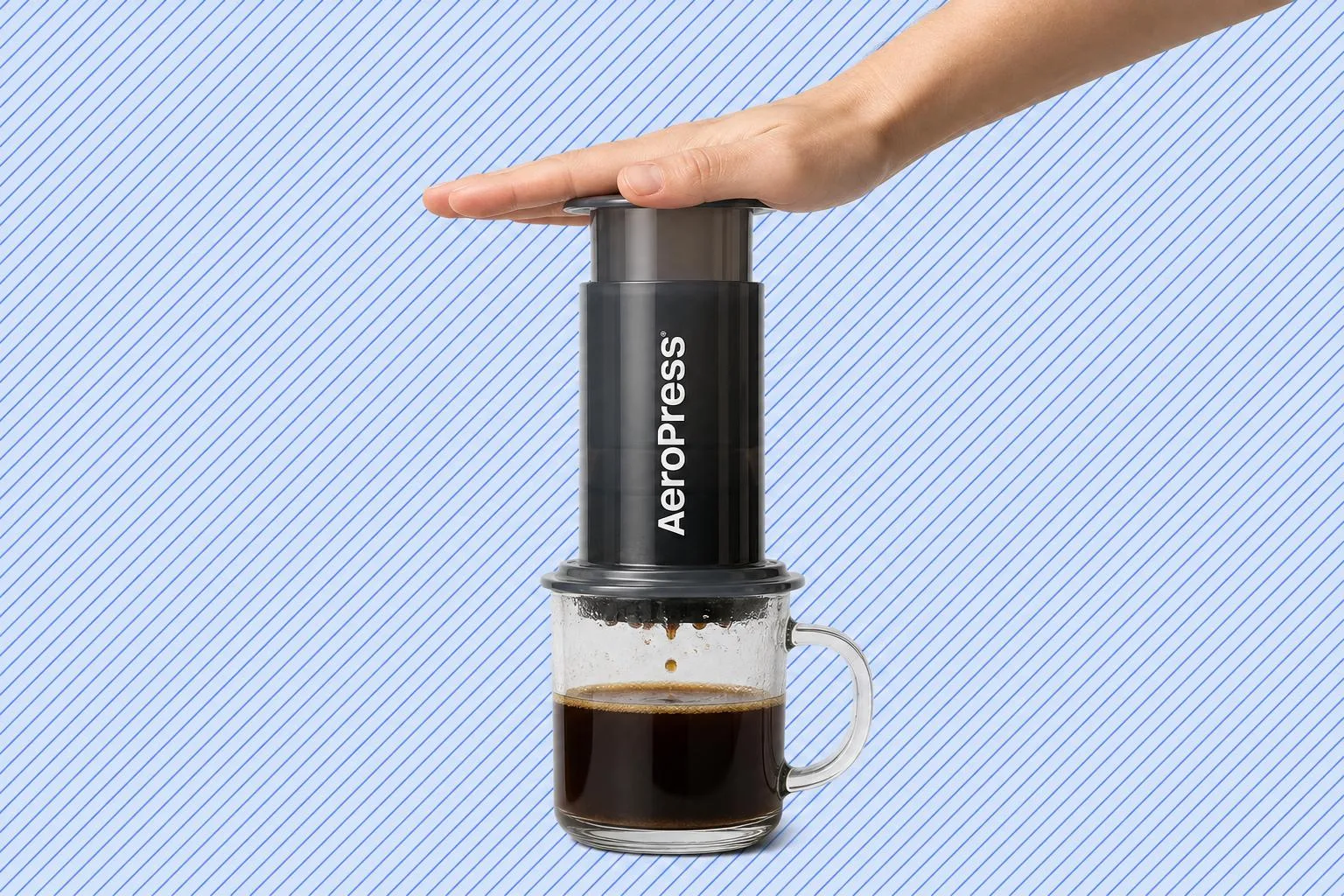
For tasting the florals at their clearest, brew a washed Pink Bourbon as a pour over at a light roast. The paper filter strips out oils and heavy body, which lets the jasmine-and-berry aromatics carry, exactly where this variety shines. Dial your recipe with the brew calculator if you want a repeatable ratio to start from.
Because it is delicate, treat it gently: not-quite-boiling water, a medium-fine grind, and no rush to push extraction hard. Over-extract a Pink Bourbon and you flatten the very perfume you paid for.
If you want to hear the family resemblance for yourself, brew a washed Pink Bourbon back to back with a washed Ethiopian. This Yirgacheffe is a clean, floral reference point for that comparison.
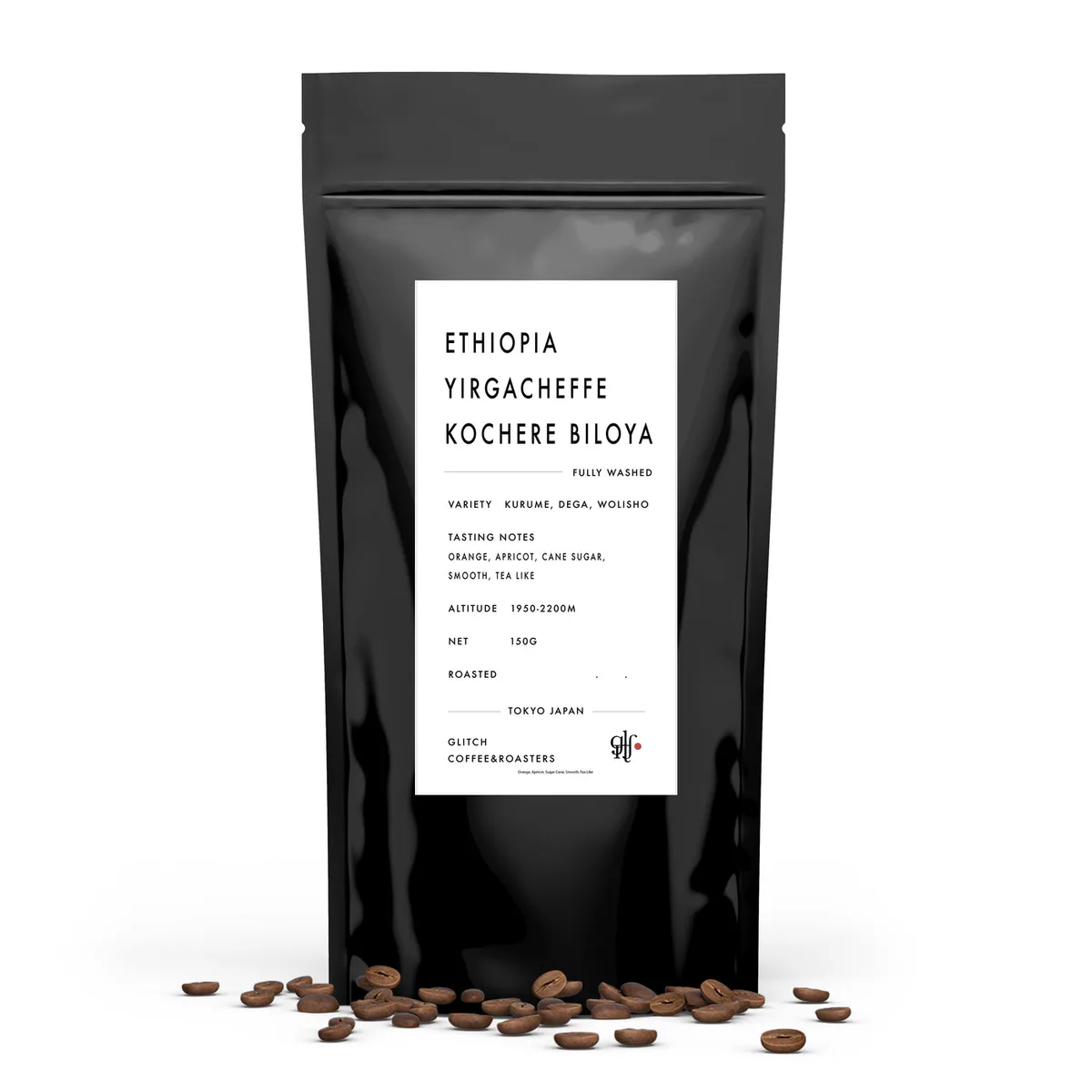
Do the two side by side and the point of this whole article lands in the cup: the Colombian and the Ethiopian speak the same floral language, which is precisely what the DNA has been trying to tell us.
One last honest note. Our catalogue refreshes and prices move, so a specific Pink Bourbon lot may sell through; when it does, a washed Ethiopian heirloom is the closest and usually cheaper stand-in. To keep exploring, browse the Pink Bourbon variety page or the wider varieties index.