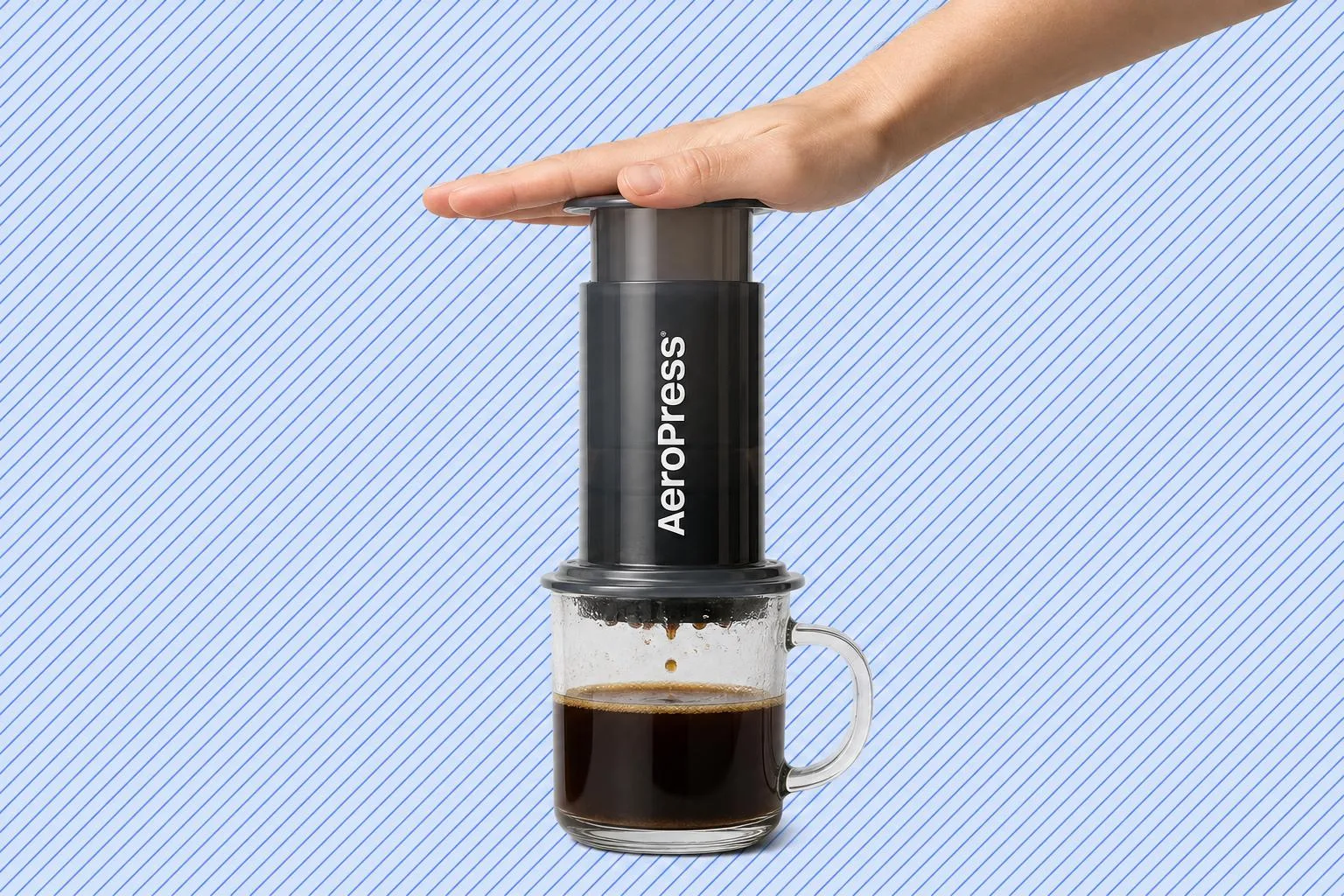
The fastest way to make good coffee with an AeroPress is to weigh everything and keep it simple. Use 17g of coffee to 220g of water, a ratio of about 1:13, ground like table salt, with water just off the boil at 90 to 96 °C.
Stir, wait, and press gently over about a minute and a half. That is the whole recipe, and it makes a clean, full-bodied cup that lands somewhere between filter coffee and espresso. Everything after this is just tuning.
The AeroPress was designed by Stanford engineer Alan Adler and launched in 2005. Its paper filter gives a cleaner cup than a French press while keeping full contact between water and grounds, which is why one cheap plunger can imitate so many brew styles.
The upright baseline, step by step
Upright means the brewer sits the normal way up, chamber on top of the filter cap, sitting on your mug. It is the beginner-friendly setup: no flipping, no hot-spill risk, and it still makes an excellent cup.
Rinse a paper filter in the cap, screw it on, and set the AeroPress on a sturdy mug on your scale. Add 17g of coffee, tare the scale, then pour in 220g of water off the boil.
Give it a quick 3-second stir to wet all the grounds evenly. Pop the plunger on top to seal the chamber, wait about 90 seconds, then press down slowly and steadily. Stop the moment you hear a hiss, so you leave the driest, most bitter dregs behind.
The whole brew, pour to press, should take somewhere around 1:45 to 2:00. If you want to nail the ratio for a bigger or smaller mug, the brew calculator will scale 1:13 to whatever dose you like.
Weighing matters more than it sounds. A scoop of coffee can swing by several grams depending on the bean and the grind, and a few grams either way is the difference between a thin cup and a heavy one. Once you weigh, your results stop being random.
The press itself is worth slowing down. Aim for a gentle push that takes roughly 20 to 30 seconds, not a hard shove; if it feels like hard work, your grind is too fine, and if it drops away with no resistance, it is too coarse. That resistance is useful feedback you can read every single morning.
Dial one: water temperature
Temperature is the first dial, and it is the one most people never touch. Standard AeroPress brewing wants water at 90 to 96 °C, roughly just off the boil, which extracts freely and gives body.
Go hotter and you pull more out of the grounds, including the bitter compounds. Go cooler and you extract less, which sounds bad but is often exactly what you want with a delicate coffee.
This is the trick behind competition recipes. Winners at the World AeroPress Championship often brew light roasts at surprisingly low temperatures, commonly 80 to 88 °C and sometimes as low as 75 to 80 °C, because cooler water cuts bitterness and lets sweetness show, even though it lowers overall extraction.
The 2025 World AeroPress Championship winning recipe shows how far the dial goes: an upright brew with 18g of coffee, two paper filters and a flow-control cap, 100g of water at 84 °C, then 70g of cooler bypass water added afterwards. You do not need the hardware to borrow the idea: cool your water, and top up with a splash of cold at the end.
The current manufacturer signature method leans the same way: 16 to 18g of medium-fine coffee, water at about 85 °C, a 3-second stir, a 30-second wait, then a gentle upright press. For a dark roast, drop the temperature and shorten the steep so it does not turn ashy.
You do not need a variable kettle to play here. Boil, then wait: water off the boil loses roughly a degree every ten to twenty seconds in an open kettle, so a minute's rest lands you near 90 °C, and a splash of cold water drops it faster still.
Dial two: grind size
Grind is the second dial, and it controls how fast water pulls flavour out. For short AeroPress brews, a fine grind like table salt boosts extraction and body in the time you have.
The rules for fixing a cup are simple and worth memorising. If it tastes sour or weak, grind finer. If it tastes bitter, grind coarser.
Bitter cups almost always come from one of three things: grinding too fine, water too hot, or brewing too long. Change one at a time so you can tell what worked, and remember the AeroPress is famously forgiving, so a click of grind either way still makes a drinkable cup.
If you want a longer, tea-like brew instead of a punchy one, coarsen the grind and stretch the steep. A popular upright recipe from James Hoffmann uses a lighter 1:18-ish ratio, for example 11g to 200g, water just off the boil for filter roasts, a two-minute steep, a swirl, and a gentle press to finish around three minutes.
Upright versus inverted
The inverted method flips the whole brewer upside down so the plunger is at the bottom and the filter cap points up. Nothing drips through until you fit the cap and flip it back over, which gives you total control of steep time.
This is the approach favoured by most championship winners, because it lets you steep as long as you like with no early drip loss. The trade-off is a small risk of a hot spill on the flip, which is why it is not the first thing to teach a beginner.
For almost everyone, upright is enough. Reach for inverted only when you want to steep past two minutes without losing any water, or when a specific recipe calls for it.
Espresso-style, Americano and iced
The AeroPress cannot make true espresso, but it can make a concentrate you treat like one. The original recipe uses a strong ratio of about 1:6, producing a thick, intense shot you dilute afterwards.
Because the output is small and very concentrated, around 200ml at most, you have options. Top it with hot water for an Americano, or press it straight over a glass of ice for a fast, bright iced coffee that dilutes as the cubes melt.
For the iced version, brew a touch stronger and hotter than usual so the melting ice does not water it down to nothing. Half your water as brew and half as ice in the glass is a good starting split.
This flexibility is the real argument for the AeroPress. One 2005 plunger and a bag of beans covers your morning filter cup, an espresso-ish base for milk, and summer iced coffee without buying three machines.
What to brew in it
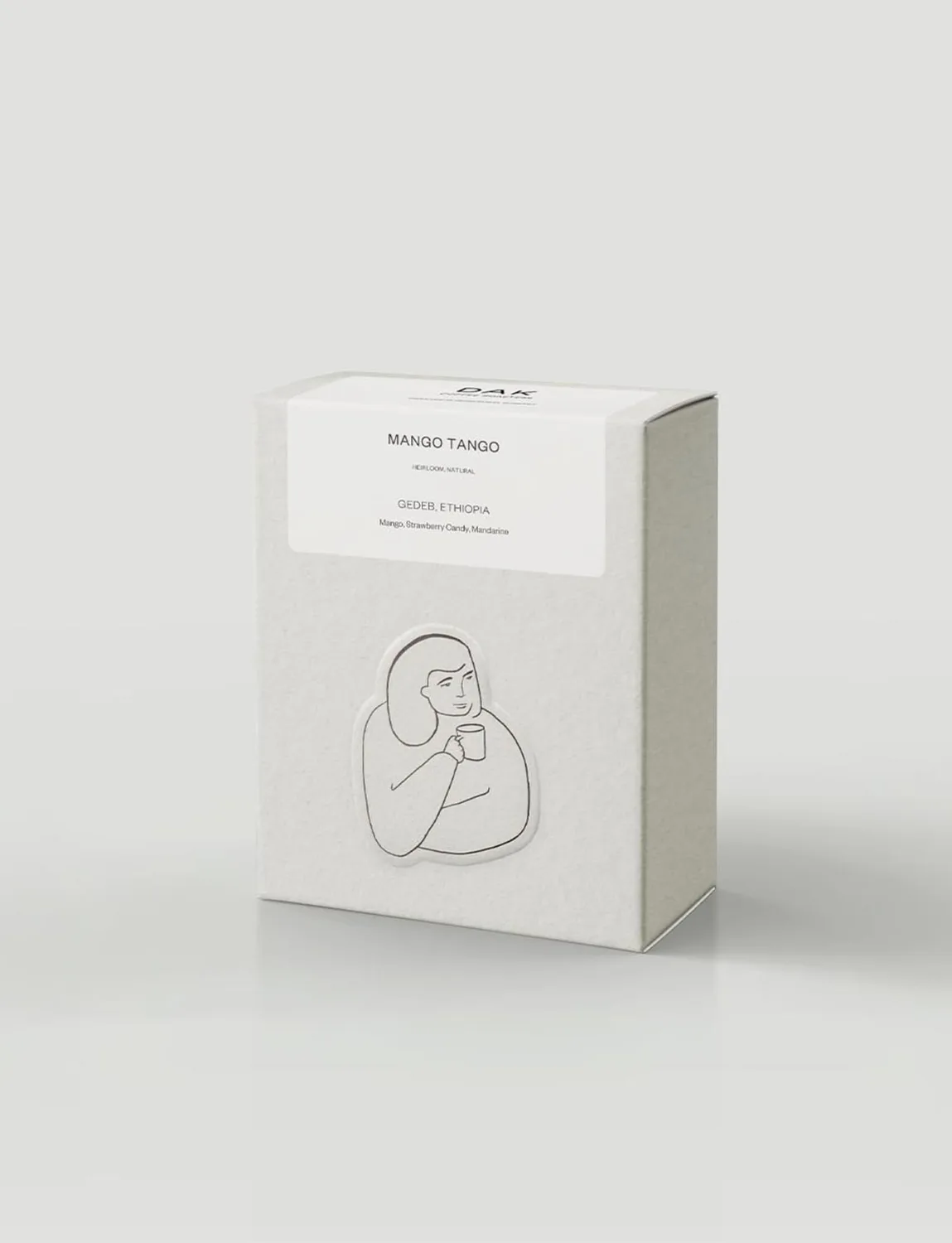
The AeroPress makes decent coffee from almost any reasonable bean, but a few pairings really sing. A natural Ethiopia gives jammy, fruit-forward flavour that is hard to reach in espresso without over-extracting, and the AeroPress delivers it cleanly.
This natural Ethiopian is a good example: tropical and berry-led, the kind of cup that turns heads when brewed cool and short.
Washed Kenya coffees go the other direction, giving bright, clean, structured cups. A washed SL28 and SL34 lot rewards the paper filter's clarity, with blackcurrant and berry acidity that stays crisp rather than sharp.
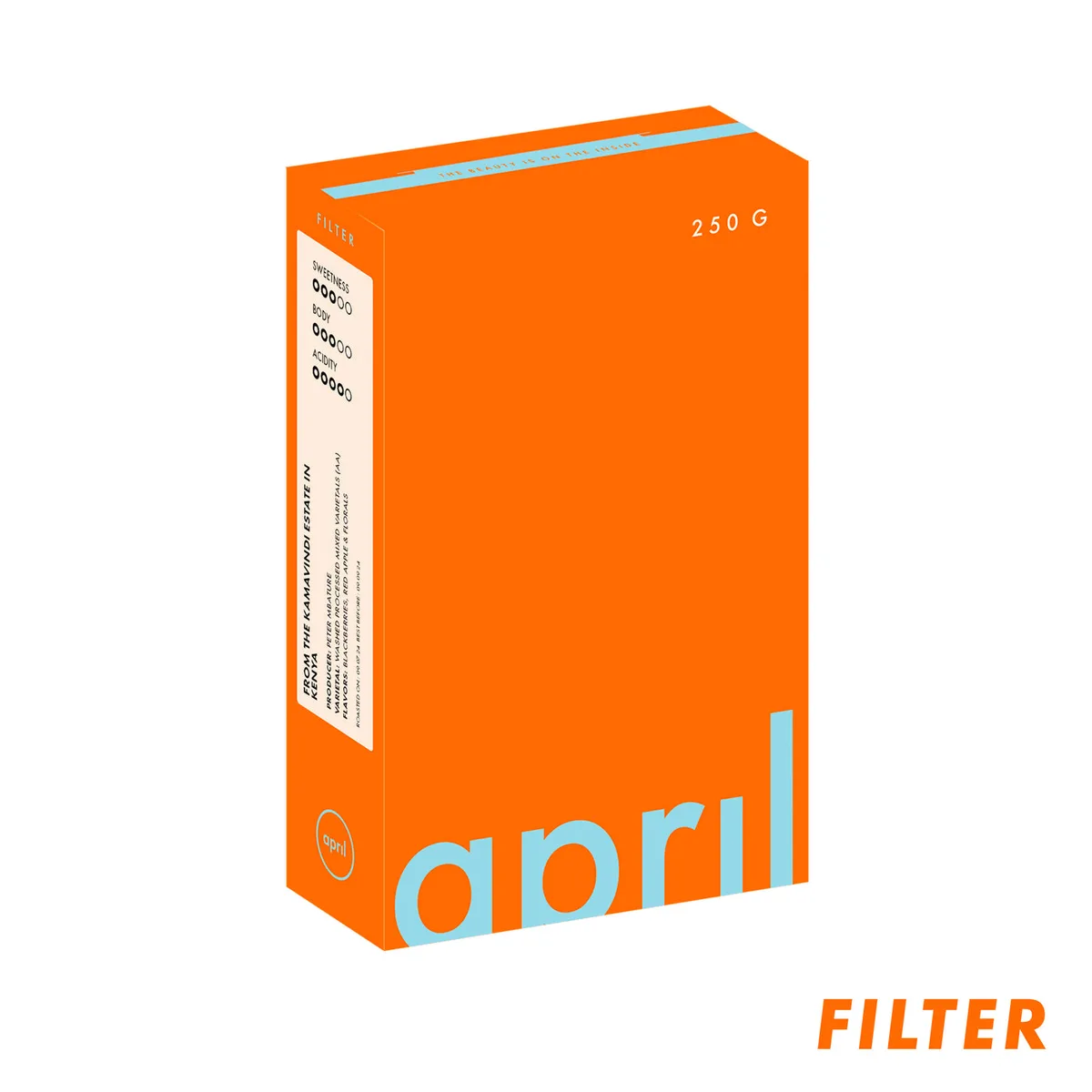
A washed Colombia is the safe middle: balanced, sweet and forgiving if your grind is a little off. Whatever you pick, brighter natural fruit likes a cooler, shorter brew, while a dark roast wants a lower temperature and a quick press.
Put it into practice
Start with the upright baseline exactly as written: 17g coffee, 220g water at 90 to 96 °C, table-salt grind, stir, 90-second wait, slow press. Taste it black before you change anything.
Then move one dial at a time. Sour means grind finer or brew a touch hotter; bitter means grind coarser, cool the water, or press sooner. Two or three cups in, you will have a recipe that fits your beans and your taste.
When you are ready to explore, browse the catalogue for a natural Ethiopian or a washed Kenyan to push each dial, or let the brew calculator scale the ratio to your mug. The AeroPress rewards curiosity, and there is very little you can get badly wrong.