What is co-fermented coffee (and why is it controversial)?
Co-fermentation ferments coffee with fruit, yeast or spices at origin. It is a real process, not post-roast flavouring, but the blurry line has split specialty coffee.
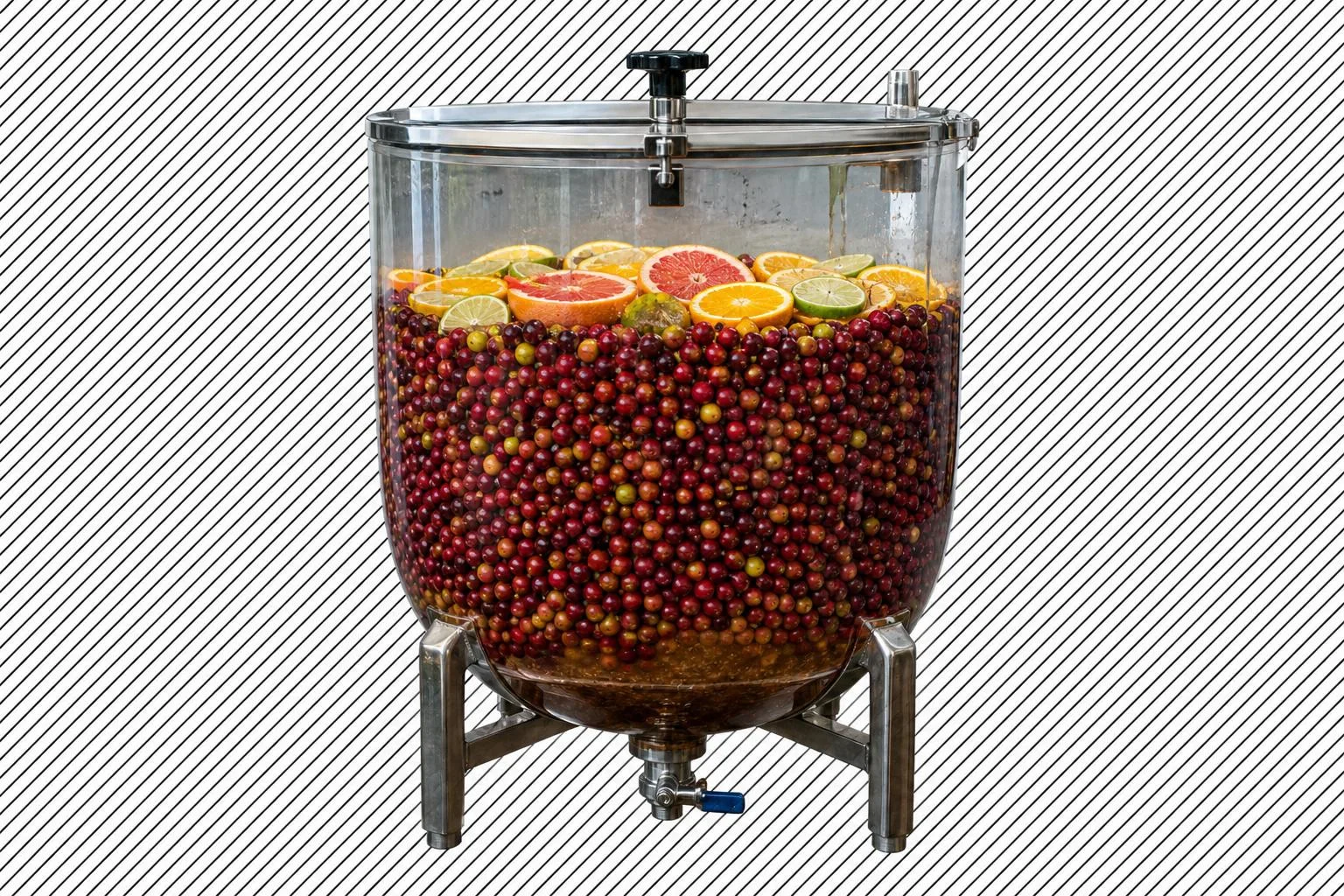
Co-fermented coffee is coffee that ferments during post-harvest processing alongside something that is not coffee: fruit, spices, hops or a chosen yeast strain. The addition happens at the farm or mill, before the beans are dried and roasted.
That is the whole idea, and also the whole argument. Done honestly, it is a processing choice in the same family as washed, natural and anaerobic. Done quietly, it shades into something closer to flavouring, and specialty coffee has not agreed on where the line sits.
This piece explains what the technique actually does, why it is different from flavoured coffee, and why a handful of competition disqualifications turned it into one of the loudest fights in the industry.
How co-fermentation actually works
The method is borrowed from wine, where grapes are sometimes fermented together to shape the final flavour. In coffee, the producer lets the harvested cherry ferment with an added ingredient during processing at origin.
The common additives are fruit: melon, orange, peach, strawberry, grape, passionfruit, lychee and banana all show up. Spices, fresh mint and specific yeasts are used too, and each pushes the cup in a different direction.
The fruit can go in whole, as juice, or dehydrated. Sometimes it joins from the very start; sometimes it is added after the coffee has already fermented on its own for a while.
Here is the part people miss. The addition is not only flavour, it is biology. A particular fruit can inoculate the batch with its own yeasts or suppress other microbes, changing the microbial environment the coffee ferments in.
So the fruit does two jobs at once. It can lend aromatic compounds directly, and it can steer the fermentation down a path the coffee would never have taken alone. That dual effect is exactly why the results can be so loud.
Timing is a lever too. Adding fruit at the very start lets its sugars and microbes dominate the whole ferment, while adding it after an initial clean fermentation gives the coffee's own character a head start before the fruit joins in.
The form of the addition matters as much as the choice of fruit. A dehydrated fruit behaves differently from fresh juice, concentrating sugars and slowing the ferment, which is one reason two strawberry co-ferments from the same farm can taste nothing alike.
Co-fermented is not flavoured coffee
This is the single most useful distinction to hold onto. Flavoured coffee has oils or extracts sprayed or stirred in after roasting, the way a hazelnut or vanilla supermarket coffee is made.
Co-fermentation works the opposite way round. It alters flavour naturally during fermentation, at origin, before the green beans are ever dried or roasted. Nothing is added to the finished bag.
That matters for a practical reason. A strawberry co-ferment does not contain strawberry pieces. The strawberries were present in the tank during fermentation and are long gone by the time you grind.
You can think of it as a spectrum of intervention. Washed coffee strips the fruit off early for a clean cup; natural coffee dries the whole cherry for a fruitier one; anaerobic coffee ferments in sealed tanks for intensity.
Co-fermentation sits at the far, most interventionist end of that line. The question critics keep asking is whether it has stepped off the processing spectrum entirely and become something else.
The mechanism is the honest tell. A flavoured coffee relies on a compound added to roasted beans, so the aroma sits on the surface and can smell synthetic; a co-ferment's flavour is built into the bean during its chemistry, which is why it survives roasting and brewing differently.
That said, the two can converge on the cup. A very heavy co-ferment can taste close to a flavoured product, which is precisely why the category is so hard to police on taste alone and why the paperwork matters more than the palate.
Why it splits specialty coffee
The core criticism is about terroir, the sense-of-place character that specialty coffee is built on. A heavy fruit co-ferment can bulldoze the subtle signals of origin and variety under one loud, candied note.
Critics argue the strongest examples taste over-fermented, more like a flavour additive than a coffee. If every co-ferment tastes of generic tropical sweetness, the logic goes, why pay for a specific farm in Colombia at all.
The defence is just as reasoned. Processing has always shaped flavour, so the line between fermentation and flavouring is partly arbitrary, and experimental methods widen what coffee can express.
There is also a consumer point. Plenty of drinkers genuinely enjoy these cups, and if disclosure is honest, no one is being harmed or misled by buying one.
The honest middle ground is a useful test. The best co-ferments read as a heightened version of what the lot already offered; a cup full of flavours unrelated to the coffee's origin reads, fairly, as a flavoured product.
There is a producer-economics angle that rarely gets said out loud. Co-fermentation can turn an ordinary lot from a hardy variety like Castillo into a sought-after, high-priced one, which is a real income for a farmer and, to critics, a shortcut around the hard work of terroir.
The fairest reading is that intent and skill matter. A thoughtful co-ferment is a craft decision; a crude one is a cover for mediocre coffee, and the cup usually, though not always, tells you which you are drinking.
The Best of Panama flashpoint
The argument boiled over at the 2024 Best of Panama competition, where four coffees were disqualified for being co-ferments or infusions. The stakes there are not small: the top Best of Panama lot sold for $10,000 per kilo in 2023.
The Specialty Coffee Association of Panama did not hold back in its language. It described the disqualified coffees as altered from their natural DNA expression, likely with the intent to score higher and win by using foreign additives.
That framing captures the fear neatly. If a producer can bolt on fruit flavour and climb the scoresheet, the competition stops measuring the coffee and starts measuring the additive.
Other bodies have moved the other way. The Specialty Coffee Association changed its rules in 2023 to allow infused or co-fermented coffees in competition, having previously disallowed artificially flavoured beans.
So the industry's own referees disagree, in writing, about whether this is processing or cheating. That split is why the debate has no tidy resolution yet.
Panama is a pointed place for the fight to land, because it is Geisha country, where the whole selling point is a naturally extraordinary variety expressing its place. A co-ferment that out-scores a clean Geisha threatens the exact story the region trades on.
For drinkers, the lesson is not that one side won. It is that a competition score no longer tells you how a coffee was made, so reading the lot's own description has become part of judging value for yourself.
Where transparency breaks down
The practice is not fringe. One Specialty Coffee Association report estimated 620,000 kg of infused, co-fermented or flavoured green coffee in Colombia alone.
The real problem is that the labels are a mess. Coffees sold as carbonic maceration, thermal shock, must recirculation or inoculated have, on many occasions, turned out to belong to the co-fermented or infused group.
That ambiguity is how a transparent technique starts to feel like a trick. Some producers have been accused of infusing fruit without disclosing it at all, which erodes trust in every honest lot around them.
There is a safety dimension too. Disclosing additives is not legally required, but best practice is to label them clearly, partly because an undeclared fruit could be an allergen for the person drinking it.
The upshot for buyers is simple. Co-fermentation is not the issue; silence about it is. A bag that tells you exactly what went into the tank is doing the right thing.
The damage of non-disclosure is wider than one bag. A roaster who buys an undeclared co-ferment can unknowingly sell it as a pure natural, which misleads their customers and sours the whole chain's trust in a producer.
The practical fix is modest but real. If the industry treated additives the way food labels treat ingredients, the controversy would shrink to a matter of taste, which is where it belongs.
How to taste the difference and shop
You can usually spot a co-ferment by how the fruit behaves. A natural Ethiopia gives fruit that still feels like coffee; a heavy co-ferment often reads as a single, intense, slightly artificial fruit note that dominates everything.
Neither is wrong. If you love bold, sweet, tropical and berry cups, co-ferments can be a genuine joy, and they shine on filter where that sweetness has room to spread.
The one thing to insist on is disclosure. Look for a bag that names the additive and the method rather than hiding behind vague terms, and treat the processes index as a map of where any coffee sits.
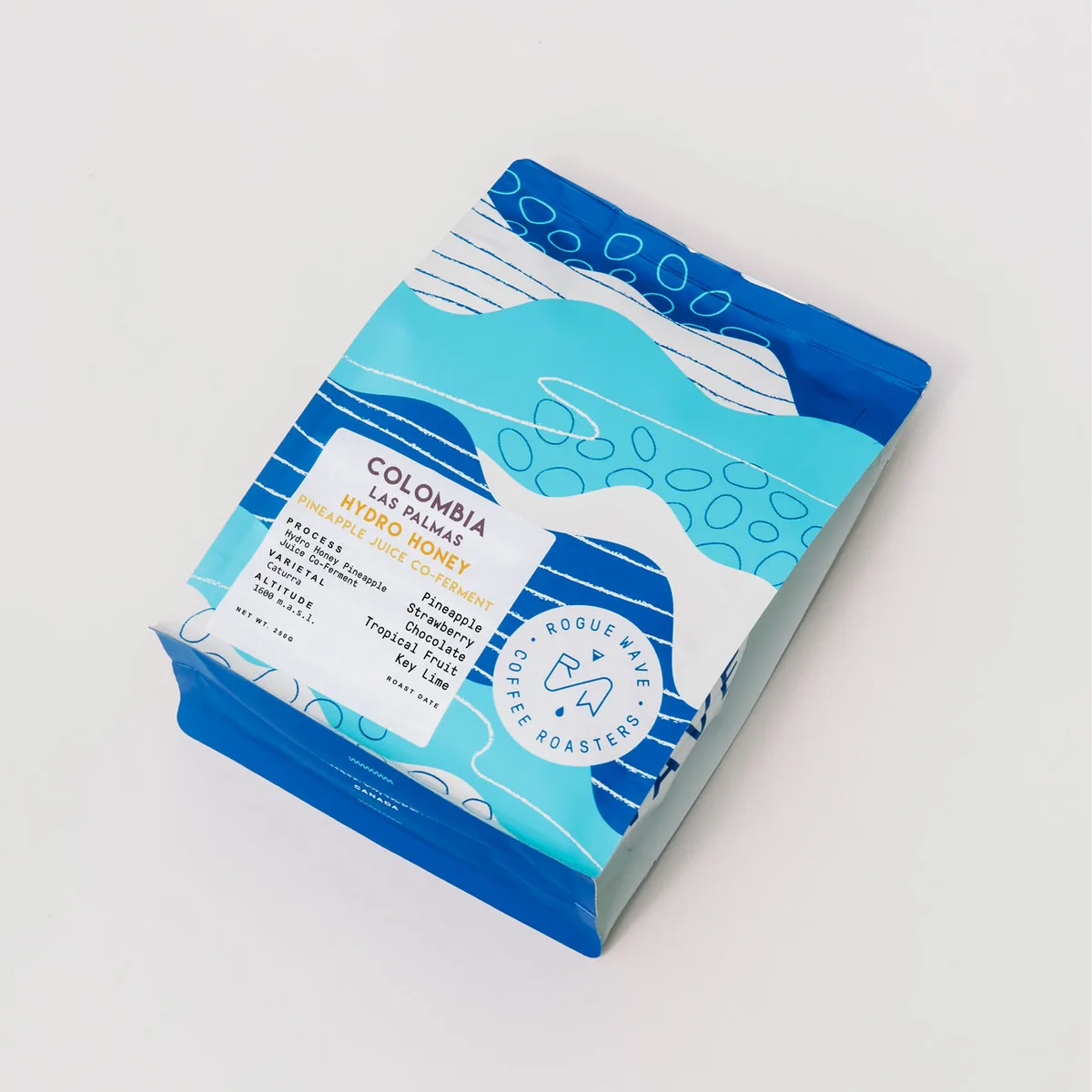
A good example of doing it in the open is this Rogue Wave lot, which states the pineapple juice co-ferment right in its name, so you know exactly what you are buying.
If you want the louder, dessert-style end of the category, DAK's Cream Donut is a clearly labelled Colombian co-ferment built around sweet berry and chocolate notes.

A fair side-by-side is the best teacher. Brew a disclosed co-ferment next to a washed or natural coffee from the same origin and ask one question: does the fruit feel grown into the coffee, or painted on top of it.
Start with that single comparison, keep the ratio and grind identical so only the process varies, then browse the co-ferment process page or let the decision helper point you somewhere honest.