Coffee this week: arabica round-trips to flat as ICE stocks build
Arabica swung to a six-week low midweek then snapped back, finishing roughly flat, while robusta drifted lower. Plus Starbucks, Luckin, Peet's and a new ICE contract.

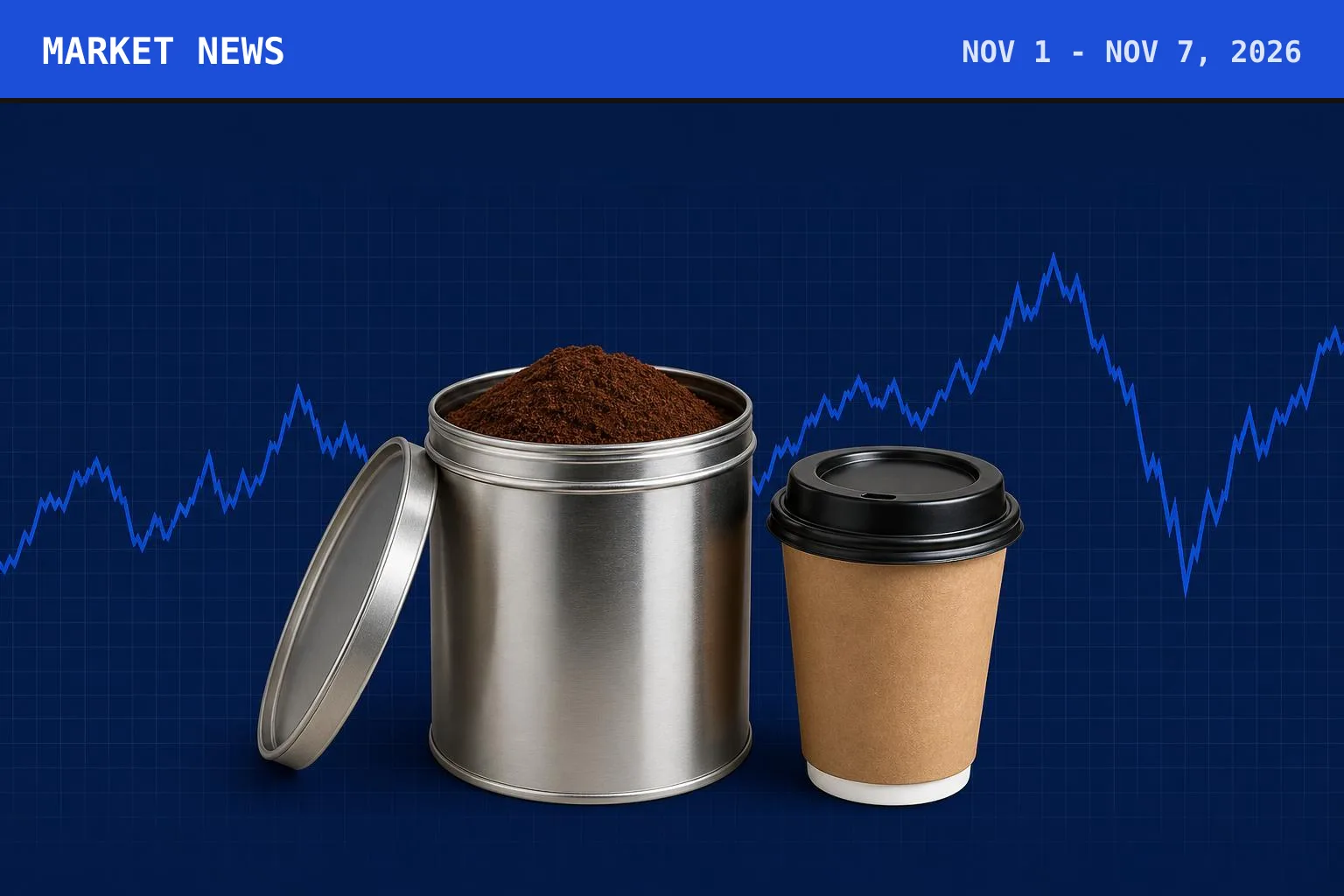
The headline this week is a round trip. Arabica slid to a six-week low on Wednesday, then bounced hard on Thursday and closed the week roughly where it started, near 274 cents.
Behind the swing sat a simple tug of war: swelling exchange stocks pulling prices down, and El Niño weather risk holding them up. Robusta, meanwhile, drifted lower all week and stayed close to a two-and-a-half-year low.
For anyone buying coffee, this is a quiet week dressed up as a dramatic one. Prices moved a lot inside the week but ended close to flat, so nothing here changes what you pay at the shelf just yet.
The market: a volatile week that went nowhere
| Market | Price | This week |
|---|---|---|
| Arabica (ICE Dec) | 273.94 ¢/lb | -2.16% |
| Robusta (ICE Jan) | $3,207/tonne | -1.93% |
| ICO Composite | 249.09 ¢/lb | +0.54% |
| Colombian Milds (ICO) | 339.70 ¢/lb | +0.69% |
| Other Milds (ICO) | 321.01 ¢/lb | +0.97% |
| Brazilian Naturals (ICO) | 279.43 ¢/lb | +0.70% |
| Robustas (ICO) | 157.29 ¢/lb | -0.26% |
The ICO rows compare Thursday 12 November with Thursday 5 November; the ICO posts each day's prices on the next working day, and the Market page charts every series day by day. Source: International Coffee Organization (ICO) indicator prices.
The week opened soft. December arabica settled near the session lows on Monday at 273.60, down 6.40 cents, giving up an early bounce before it could hold.
It got worse midweek. On Wednesday arabica fell about 1.2% and touched a six-week low of 262.15 cents, its weakest in roughly four and a half months on a continuation basis.
The weight came from supply piling up on the exchange. ICE pending grading rose above 100,000 bags on Tuesday, and certified stocks crept above 241,000 bags, their highest since mid-October. More coffee waiting to be delivered against the contract tends to cap prices.
Then Thursday flipped it. On December options expiry, arabica closed up 11.20 cents, or 4.16%, at 280.20, which left the market close to flat on the week before easing again on Friday to about 274.
The ICO's own indicator prices tell a calmer story than the futures screen. The composite edged up 0.54% on the week, and the Colombian and Other Milds that feed most specialty bags rose a little too, a reminder that the physical market moves slower than the paper one.
Why the weather still matters
The counterweight to all those stocks is weather, and this week the weather desk stayed loud. StoneX flagged on Friday that El Niño is testing coffee right at flowering and fruit-development stages.
The two origins most exposed are Colombia for arabica and Vietnam for robusta. Dry spells in Rondônia and in Vietnam kept robusta weather risk in focus all week.
That split explains the strange calm in the numbers. Traders see real coffee arriving now, which argues for lower prices, but they also see a next crop that could disappoint, which argues for higher ones.
For Brazil, the news was cautiously positive. CEPEA said midweek that 2027/28 arabica fruit set has been satisfactory, though intense heat and the chance of El Niño keep growers alert to flower and fruit abortion.
It helps to know why timing matters so much here. Flowering and early fruit set are when a dry spell does the most lasting damage, because a cherry that aborts now is simply gone from next year's harvest, not just delayed.
The practical read for drinkers: expect choppy headlines, not a clear trend. A flat week like this one is the market admitting it does not yet know which force wins.
Starbucks doubles down on the UK and Vietnam
The biggest company story came Monday, when Starbucks announced plans to open 500 UK stores and hire 7,500 baristas over the next five years. That follows a restructuring that had closed dozens of its UK shops.
It is a notable reversal of mood: cut first, then commit to a large build-out. The signal is confidence in UK high-street coffee demand despite years of price pressure.
The chain also hit a milestone in Asia. By the end of fiscal 2026 it counted 6,022 coffeehouses across Asia-Pacific.
Most symbolic of all, it opened its first store in Buôn Ma Thuột, the coffee capital of Vietnam's Central Highlands. Planting a flagship in the heart of the world's robusta belt is a statement about where Starbucks thinks growth lives.
There is a neat irony in that address. The region grows the beans that fill much of the world's instant and espresso blends, yet the store will sell the same milky, menu-driven drinks it sells everywhere, a sign that growth is about drinkers, not terroir.
For drinkers, none of this changes a cup tomorrow. But a bigger footprint in the UK and Vietnam means more everyday espresso demand, which quietly supports the same prices the futures market frets about.
Luckin and Peet's lean into the holidays
Luckin drew investor attention late in the week, pairing strong third-quarter earnings with a fresh share buyback authorization. For a chain that has grown at breakneck speed, a buyback reads as a sign it feels comfortable with its cash.
It is also pushing hard into the US. Its first US holiday collection launched on November 9, adding a Toffee Hazelnut Latte and a Crème Brûlée Latte to the menu.
Those are flavoured, sweetened drinks, far from the single origins we catalogue. But they matter because they bring new drinkers into coffee at the shallow end, and some of them wander toward the deep end later.
Peet's went a different route the same week. On November 12 it unveiled a Black Cherry Sparkling Energy drink with partner Q Mixers, available at participating coffeebars through November and December.
Caffeinated sparkling drinks keep showing up on cafe menus, chasing the ready-to-drink energy crowd. Whether they stick is another question, but the experiment tells you where chains see younger spending going.
Taken together, the two launches point the same way: the big names are competing on seasonal novelty rather than on bean quality, because that is where volume and margin sit this winter.
Elsewhere: a new contract and a sustainability wobble
The quietly historic item: ICE's new arabica contract went live. The original "C" contract, dating to 1882, is being phased out with a final March 2028 expiry.
The first lots of the new metric contract traded Tuesday, with 48 lots changing hands for September 2028 at between US$5,724 and US$5,737 a tonne. Moving from pounds to tonnes sounds dull, but it is the plumbing under every arabica price you read, so a smooth switch matters.
Less cheerful was a report from the Global Coffee Platform on Monday. It logged its first-ever decline in sustainable sourcing among large buyers.
About 69% of green coffee purchased by 14 major roasters and retailers in 2025 met a recognised baseline standard, down from 75% the year before. One of the largest buyers, JDE Peet's, fell from 72.94% in 2024 to 47.04% in 2025.
When green prices run high, cheaper uncertified coffee gets tempting, and this is what that pressure looks like in the data. It is a reminder that the specialty coffees we card, bought on relationship and traceability, sit at the opposite end of the market.
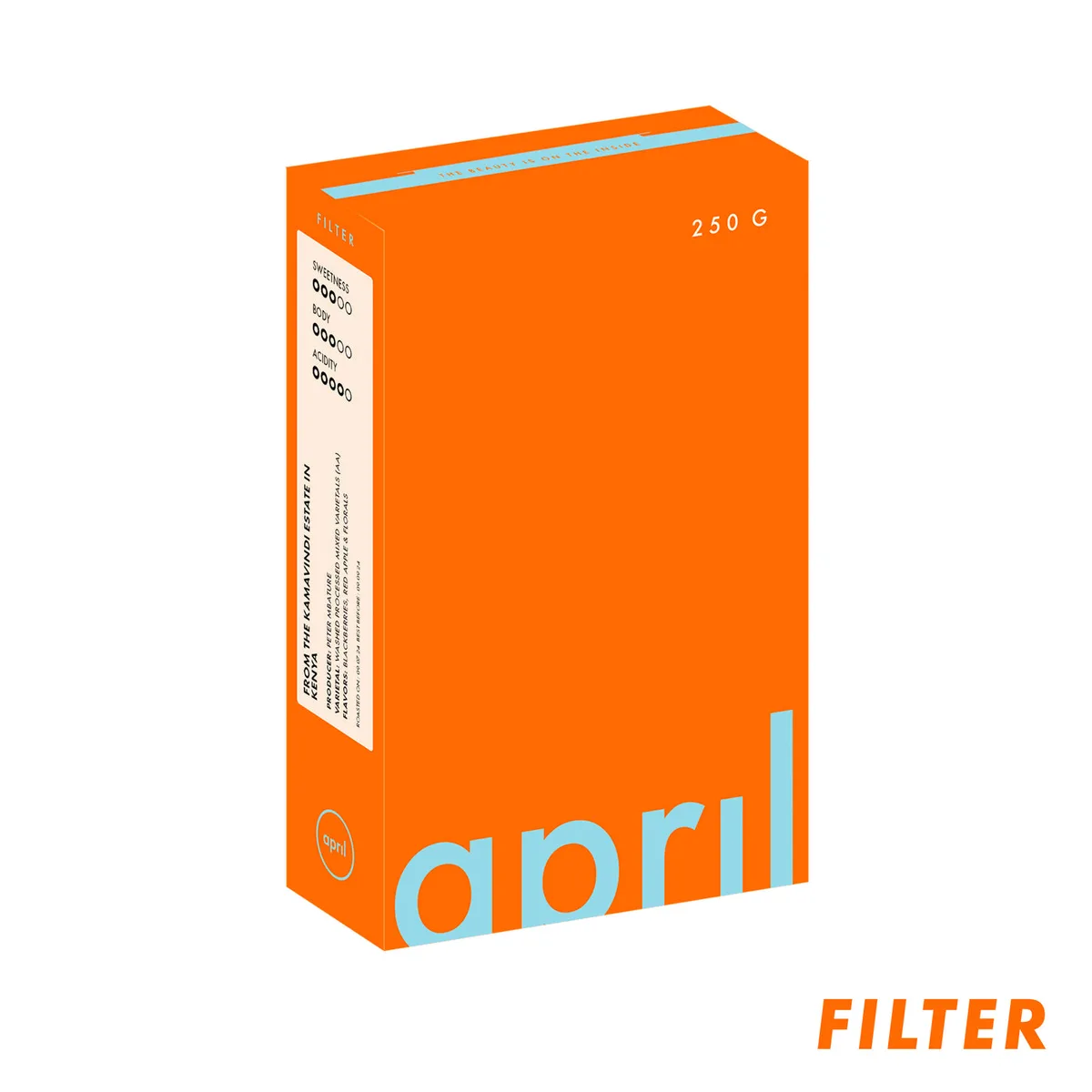
If you want a living example of that other end, this washed Kenyan lot is as traceable as it gets, down to the single estate and its SL varieties.
Brazil also hosted International Coffee Week in Belo Horizonte, running through November 13 and staging the 2027 Brazilian Barista Championship. For a producing country, a big trade fair is as much about buyers meeting growers as it is about competition.
What to watch next week
Two things will settle the next move. First, those ICE stocks: if pending grading and certified inventories keep climbing, the downward pull on arabica gets harder to ignore.
Second, the weather maps for Colombia and Vietnam. Any real dryness at flowering would do what Thursday's bounce only hinted at, and give the bulls a story that lasts more than a day.
Keep half an eye on robusta too. It is pinned just above a two-and-a-half-year low, and if the dry spells in Vietnam ease, there is little in the chart to stop it slipping to a fresh one.
If you want to read the week yourself rather than take ours, the Market page charts arabica, robusta and the ICO series day by day. And if the headlines leave you wanting a cup that has nothing to do with futures, our coffee catalogue is the better doorway.