The short version: use 30g of coarsely ground coffee to 450g of water just off the boil, steep for four minutes, break the crust, then plunge slowly and pour. That is a 1:15 ratio, the sweet spot for a French press, and it gives you a full-bodied cup without the gritty bitterness the method is famous for.
Everything else in this guide is about why those numbers work and how to adjust them. The French press is forgiving, but it rewards a scale, a decent grinder and a little patience once the timer stops.
The standard recipe, by weight
Weigh your coffee and water rather than scooping. Volume is unreliable, and the French press punishes a wrong ratio more than most brewers because nothing filters out the excess.
- Preheat the empty press with hot water, then tip it out. A cold glass carafe drops 200°F water by roughly 10°F the moment it touches the walls, pushing you below the clean extraction range.
- Add 30g of coarsely ground coffee.
- Pour 450g of water at 195 to 205°F (about 93°C). Boil, then wait 30 to 60 seconds for it to settle into range.
- Start your timer when you finish pouring, not when you first add coffee.
- At four minutes, break the crust of floating grounds with a spoon and give it a gentle stir.
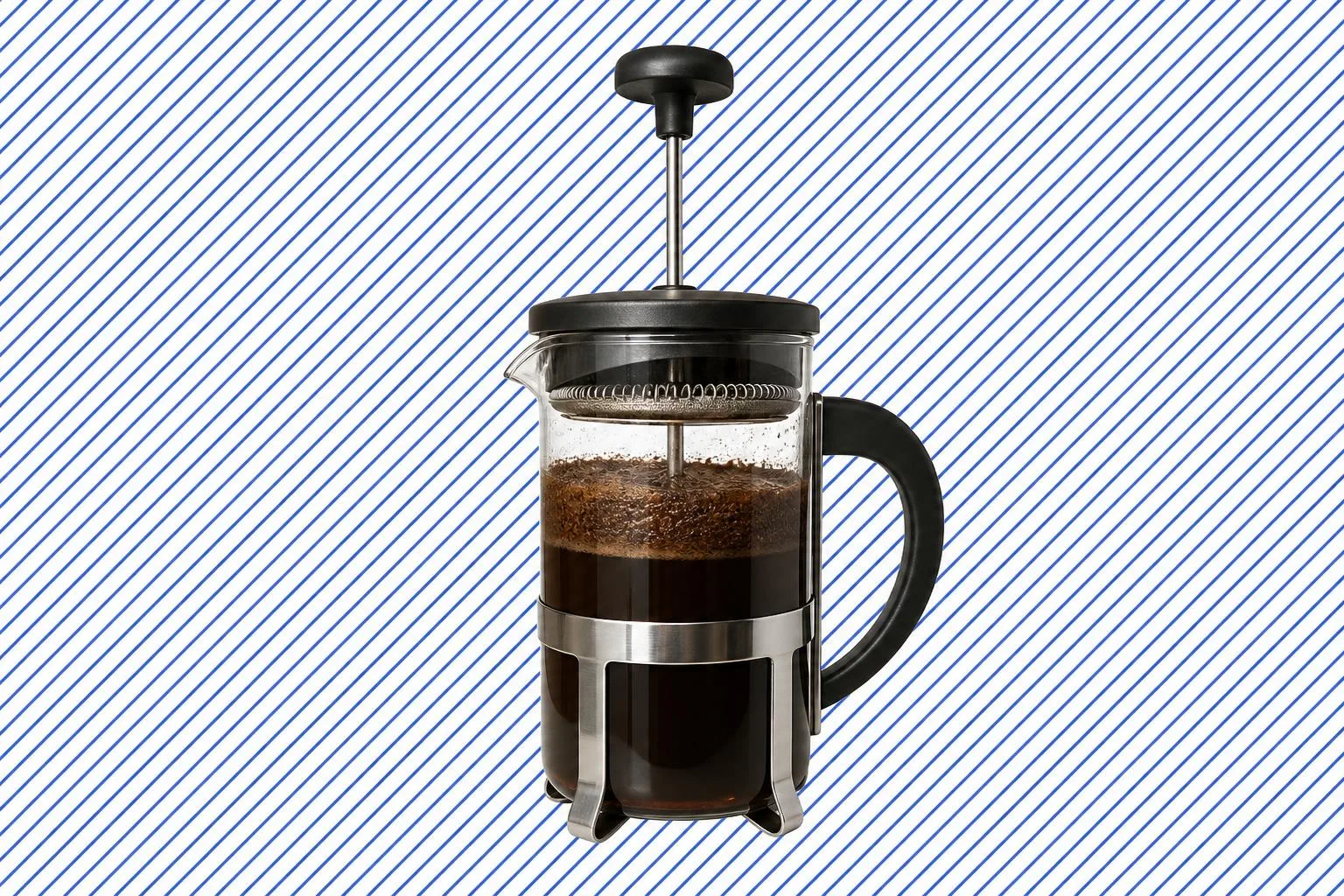
- Fit the plunger and press slowly and evenly to the bottom.
- Decant immediately into cups or a separate carafe.
That 1:15 ratio is stronger than the 1:18 golden ratio used for filter coffee, and deliberately so. The band runs from a punchy 1:12 to a lighter 1:17; go above 1:17 and the cup starts tasting like water.
If you like a bigger or smaller batch, hold the ratio and scale both numbers together. For a full 1-litre press, 66g of coffee to 1,000g of water keeps you at the same 1:15 and the same four-minute steep.
Why the grind has to be coarse
Think of a French press as immersion plus a metal filter. The coffee sits fully submerged the whole time, and the mesh only catches the larger particles.
Unlike paper, the metal mesh cannot trap fines, the dust-fine particles a grinder produces. Those fines slip into your cup and keep extracting after you press, and that ongoing extraction is where the classic bitter, gritty flavour comes from.
Aim for a coarse grind, roughly the texture of coarse sea salt, somewhere around 690 to 1300 microns. Medium is acceptable, but coarser is safer: fewer fines means less silt at the bottom and a cleaner finish.
Use a burr grinder, not a blade one. A blade grinder chops unevenly, producing dust and boulders at once, which causes simultaneous over and under extraction that no recipe tweak can fix.
This is the single upgrade that changes the most cups. If your press coffee has always tasted muddy and harsh, a burr grinder set coarse will do more for you than any temperature or timing tweak.
Break the crust, then decant fast
Two small habits do most of the work in a French press. The first is stirring.
At four minutes a crust of grounds floats on top. Breaking it with a spoon lets those grounds sink and makes extraction more even, whether you plunge or not. A gentle stir at this stage also gives the cup more body and complexity.
The second habit is decanting. Do not leave brewed coffee sitting on the grounds while you drink it slowly.
A cup brewed perfectly to four minutes and left in the press for ten minutes tastes significantly more bitter than one poured out straight away. Once you plunge, get the coffee off the bed of grounds, either into cups or a clean jug.
Troubleshoot by steep time
The French press has one main dial for taste: how long the coffee steeps. Change one thing at a time and taste the difference.
- Too weak or watery? Extend the steep to 4.5 or even 5 minutes before you touch the ratio.
- Too bitter or harsh? Shorten the steep to 3.5 minutes, and check your grind is not too fine.
- Still muddy after adjusting time? Grind coarser. Silt in the cup almost always means fines, not steep length.
Work through those in order, and give each change a full brew before judging it. Chasing two variables at once just tells you the cup changed, not which lever did it.
If you want to nail your ratio for a different press size, the brew calculator will scale the 1:15 recipe to any dose or carafe volume.
Match the recipe to your roast
Full immersion flatters body and sweetness over sparkle. It shows off chocolate and caramel notes more than delicate acidity, which is why medium and medium-dark roasts tend to shine here.
Single-origin Colombian and Guatemalan coffees do especially well: they bring the rounded, cocoa-and-caramel body the method loves. A washed medium roast from either origin is a reliable starting point.
A gentle medium-roast Colombian is the safest first French press coffee, with the deep chocolate and caramel weight the brewer draws out beautifully.
If you want a cheaper everyday bag to practise the recipe on, a straightforward washed Colombian at medium roast does the same job without asking much of your technique.

Light roasts are not off-limits, but they want a lighter touch. Drop the water to about 195°F and shorten the steep to around 3:30; the coarse grind lets their delicate flavours through without pulling bitterness.
Whatever the roast, freshness matters. The best window is roughly 7 to 30 days past the roast date, fresh enough to taste alive, rested enough to have settled.
The no-plunge upgrade for a cleaner cup
Once the standard recipe feels routine, there is a well-known technique from James Hoffmann that trades a little volume for a much cleaner cup. It skips the plunge almost entirely.
Here is how it runs:
- Add 30g of coffee and pour 500g of water just off the boil, around 94°C. Do not stir.
- Steep for four minutes.
- Break the crust with a spoon, then give it two or three slow stirs to sink the floating grounds.
- With two spoons, scoop off the foam and floating grounds on top.
- Wait at least five minutes for the remaining grounds to sink to the bottom.
- Rest the plunger on the surface but do not press it down. Pour gently.
The idea is that most of the fines settle out on their own, so you barely disturb the bed when you pour. The result is closer to a pour over in clarity while keeping some immersion body.
Be honest about the trade-offs. The whole brew runs about ten minutes, so use a medium-coarse grind rather than very coarse to avoid over-extraction during the long rest.
You will also lose a little coffee to the sludge left behind at the bottom, since you stop pouring before the dregs. That lost volume is the price of the clean cup, and for many people it is worth paying.
Because this method leans towards clarity, it can also carry a brighter, more aromatic bean than the classic recipe. A washed light roast with floral or citrus notes survives the longer contact time here better than it would under a hard plunge.
What to do first
Start with the standard recipe: 30g coffee, 450g water, four minutes, break the crust, plunge slowly, decant at once. Get that repeatable before you chase the no-plunge method.
Then change one variable at a time. Dial the grind coarser if the cup is muddy, adjust the steep by 30 seconds if it is weak or bitter, and only then experiment.
When you are ready to buy beans for it, browse the full catalogue for a medium-roast Colombian or Guatemalan, or compare brewers on the French press page. The press is the most forgiving way to make a big, comforting cup, and it takes about a week of mornings to make it your own.