The 30th Best of Panama auction closed on 24 September 2026 after about 19 and a half hours of bidding, and the headline numbers are extraordinary. Total sales reached $3,041,940 across 50 lots, drawing more than 25,000 bids from buyers around the world.
The top price was $18,004 per kilo. That was paid for Elida Geisha Torre, a washed Geisha from Lamastus Family Estates, whose 15 kg lot fetched $270,060 in total. The buyer was China's JD.com, and the lot carried a cup score of 96.25.
So the short answer: Best of Panama 2026 coffee sold for an average of $4,055.92 per kilo across the whole auction, with the single most expensive lot going for $18,004 per kilo. Below that peak sat dozens of lots that would still count as some of the priciest green coffee on Earth.
The lots that defined the sale
Of the 50 lots on offer, 40 were Geisha and 10 were other varieties. Every one of the 40 Geisha lots sold above $1,500 per kilo, which tells you how firmly this variety now anchors the top of the market.
The winning Torre lot was Lamastus's eighth Best of Panama title, grown at around 1,800 m in Boquete. Second place went to Lerida Waterfall Geisha, a natural from Finca Lerida scoring 95.63 points, which sold for $13,505 per kilo.
Five Geisha lots cleared the $10,000 per kilo mark. Hacienda La Esmeralda, the estate that started this whole story, placed third with a natural Geisha at $10,024 per kilo and fourth with a washed Geisha at $10,014 per kilo.
The non-Geisha varietals ranged from $897 to $4,216 per kilo. The top of that group was a Laurina from Hacienda La Esmeralda, a reminder that even Panama's "other" coffees now command specialty prices.
To put the scale in everyday terms, a 15 kg lot is about 33 pounds of green coffee. At $18,004 per kilo, a single roasted shot's worth of beans costs more than most people spend on a whole bag at the supermarket.
Who did the buying
Chinese buyers dominated. They acquired 20 of the 50 lots and accounted for 38% of the auction's final revenue, with JD.com taking the record Torre.
Western specialty names were active too. US roaster George Howell Coffee bought the Finca El Pergamino "Holy Bean" washed Geisha for $9,936 per kilo, and Dubai's The Espresso Lab took an Elida Geisha Vuelta natural at $10,008 per kilo.
That spread matters. A roaster paying close to $10,000 per kilo for green coffee is buying a tiny amount to brew in minuscule servings, often at a cupping or as a special pour, not to stock a shelf.
The geography of the bidding is a story in itself. A decade ago these auctions were driven largely by buyers in the United States, Japan and Taiwan; now mainland China and the Gulf are setting the ceiling, and that fresh demand is part of why prices keep climbing.
For many of these buyers the coffee is also a flag to plant. Winning a lot like the Torre buys headlines, cafe footfall and bragging rights, so the bid reflects marketing value as much as liquid in the cup. That is a different calculation from the roaster trying to fill a weekly shelf, and it pushes the top end higher than taste alone would.
The record cooled, even as the total rose
Here is the counterpoint the headline misses. The $18,004 per kilo top price was well below last year's record of $30,204 per kilo, so the single peak actually cooled in 2026.
Yet the auction as a whole grew. The 50 lots brought in $3.04 million versus roughly $2.86 million in 2025, a rise of about 6% in total value.
So the market broadened rather than spiked. Fewer buyers chasing one trophy lot into the stratosphere, more serious money spread across the top tier. For the growers, a deeper field of high bids is arguably healthier than one freak number.
A record-chasing single lot grabs the press, but it rewards only one farm. A rising floor, with every Geisha lot clearing $1,500 per kilo, puts money into many more hands and makes the whole category more stable.
Why Panama Geisha costs this much
The price is not marketing. It is the product of a rare variety, hard terroir and a cup that genuinely tastes different from almost anything else.
Geisha traces back to Ethiopian forests, and when grown high in Panama it gives a wildly aromatic, tea-like cup. A Lamastus washed Geisha cupped this season showed white jasmine, lemon, green apple and bergamot: the classic floral and bergamot profile people fall for.
The plant is the problem and the point. Geisha is low-yielding, tall and fussy, so a farm gives up volume to grow it. At 1,800 m in Boquete the cherries ripen slowly and unevenly, which concentrates flavour but raises the cost of picking.
Then comes scarcity by design. Auction lots are 15 kg each, hand-sorted and separated by variety, farm and process, so a world of buyers competes for a few bags. Add the fame and the bidding does the rest.
There is also the cost of proving the quality. Lots are scored by an international panel before the sale, and a mark like 96.25 is not handed out lightly, so the auction price reflects verified excellence rather than a seller's claim.
How the fame started
It is worth remembering how recent all this is. Panama Geisha's reputation began in 2004, when Hacienda La Esmeralda stunned the judges with a cup nobody could place.
A 2005 lot set a then-record of $770 per kilo. Set beside 2026's $18,004, that shows how far and how fast these prices have climbed in two decades.
The variety that caused the stir has since spread to Colombia, Honduras, Bolivia and beyond. But Panama remains its spiritual home, and the Best of Panama is still the auction that sets the ceiling.
Each record ripples outward. When a Boquete lot sells for five figures, growers in other origins plant more Geisha and buyers pay closer attention, which is how a single Ethiopian forest variety came to crown specialty menus worldwide.
Can you actually taste one?
You will not be drinking the $18,004 lot. But Panama Geisha from the same estates, and sometimes nearby lots from the same auctions, does reach roasters you can buy from.
Hacienda La Esmeralda, the estate behind Best of Panama 2026's third and fourth places, has washed Geisha roasted for filter. Expect jasmine, stone fruit and a tropical lift, and expect to pay for it.
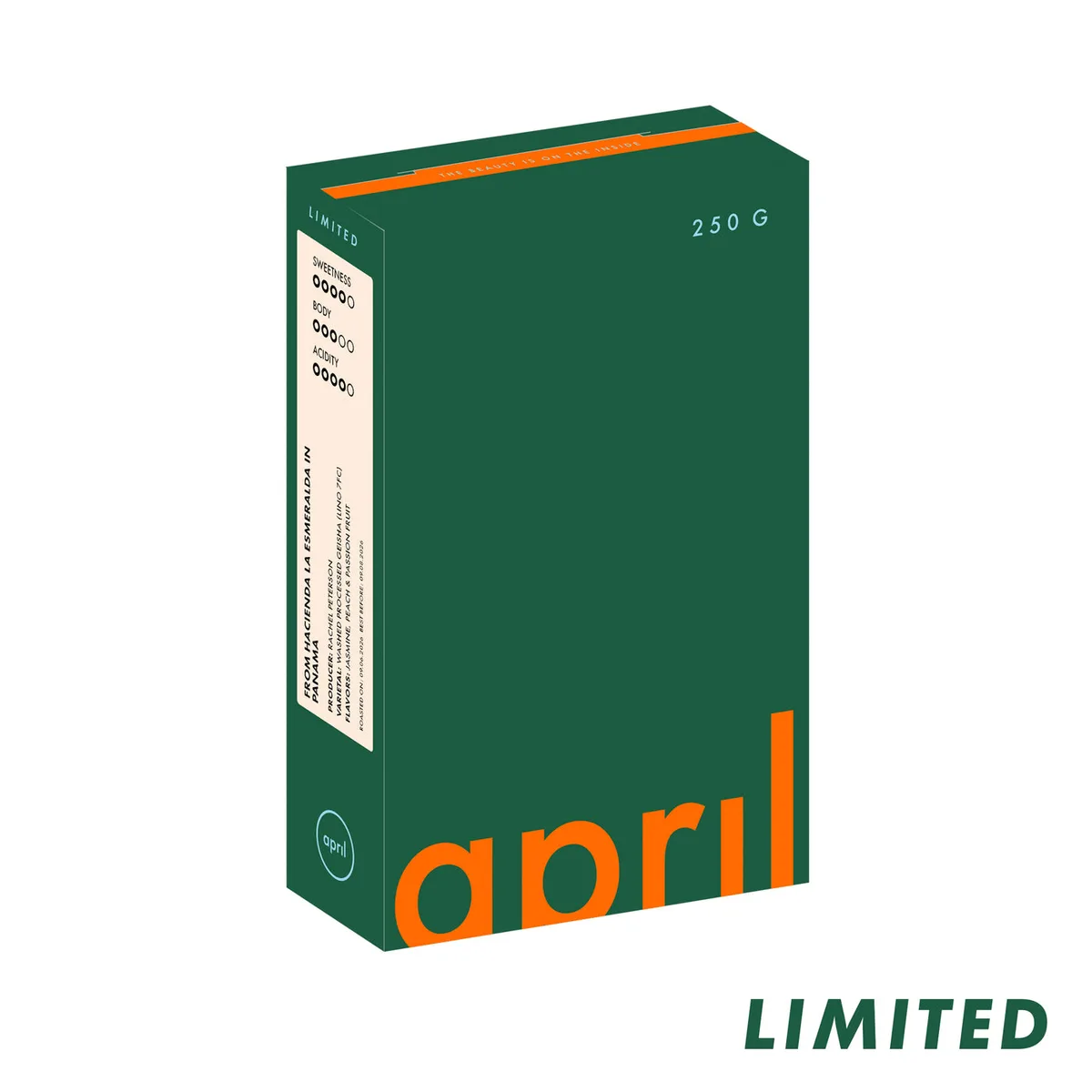
Lamastus Family Estates, this year's winning farm, also releases washed Geisha in smaller formats. This Elida lot leans floral and winey with a savoury edge, a good window into the estate's style without the auction's four-figure kilo price.

Finca Lerida, which took second place this year, is another name to look for. A washed Lerida Geisha carries tropical fruit, florals and a clean citrus finish, and tends to arrive in 100 g bags that suit a careful brew.
How to brew a coffee this special
Treat it gently. A Geisha this delicate rewards clarity, so a pour over with a paper filter shows off the florals better than a heavy immersion brew.
Start around 1 part coffee to 16 or 17 parts water, grind a touch coarser than your usual filter setting, and keep water at 92 to 96 °C. If you want to dial in your dose and water weight, the brew calculator will do the maths for a small, precise batch.
Drink it black and let it cool. The jasmine, bergamot and stone-fruit notes open up as the cup drops in temperature, which is exactly where cheaper coffees fall apart and a great Geisha keeps giving.
If four-figure kilos are not your budget, that is fine. Explore the wider Geisha variety page or browse all our Panama coffees to find a version that fits your shelf and still tells the story.