Geisha coffee is expensive because four things stack on top of each other: it's a genuinely rare variety with low yields, it needs high altitude to taste like itself, it sells through a hype-driven auction market, and its flavour is scored and collected like fine wine. Each factor alone would push the price up. Together they produce numbers that look like typos.
The headline case: at the August 2025 Best of Panama auction, a washed Geisha from Hacienda La Esmeralda sold for a record $30,204 per kilo — roughly $13,705 a pound — to a buyer in Dubai. That single 20-kilo lot came to more than $600,000.
For comparison, ordinary Arabica on the commodity market recently traded near $1.08 a pound. Geisha isn't a slightly pricier coffee. It's a different economy.
A rare plant that doesn't like to produce
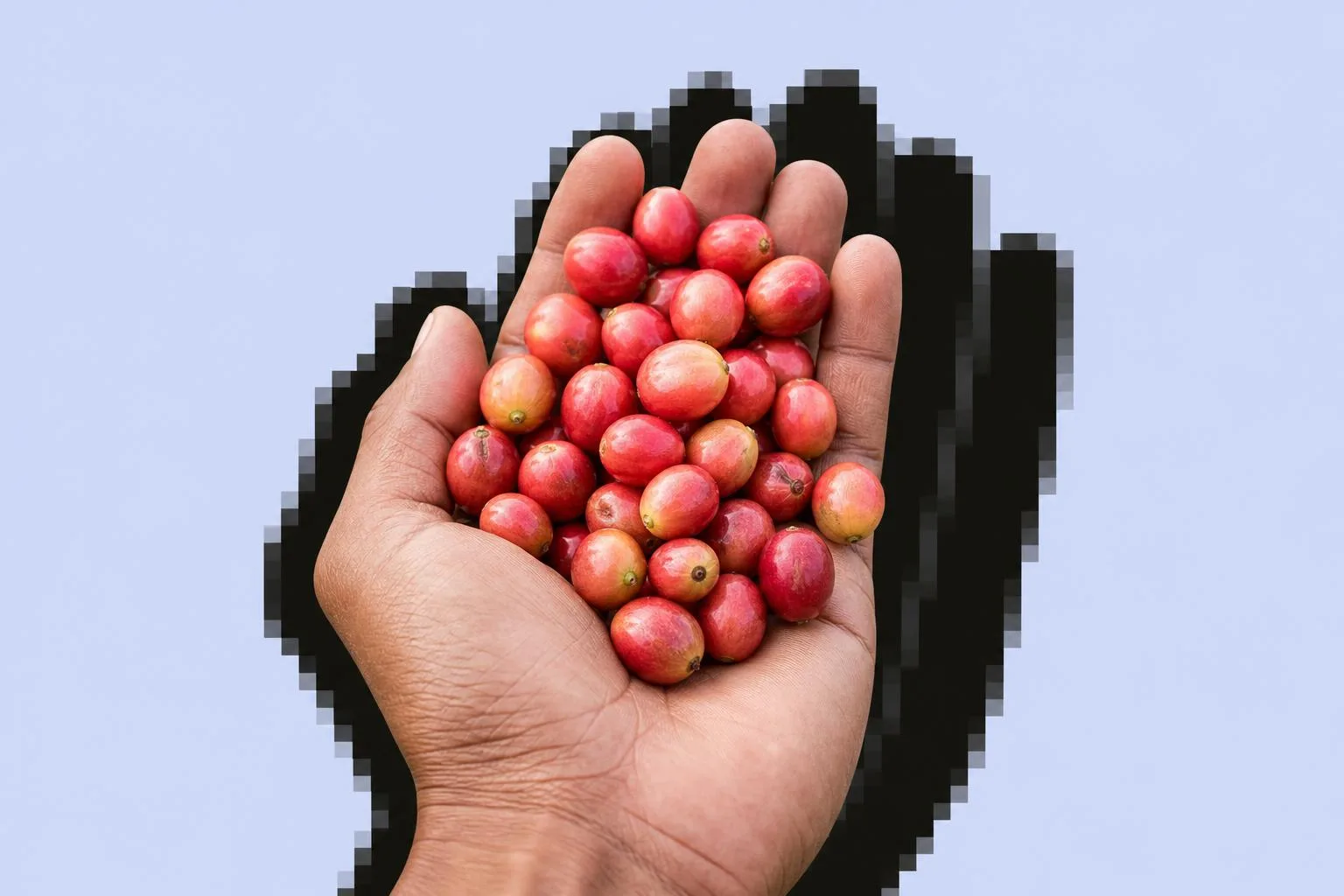
Geisha is an Arabica variety native to Ethiopia, identified in the 1930s and collected in the Gori Gesha forest of the southwest. Seeds travelled to a research station in Tanzania, then in 1953 to CATIE in Costa Rica as accession T2722, and finally to Panama in the 1960s — originally for its leaf-rust resistance, not its flavour.
The plant is temperamental. It has a small root system and simply isn't very productive; sources put its yield roughly 20–30% below conventional Arabica.
A farmer plants the same hectares, tends the same trees, and harvests less coffee. That gap alone raises the cost per bag before anyone has tasted a thing.
It's also fussy about where it grows. Geisha only expresses its famous aromatics at altitude — Panama's celebrated lots sit around 1,550–2,060 m in volcanic soil and misty microclimates.
Plant it low and you get a thin, unremarkable cup. So the best Geisha comes from a narrow band of high, cool, hard-to-farm land, which limits supply further.
The cup people are paying for
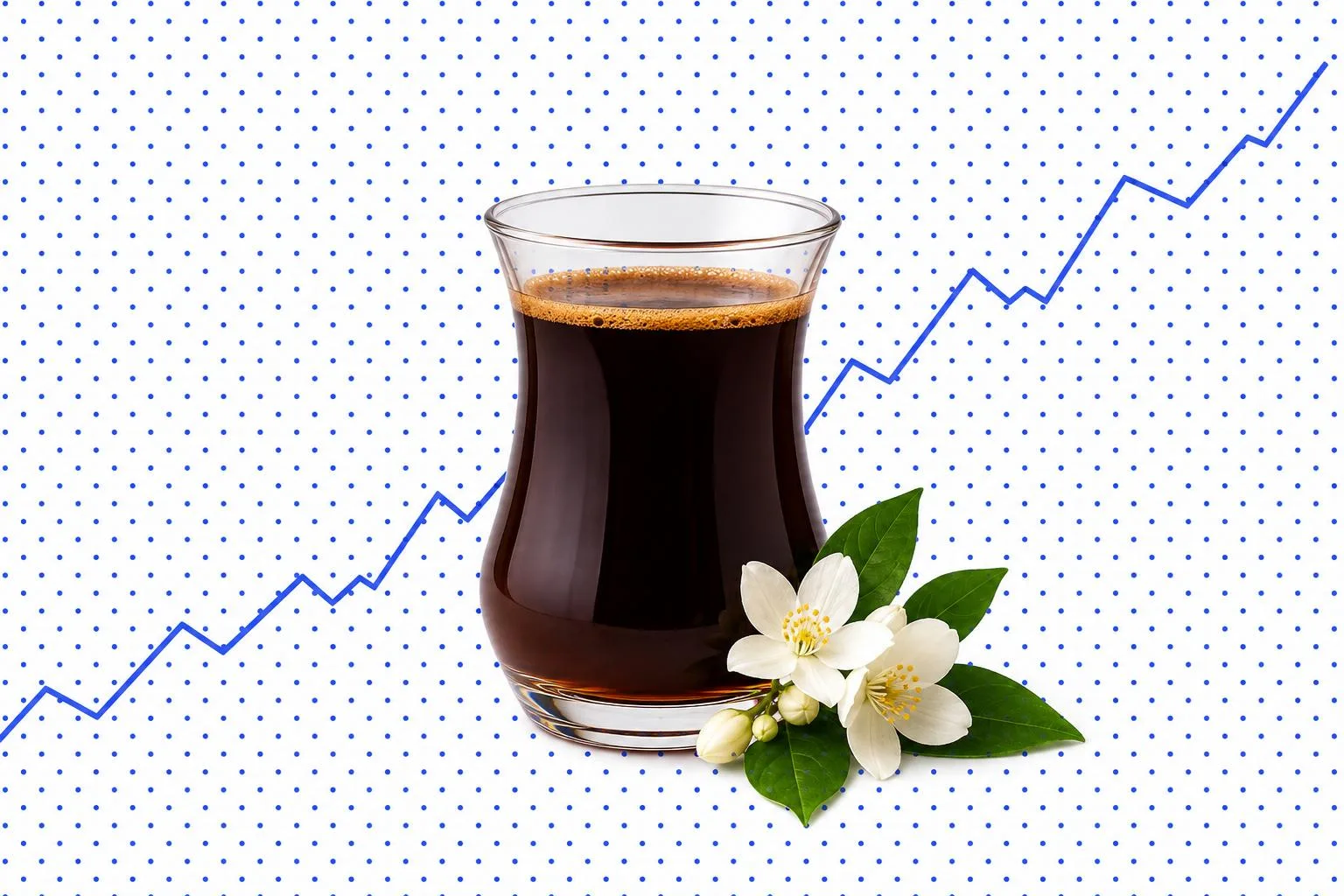
Strip away the auction theatre and there is a real reason Geisha commands attention. At its best it tastes like jasmine, bergamot and black tea over stone fruit and tropical fruit, with a silky, tea-like body and wine-like acidity. It's floral and perfumed in a way most coffee never approaches.
That profile is usually shown off with a clean washed process, which strips the fruit before drying and lets the variety's aromatics come through unclouded. Natural and honey versions exist too, trading some clarity for extra fruit and body. Either way, top Panama Geishas consistently score 90+ on the Specialty Coffee Association's 100-point scale — the number that turns a good coffee into a collectible one.
If you want to taste the archetype — the actual estate behind the record — this washed Esmeralda Geisha is the real thing, grown on the farm that started the whole phenomenon:
The auction turns rarity into spectacle
Geisha's modern price story began in 2004, when Hacienda La Esmeralda first entered the variety at the Best of Panama and it fetched a then-shocking $21 a pound. The ceiling has been rising ever since. In 2019, Lamastus Family Estates' "Elida Natural Geisha 1029" became the first coffee ever to top $1,000 a pound, at $1,029.
The 2025 auction shows how far things have run: it generated over $2.8 million in total, with 30 of 50 lots exceeding $1,000 per kilo and an average of $2,861.20 per kilo — more than double the year before. This is an auction, so scarcity, prestige and competing bidders do exactly what auctions are designed to make them do. A tiny lot, a famous farm and a global pool of buyers who want bragging rights push prices far past what the coffee costs to grow.
It helps to separate two markets that share a name. The auction spectacle is one thing. Everyday retail Geisha is another.
What Geisha actually costs to buy
Most Geisha you can buy is nowhere near the record. Green (unroasted) Geisha from Colombia, Guatemala or Costa Rica often runs about $25–50 a pound, while high-end Panama green runs roughly $100–600 a pound. Roasted retail bags follow that spread — a Panama Geisha lands well above a great washed Ethiopian, but it isn't a five-figure object.
A few things worth knowing before you spend:
- Origin drives most of the price. Panama carries the biggest premium because that's where the reputation was built. The same variety grown in Colombia, Ecuador or Honduras can be excellent and much cheaper.
- "Geisha" on a label isn't a quality guarantee. Low-grown or poorly processed Geisha can taste flat. Altitude and care matter more than the name.
- Ethiopian and Panamanian Geisha are close genetic cousins. 2014 research by Dr. Sarada Krishnan found Panamanian and Ethiopian Geisha to be genetically very similar — the plant is the same story, differently marketed.
For a first taste that won't require a second mortgage, a well-made Colombian Geisha delivers the jasmine-and-citrus signature at a fraction of the Panama price:
What to do first
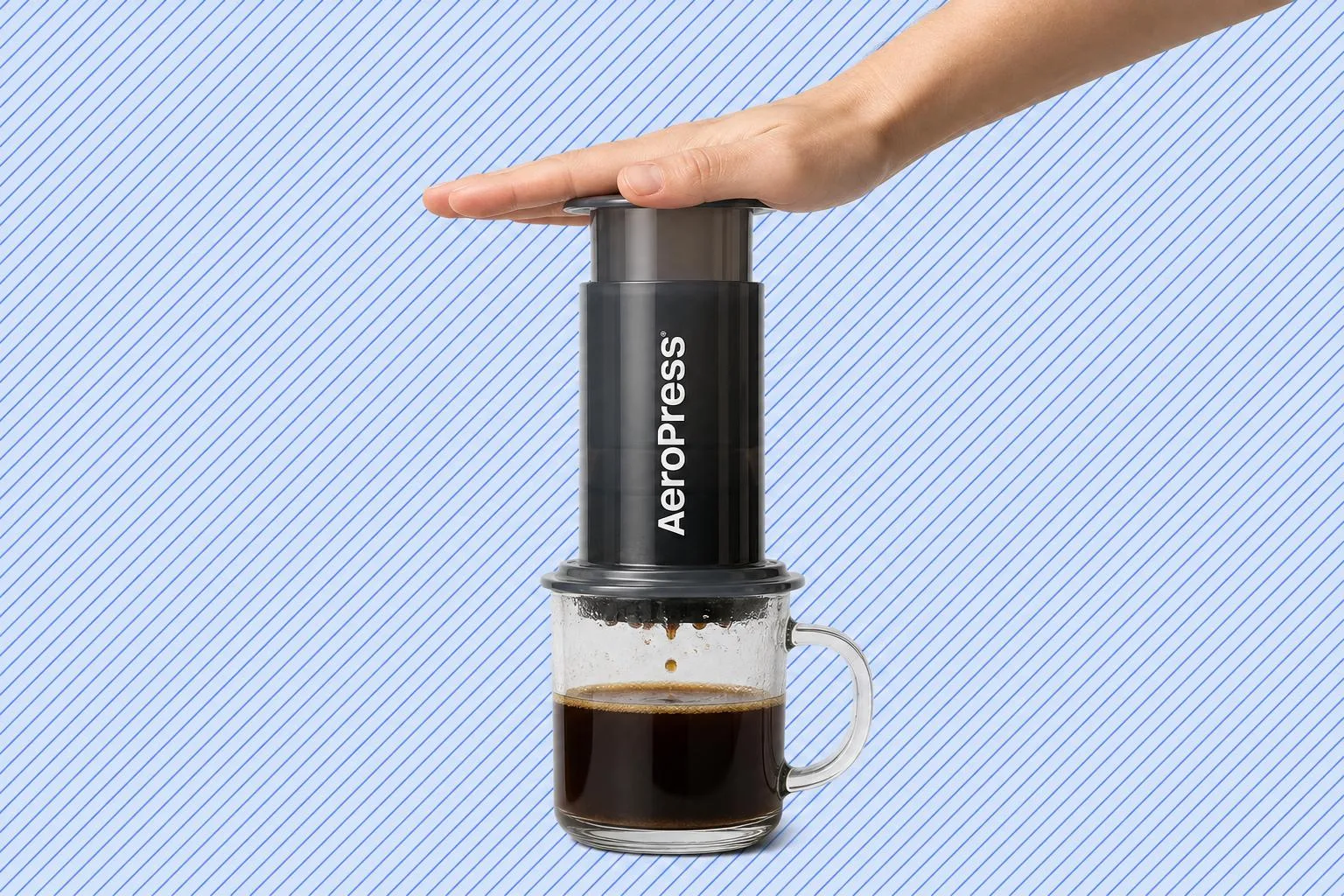
If you're curious, don't start at the top. Buy a mid-priced Colombian, Ecuadorian or Honduran Geisha, brew it gently as a pour over to keep the aromatics intact, and pay attention to the florals and the tea-like body — that's what all the money is chasing. Dial in your ratio with the brew calculator, and if you like what you find, work your way up to a Panama lot later.
To explore more, browse the Geisha variety page or compare washed and natural versions side by side — the same plant tells two different stories depending on how the fruit was handled.