Can you remove caffeine from coffee after brewing? The graphene filter, explained
Researchers in Australia built an experimental graphene-oxide filter that strips roughly half the caffeine from already-brewed coffee. Here is what it does, what it cannot do yet, and what it means for your cup.
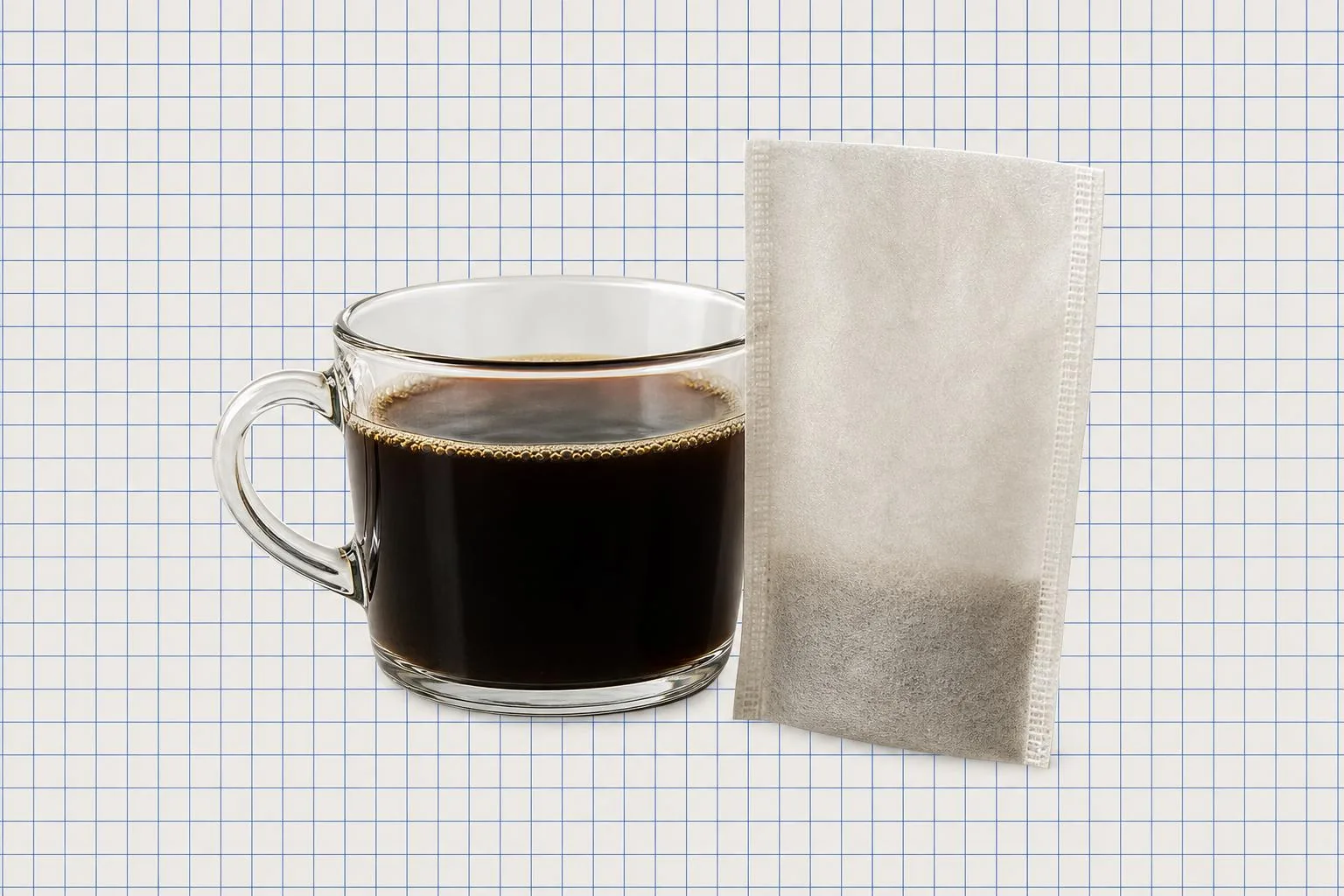
Short answer: in a laboratory, yes, and only partly. Researchers in Australia have built an experimental membrane that removes close to half the caffeine from coffee that has already been prepared.
The filter is made from graphene oxide, an ultra-thin carbon-based material. In the best test it cut caffeine by about 47 percent while leaving measurable amounts of several other coffee compounds behind.
This is not a product you can buy. It is lab-stage science, published in the Journal of Membrane Science in September 2026, and the honest caveat sits at the front of this piece: it is a promising result, not a kitchen gadget.
What the researchers actually built
The work came from the ARC Centre of Excellence for Carbon Science and Innovation. The team set out to do something harder than it sounds: separate caffeine from brewed coffee at the molecular scale, after the cup is already made.
That framing is the interesting part. Almost all commercial decaffeination happens much earlier, on green beans before roasting, using water, carbon dioxide or chemical solvents.
This method skips all of that. It targets caffeine that is already dissolved in the liquid, which means the roast and the brew have already happened.
The principal test used 100 millilitres of a solution made from commercial instant coffee. The best-performing membrane reduced caffeine from 24.64 to 12.95 micrograms per milligram of dried coffee solids, a 47.4 percent drop.
The stated goal was elegant: let caffeine pass through the membrane while the other coffee compounds stay behind in the liquid. In other words, strip the stimulant and keep the drink.
A membrane like this works as a sieve that sorts by molecular behaviour, not by the holes in a paper filter. Graphene oxide can be layered into sheets with gaps so narrow that single molecules interact with the walls as they squeeze through.
That is why the team could measure the problem so precisely. By tracking the exact caffeine concentration before and after, they could say how much the sheet removed, and confirm the stimulant really was leaving the liquid rather than just diluting away.
Why the heaviest molecule leaves first
To check whether the filter was carrying away more than just caffeine, the authors measured four other substances alongside it: choline, trigonelline, 5-hydroxymethylfurfural (HMF) and N-methylpyridinium (NMP). These are part of coffee's intricate chemistry, so tracking them shows what else might be lost.
Here the result turns counter-intuitive. Line the molecules up by weight and caffeine is the heaviest of the group, at 194.2 daltons, a dalton being the tiny unit chemists use to weigh single molecules.
The others are lighter: NMP at 94.1, choline at 104.2, HMF at 126.1, trigonelline at 137.1. You would expect the lightest things to slip through most easily.
Instead, the heaviest molecule escaped with the greatest ease. Weight alone did not decide what passed.
The explanation is about chemistry, not size. Under the study's conditions caffeine is less ionized, meaning it carries less electrical charge, so it can temporarily cling to the material's surface and then release again as it travels through.
That clinging and letting go is called adsorption and desorption. It behaves like a relay of brief handholds along the membrane, moving caffeine forward while more strongly charged molecules sit in the liquid and stay put.
For a coffee drinker, the useful takeaway is simple. A filter can be tuned to chase one specific molecule out of a cup, which is exactly what you want if the target is caffeine and the thing you are trying to keep is flavour.
The honest caveats
This is where the excitement needs cooling. The experiment did not include a sensory tasting, so we simply do not know whether the treated coffee tastes the same.
That matters more than it might seem. A chemical measurement can show that trigonelline or HMF survived, but it cannot tell you whether the cup still has balance, sweetness or aroma.
The team also ran into a familiar trade-off. When they tuned the filter to remove more caffeine, it stripped out too many other compounds in the process, which made it less suitable for the job.
That tension sits at the heart of every separation technology. Push harder for one result and you tend to disturb everything else, and coffee is a drink where hundreds of compounds build the flavour you actually recognise.
There are scale limits too. The headline test used a small volume of reconstituted instant coffee, not a filter of fresh specialty coffee run through at home.
Instant coffee is also a simpler, more uniform liquid than a freshly brewed pour over, so results on one do not automatically carry to the other. And even at its best, the membrane removed about half the caffeine, not all of it; half-caf is a real category, but it is not decaf.
Why this matters for specialty coffee
Step back from the lab and the appeal is clear. Conventional decaffeination happens while the coffee is still green and unroasted, which quietly limits what a decaf drinker can buy.
At the top of the specialty world, that limit bites hard. Prized varieties like Geisha are rarely, if ever, decaffeinated, because almost nobody sends lots that precious through a green-bean decaf process.
A filter that works after brewing would flip the order. In theory you could roast and brew any coffee you like, then take the caffeine out of the cup, without committing the green beans to a treatment first.
That is why the idea travels well across origins and processes. A washed Ethiopian lot or a natural microlot could in principle keep its character and still become low-caffeine, instead of being ruled out before roasting.
It would also change the economics. Decaf has long been a smaller, cheaper corner of the catalogue, partly because few roasters commit their best green coffee to a process that can blunt it.
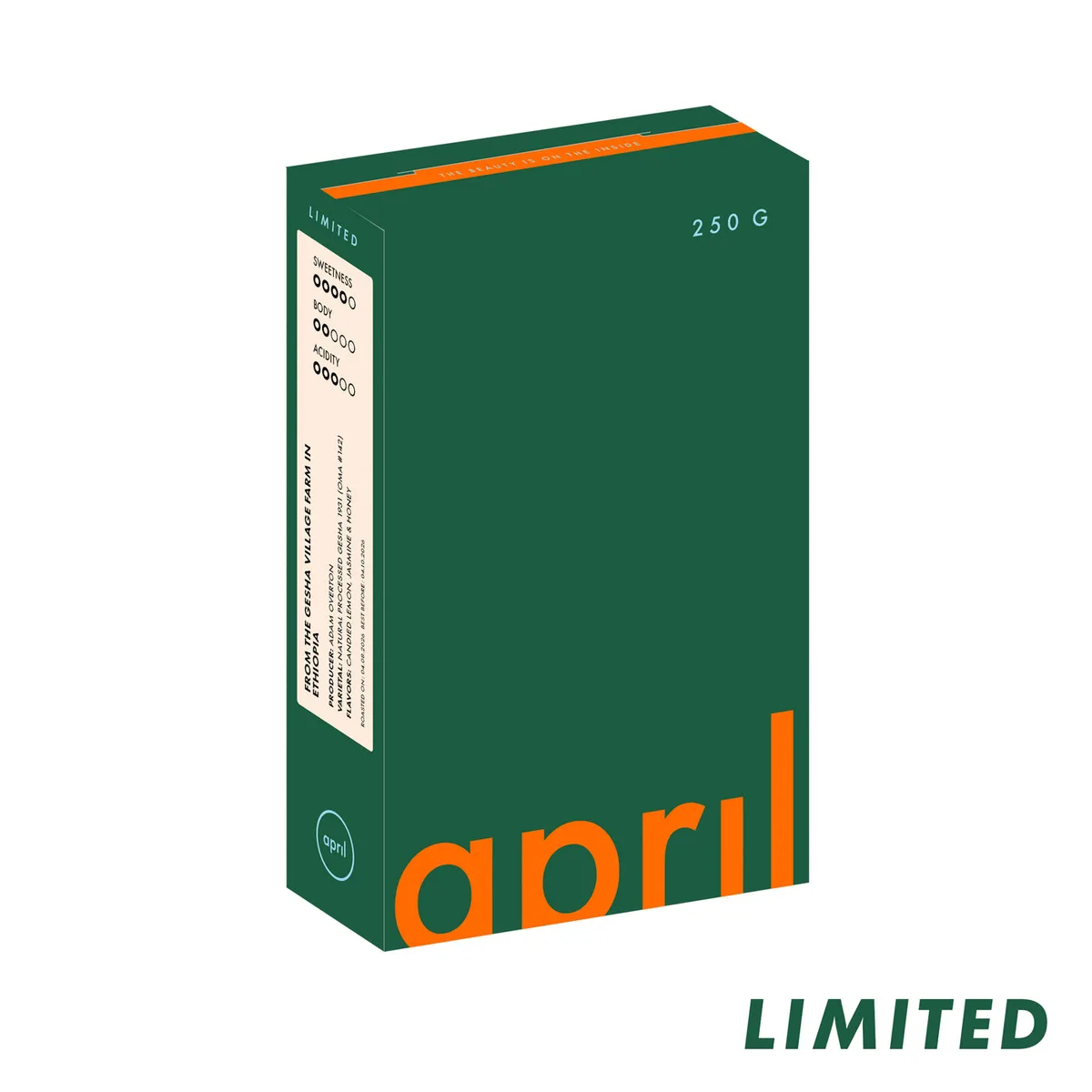
To be clear, none of that is possible today. But it reframes a coffee like this Gesha Village natural, the kind of expressive lot you would never normally find decaffeinated, as exactly the sort of cup an after-brew method could one day open up.
Can you make coffee decaf at home right now?
Not with this technology. There is no consumer graphene filter, no attachment for your dripper, no cartridge for your machine.
If you want less caffeine today, your real options are older and simpler. The most reliable is to buy coffee that was decaffeinated as green beans, then roasted and sold like any other bag.
Those beans have come a long way. Water-based and carbon-dioxide methods can produce genuinely enjoyable decaf, even if the very top specialty lots rarely go through them.
You can also lean on dose. Brewing a smaller mass of coffee, or blending a decaf with a regular coffee to make your own half-caf, lowers the caffeine in the cup without any new hardware.
Brew method matters less here than people assume. A long steep does not strip caffeine from the grounds; it pulls more of it into the water, so a heavier dose or a bigger drink carries more caffeine, not less.
And if you are deciding what to buy and want help narrowing the field, the site's decision helper and the full coffee catalogue are better starting points than waiting for a filter that does not exist yet.
What to watch next
The researchers are not finished. They are building a new filter using hollow fibres, described as thin tubes that pack a large membrane surface area into a small space.
That design choice is deliberate. In other filtration experiments, hollow fibres have consistently removed more caffeine than the graphene oxide used in the current filter.
More surface area means more chances for caffeine to cling and release on its way through, which could push the removal rate past the current half. Whether it does that without dragging out flavour compounds is the open question.
The other test the work still needs is a human one. Until someone actually tastes the treated coffee against an untreated control, the claim that this preserves flavour stays a hypothesis.
There is also the long road from a lab bench to a shelf. A membrane that performs on 100 millilitres has to prove it is affordable, durable and safe before it becomes anything you would pour your morning coffee through.
So treat this as an early, genuine signal rather than a finished answer. The science that caffeine can be coaxed out of a finished cup now exists; the device that does it on your counter does not.
For now, the practical move is unchanged: if you want low-caffeine coffee that still tastes like something, buy a well-made decaf or build your own half-caf, and keep an eye on where this research goes. If you follow the wider market and supply side of coffee, the green coffee prices page tracks that day by day.