Arabica fell again this week, sliding to a 10-week low on Thursday before closing near there on Friday. The reason is not a shortage but the opposite: dealers say Brazil's harvest is nearly complete, and attention has swung to what looks like a healthy 2027 crop.
The other headline had nothing to do with weather. Abu Dhabi's sovereign wealth fund Mubadala agreed to back Luckin Coffee, China's biggest chain, in a deal valued at about $1 billion. For coffee drinkers, both stories point the same way: more supply, more competition, and slightly less upward pressure on the price of a bag.
The market: arabica slides to a 10-week low
| Market | Price | This week |
|---|---|---|
| Arabica (ICE) | 284.25 ¢/lb | -3.84% |
| ICO Composite | 266.82 ¢/lb | -0.99% |
| Robustas (ICO) | 173.47 ¢/lb | +3.00% |
Arabica futures dropped 2.65% on Thursday to $2.8430 per lb after touching a 10-week low of $2.8355, then closed Friday, 11 September at 284.25 cents. Over the past month, the price has fallen almost 11%.
The driver is the calendar. With this year's Brazilian harvest all but finished, traders have switched their focus to the 2027 crop, and the early outlook there is favourable. A good forecast for next year's beans takes some of the fear out of today's prices.
It helps to remember why Brazil moves everything. It is the single biggest producer, so when its harvest lands cleanly and the next one looks promising, the whole futures market exhales. A price is a bet on the future, and this week the bet turned calmer.
Stocks are easing too, if only just. Exchange-certified arabica stocks edged above a recent 26-year low, reaching 220,452 bags on 9 September as extra supplies from Brazil arrived. That is still a fraction of the 685,945 bags held at the same point last year, so the cushion remains thin.
Those certified stocks are the coffee sitting in exchange-approved warehouses, ready to settle futures contracts. When they run low, small shocks move prices hard; when they rebuild, the market feels safer. This week they crept up, which is part of why the mood softened.
Robusta, the workhorse bean behind most instant coffee and a big part of espresso blends, also softened early in the week and hit its lowest level since early June. Measured from their 24 August highs, ICE arabica and robusta had shed 13.5% and 9.8% respectively.
That is a sharp two-week retreat from what were near-record levels, and it shows how quickly sentiment can flip once the supply story turns. Prices are still historically high, but the panic buying of late August has clearly cooled.
The International Coffee Organization's indicators tell the same gentle-down story. The composite index drifted from 269.49 cents on 4 September to 266.82 on 10 September, with Colombian Milds, Other Milds and Brazilian Naturals all slipping over the same span. Robustas were the outlier, firming from 168.41 to 173.47 cents.
That split matters. The ICO's group indicators track different bean families, and when the washed arabicas of Colombia ease while robusta firms, it signals buyers hunting the cheaper bean as the premium ones stay dear.
What does this mean at the shelf? Very little, very slowly. Green-coffee prices are still historically high, roasters buy months ahead, and a few weeks of futures softness rarely reaches your bag before the next season's contracts are signed.
The big names: Mubadala backs Luckin
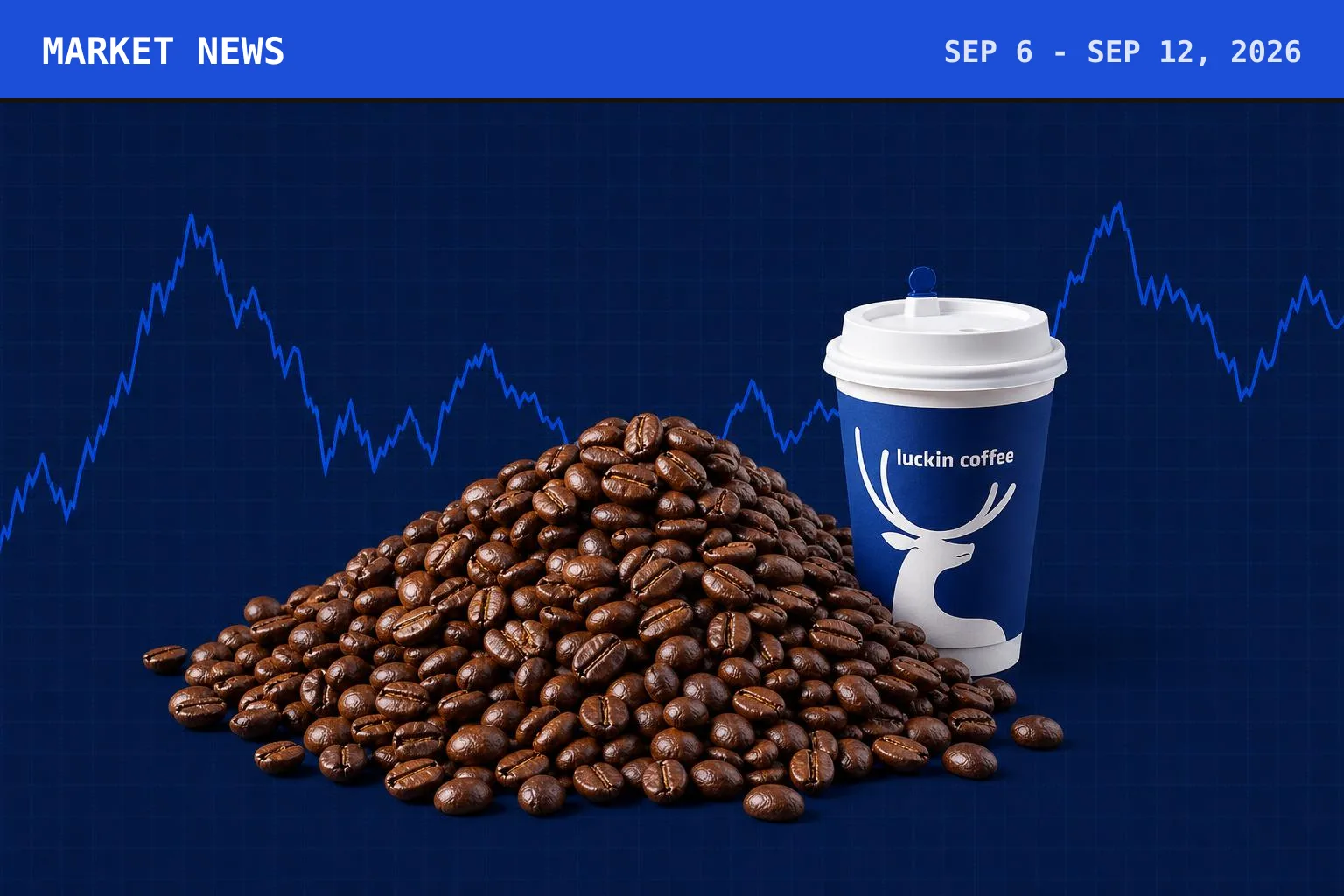
On Wednesday, Mubadala Investment Co. became a backer of Luckin Coffee through a deal with the chain's main private-equity investor, Centurium Capital. The transaction is valued at roughly $1 billion, and Mubadala gains the right to appoint one director.
The timing matters. Luckin is deep into a growth push, including its move into the United States, while pouring hundreds of millions of dollars into roasting, processing and green-coffee procurement. Fresh capital from a sovereign fund gives that low-price model a longer runway.
For drinkers, Luckin's expansion is the clearest sign yet that ultra-cheap, app-driven coffee is going global. It is a different world from the small-batch, single-origin roasters we catalogue, but it shapes what the mainstream expects to pay.
There is a supply angle too. A chain buying green coffee at Luckin's scale becomes a real force in the market, and where it sources from can nudge demand for whole origins. That is worth watching as the money flows in.
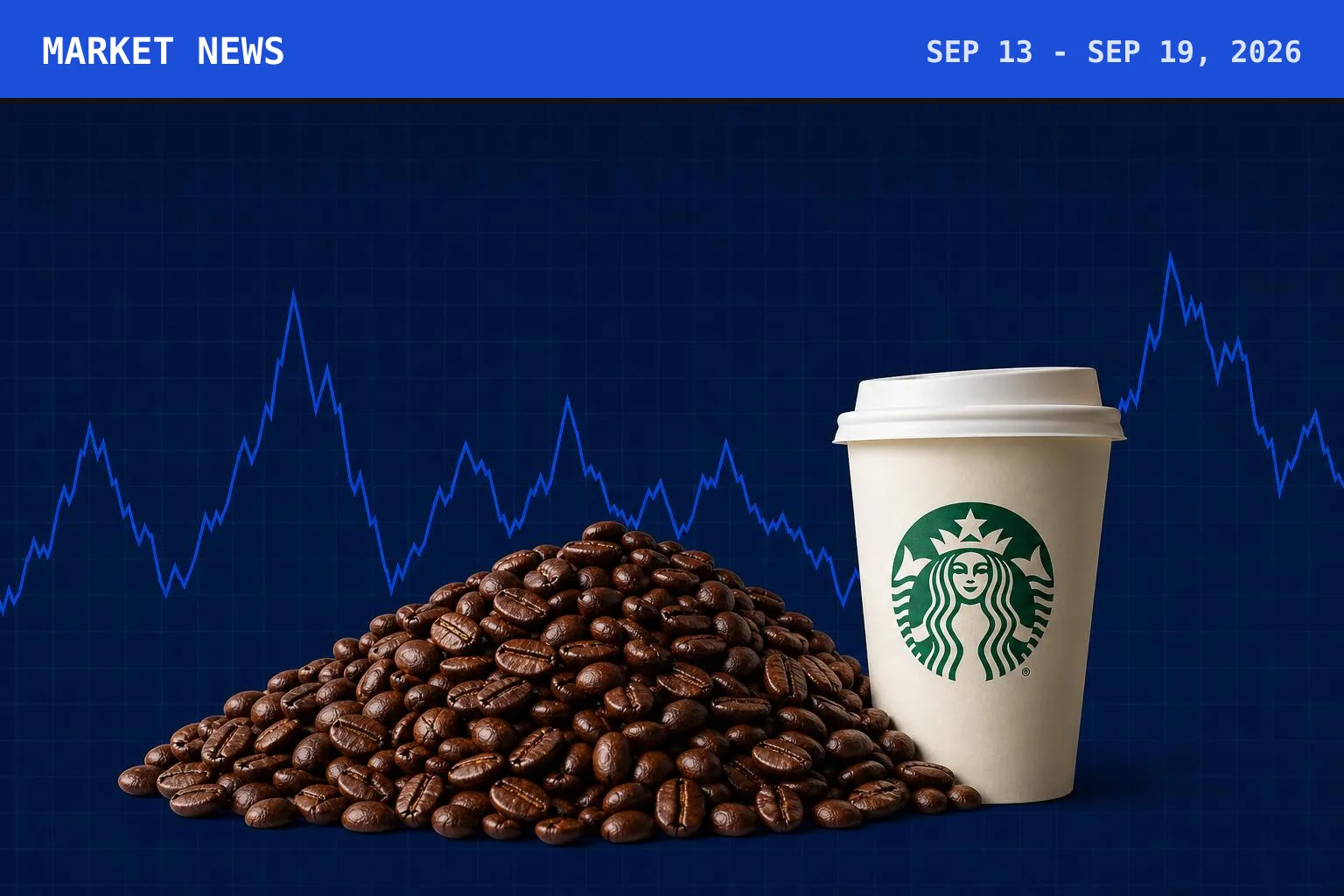
Starbucks had a quieter week. Its stock closed at $99.22 on Thursday as investors weighed solid fiscal third-quarter results against a $1 billion cafe-renovation plan aimed at winning back customers, with the company targeting 1,500 remodelled stores by the end of September.
Both giants, in their way, are spending big to defend their turf: Luckin on scale and procurement, Starbucks on the look and feel of the room. Neither move changes what is in your cup this week, but both tell you where the mass market is heading.
Elsewhere in coffee
The Global Coffee Awards crowned their US and Canada edition this week, and the overall winner was Sweet Bloom Coffee of Denver, Colorado. Awards like this are worth watching if you want to find roasters before they are famous.
Producer countries kept building new trade links. On Tuesday, 8 September, Uganda strengthened its coffee trade with South Korea, targeting 3,500 tonnes a year through Uganda's Besmark Coffee Company and Busan-based GVCC. It is a small volume in global terms, but a meaningful step for an origin better known for robusta than for clean arabica.
On Monday, 7 September, Pact Coffee set a new auction record for Congolese coffee at the 2026 Best of Congo Cooperatives, paying $55.50 per kilo for the top lot, Izuba. It was one of the first anaerobic fermented lots from the DRC, a sign that experimental processing is spreading to origins still finding their specialty footing.
There was a supply-chain scare too. Also on Monday, Indonesia's Anak Krakatau erupted, spreading ash across Lampung province and Jakarta and shutting seven airports, which have since reopened. The volcano sits near the coffee-growing regions of Lampung and Sumatra, so it is worth keeping an eye on, though there is no reported harm to this year's crop yet.
Indonesia is best known for its earthy, full-bodied wet-hulled coffees, so any lasting disruption there would be felt by fans of that distinctive style. For now it is a watch item, not a shortage.
Finally, a quiet housekeeping note from the trade: Kansas City's Paris Brothers Inc., a family-owned green-coffee sourcing and roasting company, is now trading as Paris Group. The rebrand leaves ownership, leadership and the legal entity unchanged.
What it means for your cup
The honest summary is that this week's price fall is good news that will not reach you quickly. Futures have come off the boil because Brazil's next crop looks promising, not because a glut has arrived, and the stock cushion is still slim by historical standards.
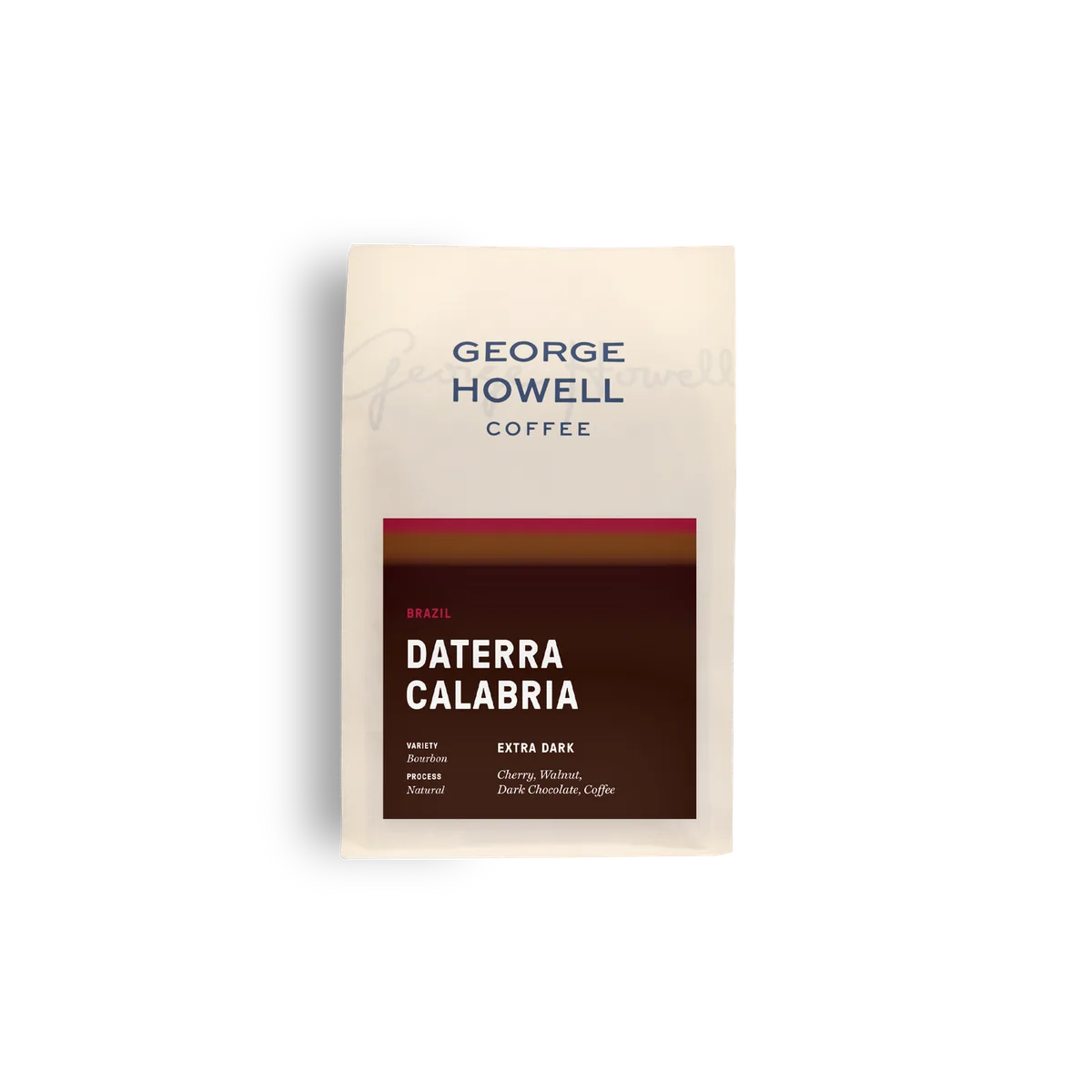
If you want to taste why Brazil moves the whole market, this is a good week to drink one. Brazilian beans lean nutty and chocolatey with a soft acidity, the backbone of countless espresso blends, and this natural-processed lot shows the sweeter, fruitier side of that profile.
For everyday drinking, Colombia remains the dependable middle ground, while Ethiopia and Kenya reward anyone chasing florals and blackcurrant. Browse the full catalogue of coffees, or let the decision helper narrow it down.
Worth watching next week
Two things. First, whether arabica steadies near this 10-week low or keeps sliding as traders price in the 2027 Brazilian crop; a favourable forecast could keep the pressure on.
Second, any follow-through from Luckin after the Mubadala deal. If cheap, capital-backed coffee accelerates its US rollout, it will keep reshaping what a cup is expected to cost, even far from the specialty shelf.