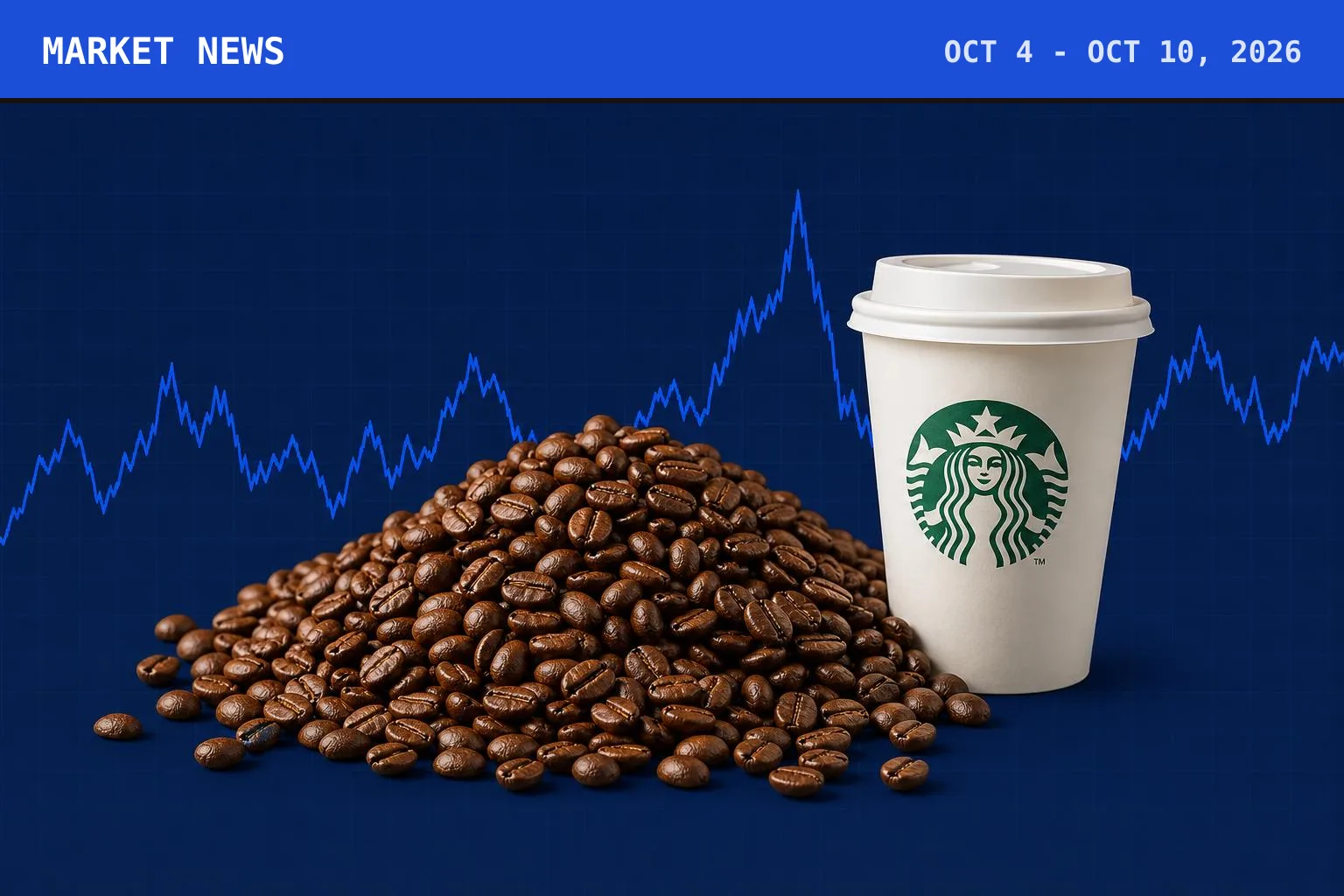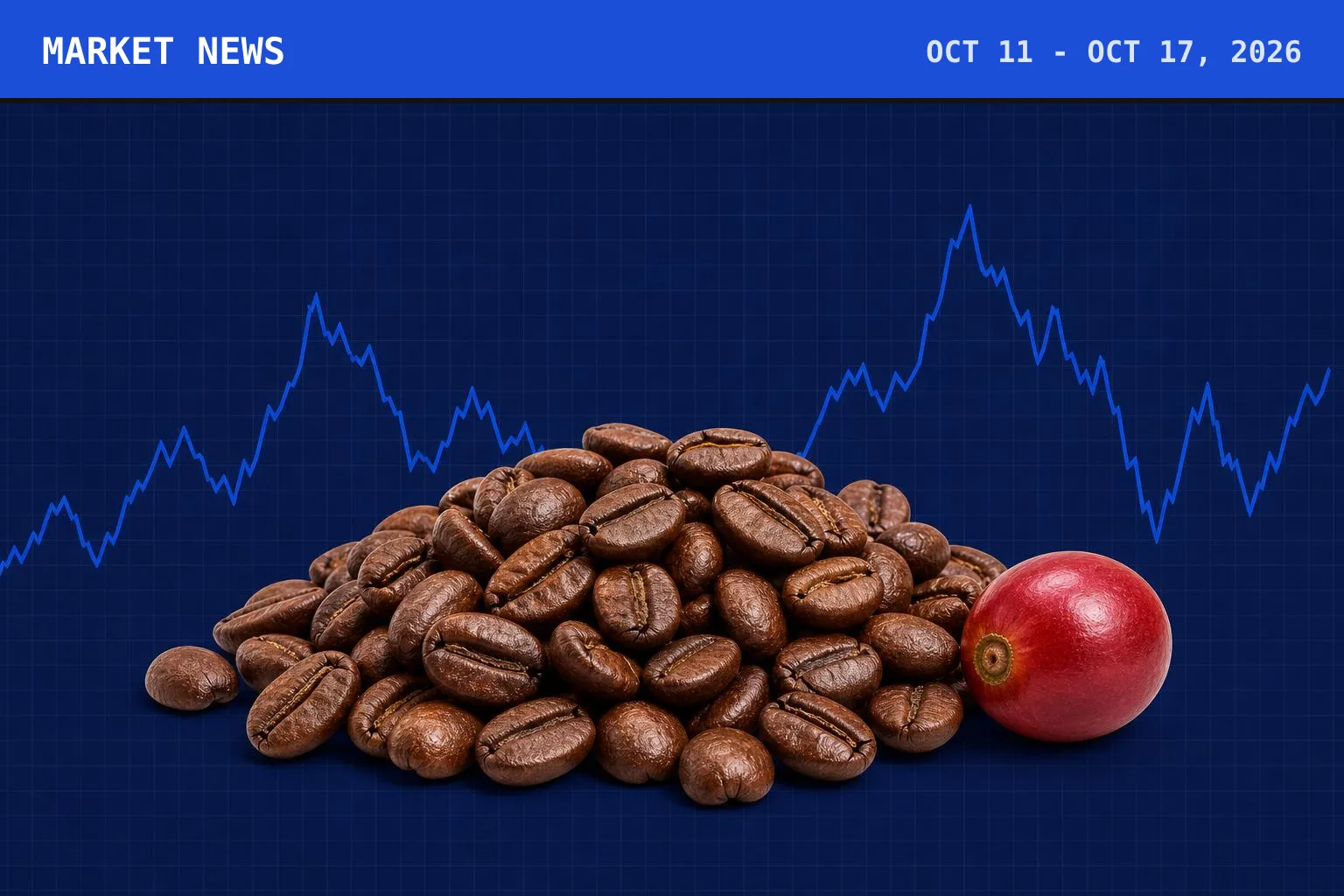
Arabica had its best week in a while. The ICE December contract finished Friday 16 October near 305.6 cents per pound, a one-month high and up roughly 6% on the week, with Colombia's shrinking crop doing most of the lifting.
For anyone buying coffee, the takeaway is simple. The multi-week slide driven by Brazil's record harvest has paused, and the supply story that pushes prices up, less coffee from Colombia, is back in the headlines. That tends to show up slowly on the shelf, not overnight.
The market: arabica rebounds hard
| Market | Price | This week |
|---|---|---|
| Arabica (ICE Dec) | 305.60 ¢/lb | +6.26% |
| Robusta (ICE Nov) | $3,422/tonne | -0.03% |
The rally built steadily rather than in one jump. Both arabica and robusta opened the week trading below their 50-day moving averages, a sign the market had been drifting lower. Then momentum returned fast.
On Monday 13 October the December contract gained 0.7% to settle at 292.70 cents, and by Friday it had climbed another leg to 305.60, up 3.65% on the day alone. A one-week gain of more than 7% in the underlying coffee price is a sharp reversal after weeks of selling.
The single biggest driver was Colombia. The country's Coffee Federation reported that 2025/26 production, covering October to September, fell 15% year on year to 12.65 million bags, the smallest crop since 2022/23. Exports fell 12% to 11.78 million bags.
Colombia is the home of washed, balanced, dependable arabica, the kind that fills a lot of supermarket blends and cafe house coffees. When that supply tightens, the whole washed arabica complex feels it, because buyers who wanted Colombian milds have to bid for other origins instead.
Inventories added to the squeeze. ICE-monitored arabica stocks slipped to 238,976 bags, down from 260,654 the prior week and not far above a 27-year low of 217,646. Thin certified stocks matter because they are the buffer the market draws on when physical coffee is scarce. The smaller that buffer, the more force any bullish headline carries.
Weather and currency filled out the picture. Traders kept pricing in El Niño risks that could disrupt rainfall during flowering in Brazil and deepen dryness across Central America. Flowering is the moment that sets next year's cherry count, so poorly timed rain now can quietly shrink a crop that is still months from harvest.
Brazilian green shipments, meanwhile, posted only a modest 3.1% recovery despite this year's bumper crop. That matters: a record harvest that is slow to actually leave the country does little to ease a tight physical market in the near term.
Robusta was the quiet one. The ICE London November contract closed around $3,422 a tonne, essentially flat on the week after a midweek dip reversed higher into Friday. Robusta is the backbone of instant coffee and cheaper espresso blends, so its calm this week means the pressure sits squarely on the specialty-leaning arabica side.
One note on the wider index: there was no fresh ICO monthly report this week, and the daily group indicators could not be separately verified, so we have left those rows out rather than carry stale numbers. The most recent published ICO figure still shows the composite averaging 262.18 cents in September, down 8.7% as Brazil's record crop reached the market. Expect the October monthly to read very differently given this week's rebound.
Starbucks: CEO shuts down deal chatter
Midweek, Starbucks spent its energy denying a rumour. Shares had sunk a week earlier on speculation about a Chipotle merger, and CEO Brian Niccol quashed the talk while confirming that the prior quarter's strong numbers were continuing.
The market liked the clarity. On Wednesday 15 October, Starbucks shares rose 3.9% to $96.88, with fiscal fourth-quarter results due on 29 October.
For drinkers, there is no menu or price change here. It is a reminder that the biggest name in coffee moves on boardroom stories as much as on bean prices, and that its next earnings call is the one to watch for any real signal about how the chain is trading.
Nestlé: another billion for Mexico
The world's largest coffee company leaned further into origin. Nestlé announced an additional $1 billion investment in Mexico for 2028 to 2030, bringing its combined commitments for 2025 to 2030 to $2 billion.
The company highlighted its Mexican coffee supply chain program, reporting more than 72 million seedlings distributed and ongoing agronomic support for more than 2,000 producers. Replanting with healthier, higher-yielding trees is slow work, but it is the kind of spending that eventually steadies supply.
Mexico sits a tier below the famous origins in most specialty line-ups, known for gentle highland classics with the odd surprising micro-lot. Investment at this scale is a vote that the country matters to the mainstream cup, and a hedge by a giant against exactly the kind of supply shocks driving this week's prices.
JDE Peet's: the Keurig Dr Pepper deal nears the finish
The takeover reached its endgame. JDE Peet's shareholders could voluntarily transfer their shares to Keurig Dr Pepper before 15:00 CET on 16 October, ahead of the coffee giant's delisting from Euronext Amsterdam.
JDE Peet's is the company behind brands like Peet's, L'OR and Jacobs, so this is a quiet reshaping of who owns a big slice of the grocery coffee aisle. Nothing changes in your cup this week, but the ownership map that sits behind a lot of everyday coffee has shifted.
Elsewhere in coffee
Research got a boost. The University of Hawaiʻi at Mānoa will lead a new federally funded program focused on coffee and cacao, with an initial $8 million obligation for its first year, reported on 16 October. More science on disease and climate resilience is good news for an industry facing both at once.
The competition calendar firmed up too. On 14 October, Sprudge reported that the World Cup Tasters Championship will head to Bogotá, Colombia, in 2027, and that Phil & Sebastian was named national winner for Canada at the 2026 Global Coffee Awards. Bogotá hosting is a fitting nod in a week when Colombia dominated the price story.
And at the luxury end, SEY Coffee in Brooklyn released a Panama Geisha that works out to more than $200 a cup. The roaster paid $44,275, or $6,325 per kilogram, for the lot from Finca Sophia's private auction, a reminder that trophy lots keep climbing in their own orbit even as commodity arabica swings underneath them.
What it means at the shelf
None of this week's moves lands on your next bag immediately. Futures prices feed through to roasters over months, and most of what you buy now was bought green weeks or seasons ago.
The direction of travel still matters. A smaller Colombian crop, near-record-low certified stocks and El Niño uncertainty all point the same way: the cheap-arabica window from Brazil's big harvest looks less open than it did a month ago.
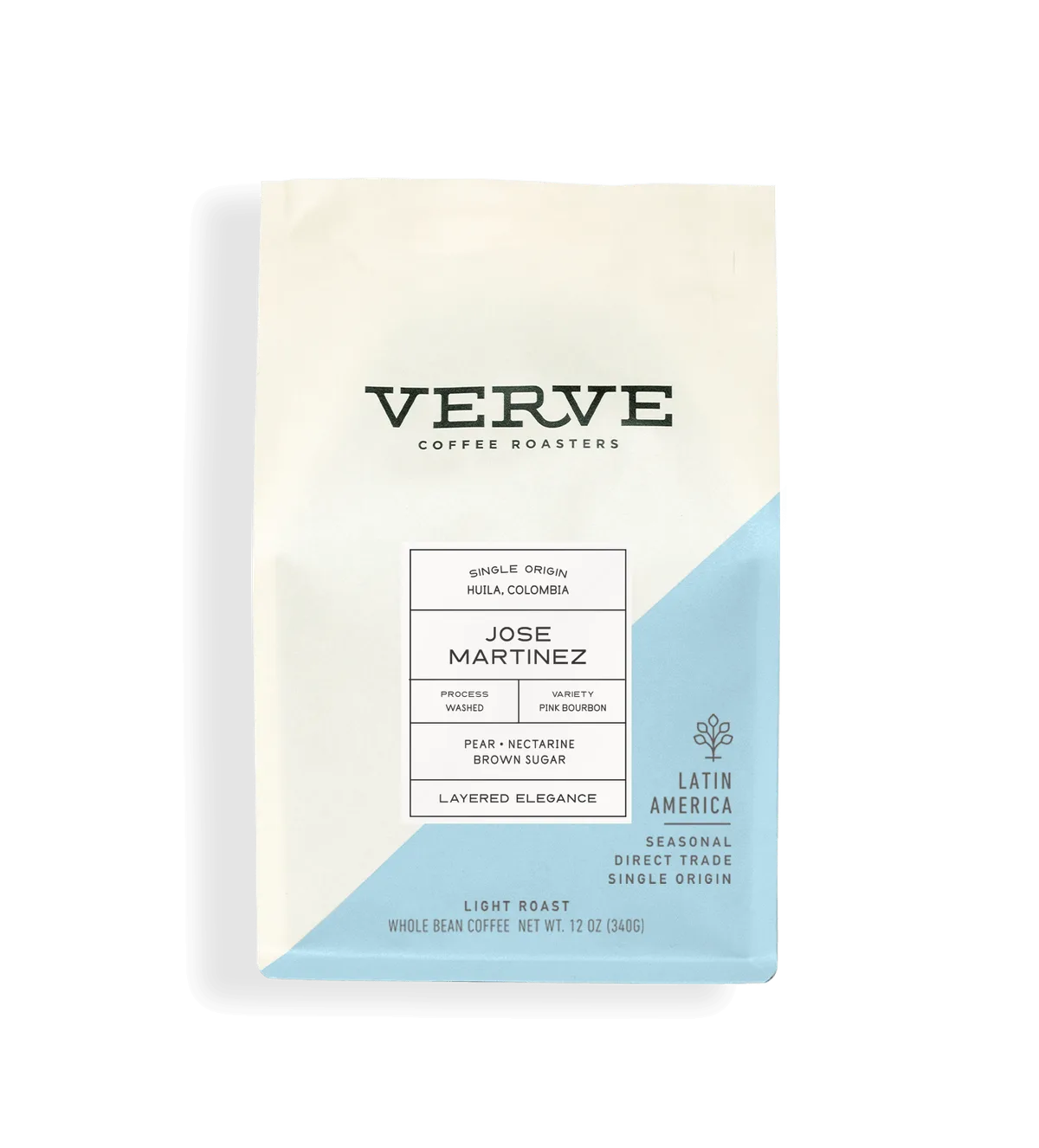
If you drink Colombian coffee, now is a sensible time to enjoy it rather than wait. A clean, sweet washed Colombian is a dependable everyday cup, and this one leans chocolatey and berry-ish without the premium of a chasing-auction lot.
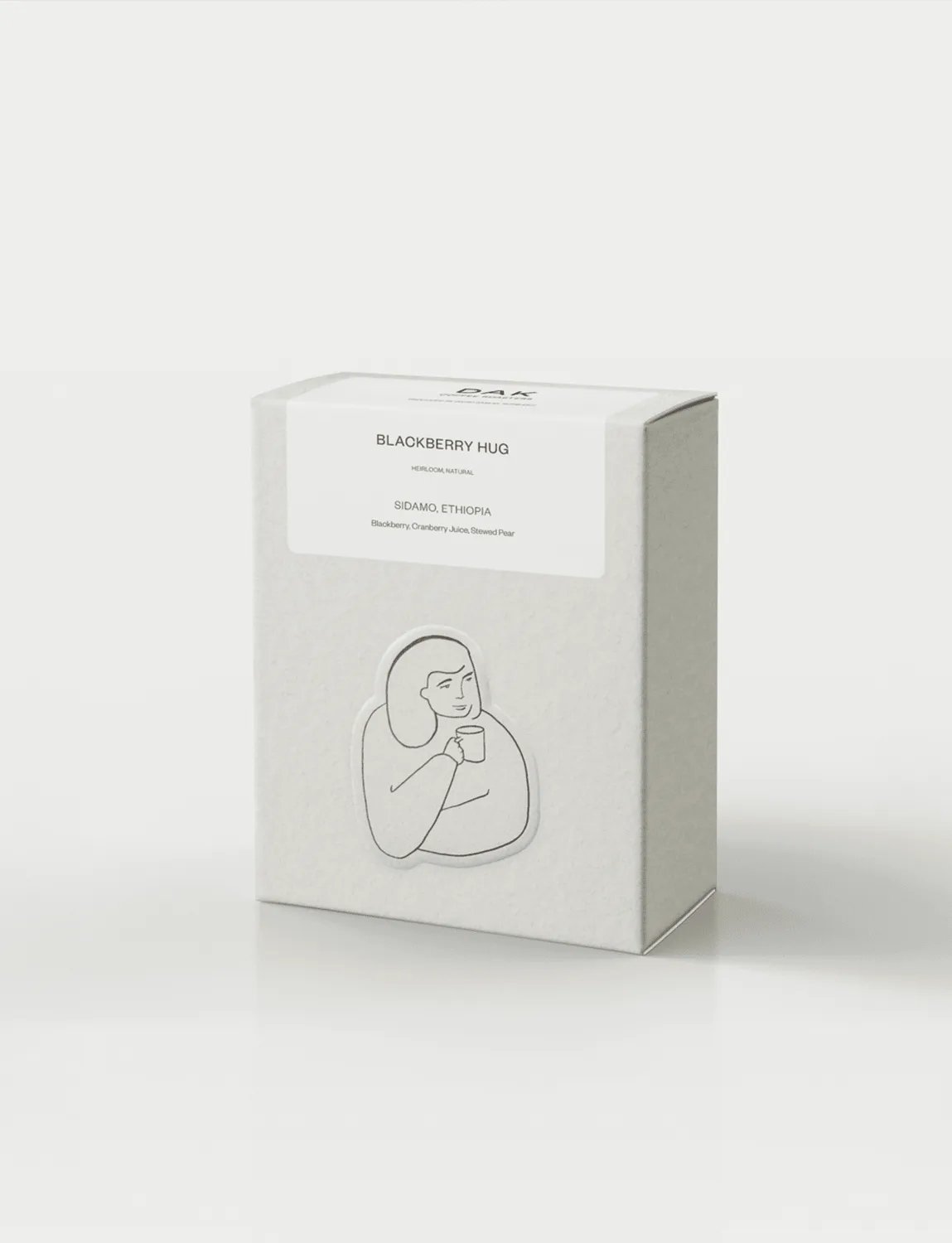
If your tastes run brighter and more aromatic, a natural Ethiopian is the other easy win, all berry and florals, and well supplied this harvest season.
Worth watching next week
Two dates stand out. Starbucks reports fiscal fourth-quarter results on 29 October, which will test whether Niccol's confidence holds up in the numbers.
On the market, keep an eye on ICE certified stocks and any fresh Colombian or Central American weather read. With inventories this thin, the next ICO monthly and any shift in El Niño forecasts could move arabica fast in either direction. If you want to turn any of this into a brew, the brew calculator and the decide tool are the quickest way to start.