Arabica spent the week of September 20 to 26 grinding lower, touching a three-month low as traders stared down a mountain of coming supply. The story is Brazil, and the numbers are getting hard to argue with.
Away from the futures screen, it was a week of big-name shuffling too: Starbucks confirmed store closures in North America, and Greggs quietly took the UK's branded-coffee crown from Costa. Here is what all of it means at the cafe and on the shelf.
The market: arabica slides to a three-month low
| Market | Price | This week |
|---|---|---|
| Arabica (ICE Dec) | 275.35 ¢/lb | -0.20% |
| Robusta (ICE Nov) | $3,272/tonne | -0.81% |
December arabica closed at 275.35 US cents per pound on Thursday, a small daily dip that capped a week of steady losses. November robusta settled at US$3,272 per tonne, also softer on the day.
The spot Arabica C benchmark closed at 271.05 cents on September 23, and it is now down roughly 28 percent over 30 days. That is not a wobble; it is a genuine repricing of the whole market.
Those percentage figures in the table are Thursday's daily moves, but the direction of the whole week ran one way: down. The market has drifted well off the highs it hit earlier in the year, and the mood has flipped from scarcity to plenty.
For anyone buying coffee, that shift matters, but it is slow. Green prices at this level take months to reach the shelf, and specialty pricing moves gently, so do not expect your favourite bag to suddenly halve.
The point is simply that the pressure is now downward rather than up, which has not been true for most of the past two years. If you have been holding off on trying something more expensive, the tide is finally at your back.
Why prices are falling: Brazil's record crop
The driver is supply, and specifically Brazil. Its 2026/27 harvest is on track to hit a record 71.9 million 60kg bags, according to the USDA, a 14 percent rise on the previous year.
Arabica output alone is forecast to jump 25 percent, to 47.5 million bags. When the world's largest producer swells its arabica crop by a quarter, the ripple reaches every trading desk and eventually every roastery.
That flood has rewritten the whole balance sheet. StoneX Specialty Coffee now expects the global market to swing into a 10-million-bag surplus in 2026, up from just 1.8 million bags in 2025.
A surplus that size explains why speculators have stopped betting on shortage and started pricing in a glut. The fear that drove prices up in 2024 and 2025 has, for now, drained out of the market.
The wildcard is weather. A strong El Niño could disrupt rainfall and temperature in Brazil's key growing regions, threatening the flowering and ripening of the next crop, and traders are already positioning for more volatility.
In plain terms, cheap-looking futures can reverse quickly if the rain misbehaves. A record harvest in the barn does not guarantee a good one next year, and the market knows it.
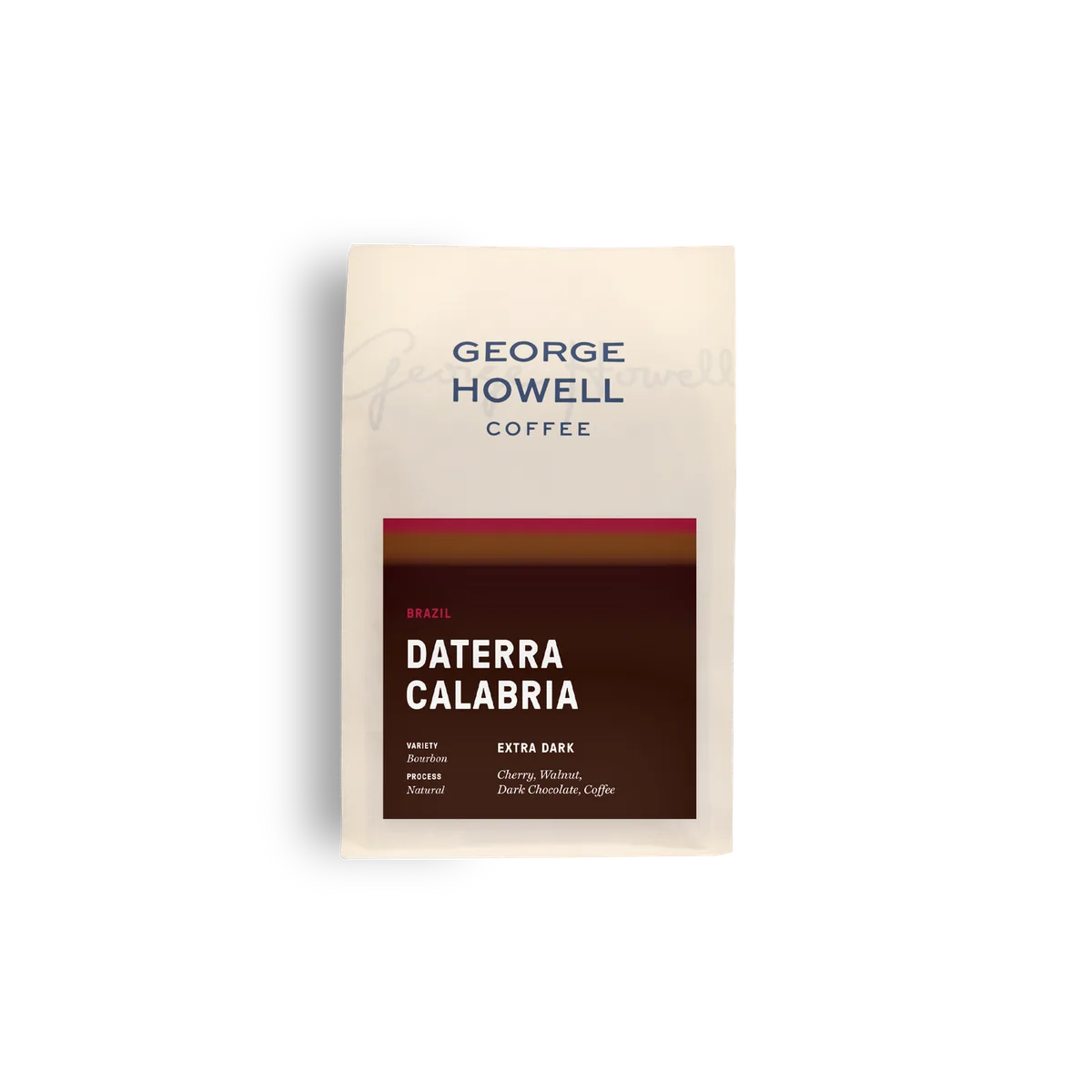
Brazil is where a lot of the world's everyday coffee begins, usually as a natural that leans nutty and chocolatey. If you want to taste what the record crop actually produces, a clean Brazilian lot is a low-cost place to start.
Demand is not blinking
If prices are falling on supply, they are not falling because people stopped drinking coffee. New UK research from the British Coffee Association puts daily consumption at 103 million cups, up from 98 million in 2018.
The growth is led by drinkers aged 18 to 34, the group most exposed to price rises and most likely to buy from cafes. That they are drinking more, not less, tells you the appetite is holding firm even after a brutal run of increases.
That combination matters for the year ahead. A big crop plus steady demand tends to mean more coffee at more reasonable prices, which is a rare piece of good news for drinkers after two punishing years.
Starbucks to close about 250 stores
The week's biggest company story came on Thursday, when Starbucks said it expects to shutter about 250 underperforming cafes across its more than 18,000 North American locations. For some drinkers, that means losing a familiar local store.
This is the second round of closures in North America during chief executive Brian Niccol's two-year tenure. It signals a company pruning rather than planting, after years of aggressive expansion.
The company now projects net new openings of 440 cafes for fiscal 2026, down from its prior outlook, and expects about 300 million dollars in restructuring charges tied to the cuts. That is a real cost, and a clear admission that not every corner needed a green sign.
The takeaway for customers is a slower, more selective Starbucks: fewer, busier stores rather than one on every block, and a chain trying to fix what it has rather than plant flags.
Greggs overtakes Costa as the UK's biggest
Britain has a new leader in branded coffee outlets. According to Allegra World Coffee Portal's Project Café UK 2026 report, confirmed in coverage on September 23, Greggs now runs 2,737 outlets to Costa's 2,707.
It is a narrow margin, but a symbolic one: the bakery chain has out-grown the country's best-known coffee brand on sheer footprint. The morning coffee run and the sausage-roll run are now, increasingly, the same trip.
Costa, the former leader, is retrenching rather than expanding. The chain is focusing on refurbishments and a refreshed range instead of a big rollout, and reported losses of more than 13 million pounds for 2024.
A proposed sale by parent Coca-Cola reportedly collapsed after bids fell short of expectations. That leaves Costa consolidating while a rival built on pastry quietly overtakes it.
It is a reminder that a coffee shop now means the bakery counter as much as the espresso bar. Where the average person buys their morning flat white is shifting under the industry's feet.
Elsewhere in coffee
A few smaller but telling moves rounded out the week:
- On Monday, Minneapolis green importer Cafe Imports became 100 percent employee-owned through an Employee Stock Ownership Plan. The 33-year-old company did not disclose a valuation.
- On Tuesday, New York's Variety Coffee Roasters reached 10 shops with a new opening in Greenpoint, adding to sites across Brooklyn, Manhattan and Queens.
- California's Go Get Em Tiger is partnering with producers to roast select coffees at origin, aiming for 20 percent of its total roasting at origin by the end of 2026 and 70 percent by the end of 2027.
- In Bucharest, the 10th Slow Coffee Festival ran from 25 to 27 September, drawing 145 exhibitors from 24 countries.
Roasting at origin is the one to keep an eye on. If it scales, it keeps more value in producing countries, a useful counterweight to the price pressure that a record crop usually brings.
The employee-ownership move at Cafe Imports points the same direction: quieter, structural bets on a fairer supply chain, made in a week when the headline was all about cheaper beans. Both are worth more than a single week's futures move.
What to watch next week
Two things. First, whether arabica finds a floor near 270 cents or keeps sliding as more of the Brazilian crop physically lands and lands on trading desks.
Second, the weather maps: any early sign of El Niño stress in Brazil could reverse the mood fast, and the market is primed to react. While prices are friendly, it is a good moment to explore, so browse the full coffee catalogue or let the decision helper point you somewhere new.